
Walmart expands its own EV charging network to hundreds of stores
Walmart has installed 838 company-branded EV charging ports at 100 stores, with construction underway at 100 more sites. The retailer aims to reach thousands of locations by 2030, leveraging its proximity to 90% of Americans who live within 10 minutes of a store.
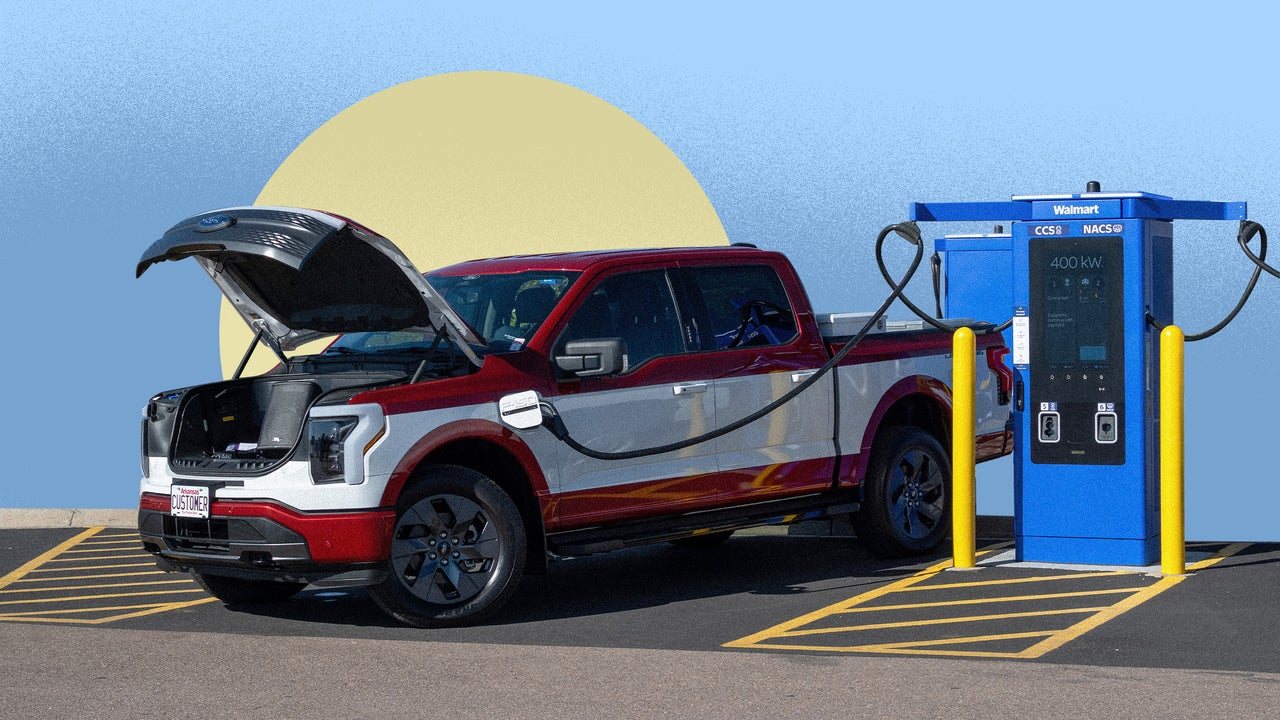
Walmart is rapidly building out its own electric vehicle charging network, installing company-branded chargers at stores across the country as part of a push to make EV charging as familiar and affordable as its retail prices. The retailer now operates 838 charging ports at 100 locations, with construction underway at another 100 sites, and last month it grew faster than any charging network in the country except Tesla's.
The company has said it plans to extend the network to thousands of locations by 2030. That expansion could have an outsized impact on EV adoption: roughly 90% of Americans live within 10 minutes of a Walmart store, and many stores sit adjacent to major highways, putting the retailer in a unique position to fill charging gaps throughout the country.
“We absolutely have the opportunity to serve places that may not otherwise have that infrastructure,” said Shayne Wahlmeier, senior vice president of Walmart Energy.
The push started with customer demand. Shoppers were actively asking for EV charging, Wahlmeier said, and while the company had third-party charging stations at many stores, it wanted its own equipment to control maintenance and reliability, and to make charging feel like part of the Walmart experience, including the low prices the chain is known for.
“We want our charging to be affordable and consistent and easy to understand,” Wahlmeier said. “So not something where price changes just because you showed up on a holiday weekend.”
Walmart Plus members receive a 10% discount on charging, the same perk the retailer offers on gas. The new fast chargers are 400 kilowatts, capable of adding hundreds of miles of range in the time it takes to shop, depending on the vehicle, and feature dual charging cords to accommodate different EV models. Customers can pay through Walmart's app, and the company is also testing credit card payments.
There is an obvious advantage for the retailer: most customers who arrive to charge also shop. A typical charging session lasts around 30 minutes, and the chargers are located a short distance from store entrances, so people often come inside.
EV chargers are becoming common at other retailers, from Target and Costco to travel centers like Buc-ee's, but Walmart's scale gives it particular leverage. The company operates more than 4,600 Walmart stores and more than 600 Sam's Club locations in the U.S. Even though the country now has more than 250,000 EV charging ports, experts say millions more are needed.
“They're in a unique position due to their proximity to so many U.S. households,” said Bill Ferro, cofounder and chief data officer of Paren, an EV charging data analytics platform. “Having a charger at your local Walmart should do a lot for expanding EV adoption as drivers see that they have a good, quality site to charge at a place that they visit anyway.”
The Walmart branding itself is an advantage. “Except for Tesla, most charging networks are relatively and completely unknown brands to most Americans,” said Loren McDonald, CEO of Chargeonomics, another EV charging analysis firm. Everyone knows Walmart and knows what to expect, he noted.
Walmart first announced its plans in 2023 but did not immediately start building. “We've taken some time to make sure that we have the right hardware vendors and the right software integration built on our side,” Wahlmeier said. “But we are at a scale now that we've got a really good pipeline in front of us and feel that we can continue to grow at the pace we are.” The company is adding new sites weekly.
Location decisions are based partly on community interest. “We evaluate each of our sites based on existing demand, but then also we listen closely to our store associates,” Wahlmeier said. “We are very local and very connected to the community, and so our store managers and store associates have lots of conversations.”
The installations include locations in Southern California, where chargers are not hard to find, alongside charging deserts like Wetumpka, Alabama, and Checotah, Oklahoma.
Walmart is one example of how EV charging is becoming part of everyday life. Other markets, including Asia and Europe, show what a more mature EV market might look like, with charging integrated into the places people live, work, shop, and spend time, said Julie Taylor, chief revenue officer of Driivz, an EV charging software platform based in Israel.
“The question starts shifting from, 'Where can I find a charger?' to an expectation that charging will simply be available as part of the destination,” Taylor added. “Think about Wi-Fi at a hotel. Twenty years ago, having Wi-Fi was something a hotel advertised. Today, customers simply expect it to be there.”
181