Restaurant Chains Tighten Rewards Programs as Customer Dissatisfaction Nearly Doubles
Major fast-food chains including McDonald's, Starbucks, Dunkin', and Subway have made their loyalty programs less generous over the past year, and a new survey shows customer dissatisfaction has nearly doubled from 15% to 28%.
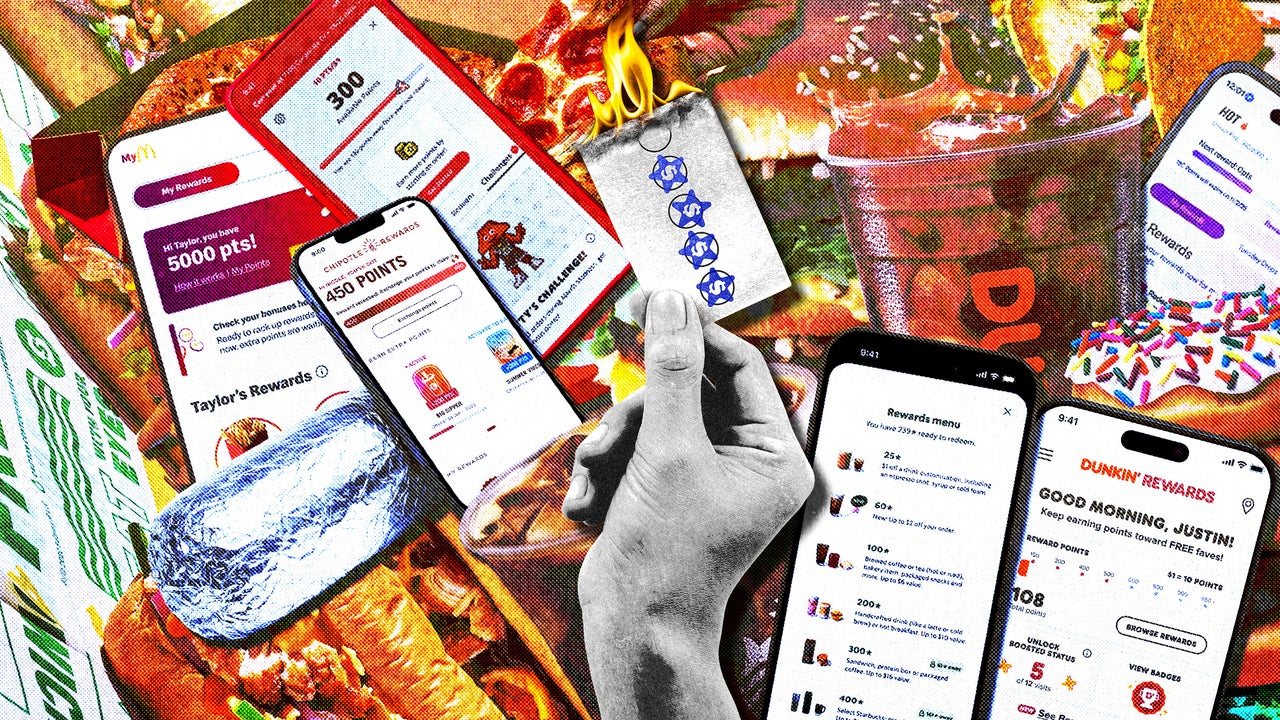
Major restaurant chains across the United States are quietly scaling back the value of their loyalty programs, and a growing share of customers is noticing. Over the past year, Starbucks made it harder for members to earn reward points, which the company calls Stars. Subway removed the free-footlong reward from its revived Sub Club and replaced it with Subway Cash. As of May, McDonald's customers need 7,000 points, equivalent to $70 in spending, to earn a free Big Mac. In August, Panera placed a hard cap on its supposedly Unlimited Sip Club, prompting prepaid annual members to trade tips online about how to get around the forced-arbitration clause if they want to pursue legal action.
The scale of the pullback is significant enough that a recent survey by restaurant technology firm Tillster found dissatisfaction with fast-food loyalty programs has nearly doubled over the past year, rising from 15% to 28%. More than a third of diners still belong to no restaurant loyalty program at all, leaving what appears to be a large, unclaimed slice of the consumer market for whichever brand can get the formula right.
The consequences for customers can be substantial. Aaron Braun, an IT professional who travels frequently for work, spent five years accumulating Dunkin' Rewards points through a company card linked to his account. He had hoped to reach 100,000 points so his two teenagers, who had just started driving themselves to school, could use them. Last year, he was staring at a stockpile of more than 93,000 points. Then Dunkin' began canceling points more than a year old. When Braun opened the app in the fall, he found his balance was short by about 63,800 points, equal to roughly $250 worth of coffee.
Braun is hardly alone. The restaurant industry is in the middle of what has been dubbed a «great rewards overhaul.» Pizza Hut, Cava, Burger King, Potbelly, and Jimmy John's have all retooled their programs in the last 12 months. Three other chains confirmed they are in the process of overhauling theirs, with releases expected by year-end or early 2027, but declined to share details.
The challenge for restaurants is that the old-school bargain of spending a set amount to get a set reward no longer seems to excite consumers. «That's not really that exciting to consumers and it's not really differentiated,» Zach Goldstein, CEO of loyalty software company Thanx, told Restaurant Business last year. When chains try to make rewards more sophisticated, personalized, and engaging, they risk making the bargain less compelling. Customers are already showing limited patience. In a recent Toast survey, more than half of diners said they have left a restaurant loyalty program because of friction around earning rewards, representing business lost before a habit ever formed.
Subway's experience illustrates how difficult the balance can be. The sandwich chain introduced the first major fast-food rewards program, Sub Club, more than 40 years ago. Its wallet-sized customer appreciation card spurred a generation of copycats. Collecting eight stamps, two for a footlong and one for a 6-inch, earned a free footlong sandwich. But the program's simplicity became its undoing. «Employees would steal these rolls of stamps, which had thousands of stamps on them,» Bill Mathis, a 25-year franchisee who chairs the North American Association of Subway Franchisees and the Coalition of Franchisee Associations, said. «And they'd sell them or give them to their friends.» By the 2000s, rolls of Sub Club stamps were being sold on eBay, and people admitted to counterfeiting them with scanners and crayons. In 2005, Subway canceled Sub Club, acknowledging fraud had become too widespread.
Restaurants do have advantages that other industries lack. Practically every brand now chases loyalty in its own fragmented sector, from travel companies to media outlets to fashion brands and banks. But restaurants have a high number of customers already voluntarily placing orders through apps with accounts that log personal data and shopping histories. Getting the formula right could unlock significant revenue and position a brand well for the future. For now, however, the industry appears to be testing how much it can take away before customers walk.
7