Ford, United, Alphabet Executives Explain How Iconic American Brands Stay on Top
At a TIME100 forum, leaders from Ford, United Airlines and Alphabet described the values, long-term investment and innovation that have kept their companies relevant across generations.
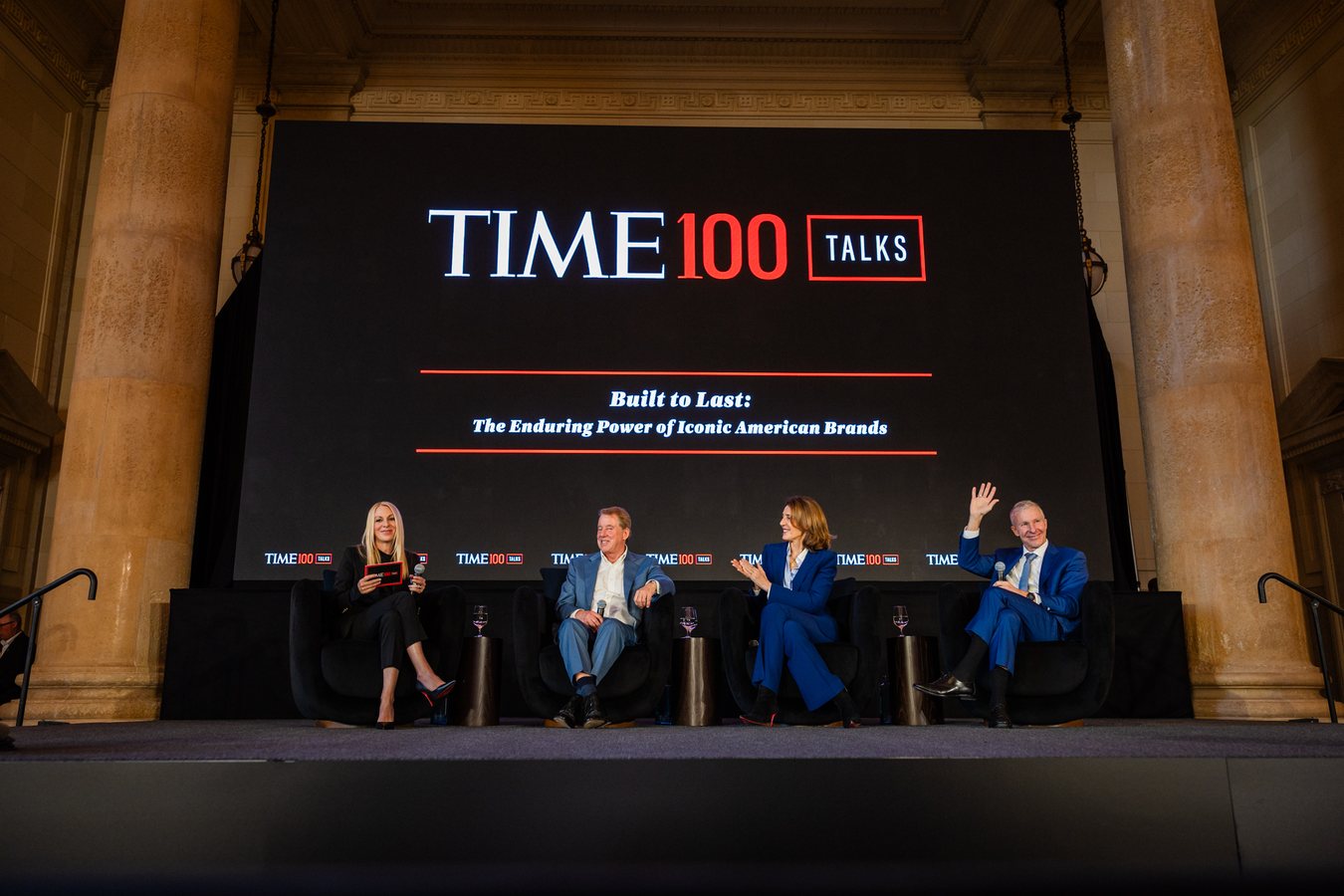
Executives from three of America's most recognizable companies gathered Tuesday to explain how their brands have survived and thrived across generations, pointing to enduring values, patient investment and a willingness to pursue ambitious ideas.
Speaking at the TIME100 Built to Last: The Enduring Power of Iconic American Brands forum, William Ford, executive chair of Ford Motor Company, said the automaker's longevity rests on priorities that reach beyond the bottom line. «We take care of each other. We take care of our communities. We take care of our country,» he said. «Those values are timeless. And it's different than culture because cultures change and cultures evolve. But I think the values that underlie that culture are what really have sustained us for our whole lifetime.»
Ruth Porat, president and chief investment officer of Alphabet, the parent company of Google, credited a «commitment to long-term investing» and a «relentless focus on innovation» for the company's staying power. She warned that innovation should never be taken for granted, and pointed to a program the company's founders created that allows employees to devote a fifth of their workload to an idea they consider promising. Gmail and Google Brain, the company's first artificial intelligence entity, emerged from that effort, she said.
Porat also described how Alphabet sets goals that are deliberately difficult to reach. Achieving 60 percent of the objectives set out in a year counts as success, she said, because hitting 100 percent would suggest the targets were not bold enough. «If we achieve 60% of the objectives we set out in a year, that is success,» she said. «Because if we achieve 100% it just means we have not been audacious enough. We haven't set the goal high enough.»
Scott Kirby, chief executive officer of United Airlines, attributed the carrier's durability to its identity as a «brand loyal airline,» built around four areas of the business: reliability, service, the hard product and technology. The goal, he said, is to surprise passengers with something new on every flight. «We need to wow them consistently,» Kirby said. «I wanted them to get on an airplane and be surprised with something new that we have done.»
Kirby acknowledged that holding a high standard across those areas has been difficult, especially during the COVID pandemic, which he called the «most existential financial crisis that ever existed in aviation.» Even amid those disruptions, he said, protecting employees remained his priority.
Looking ahead, the panelists outlined goals that extend well beyond the coming year. Kirby said his «north star» is to structure United so that the airline never again has to furlough workers. Porat said part of Alphabet's future lies in extending its business infrastructure into space, with the company preparing to launch an AI data center. She described the effort as an attempt to answer a question its technical infrastructure team has pursued for years: how to build as efficiently as possible, use resources as wisely as possible and deliver the best possible experiences. «This is a tiny little step. We still call it research,» she said.
Ford, for his part, said he is most excited by the prospect that the company will still be the most American car company a quarter-century from now, making customers' lives better and giving them back their most precious asset, time. «I think what gets me most excited is the fact that we will still be the most American car company 25 years from now,» he said, «and that we'll be making our customers' lives better, and hopefully give them back their most precious asset, which is time.»
The forum, presented by Ford, brought together leaders whose companies span aviation, technology and manufacturing — sectors that have each been reshaped by economic shocks, shifting consumer expectations and rapid technological change. Their remarks suggested that the common thread among enduring American brands is not a single strategy but a combination of stable values, sustained investment and the confidence to set goals that may not be fully met.
7