
Apple Marks 50 Years as a $4.85 Trillion Giant Built on iPhone and Services
Apple's first half-century transformed a computer maker into a $4.85 trillion company, with the iPhone still driving about half of sales and Services projected to exceed a quarter of revenue in 2026.
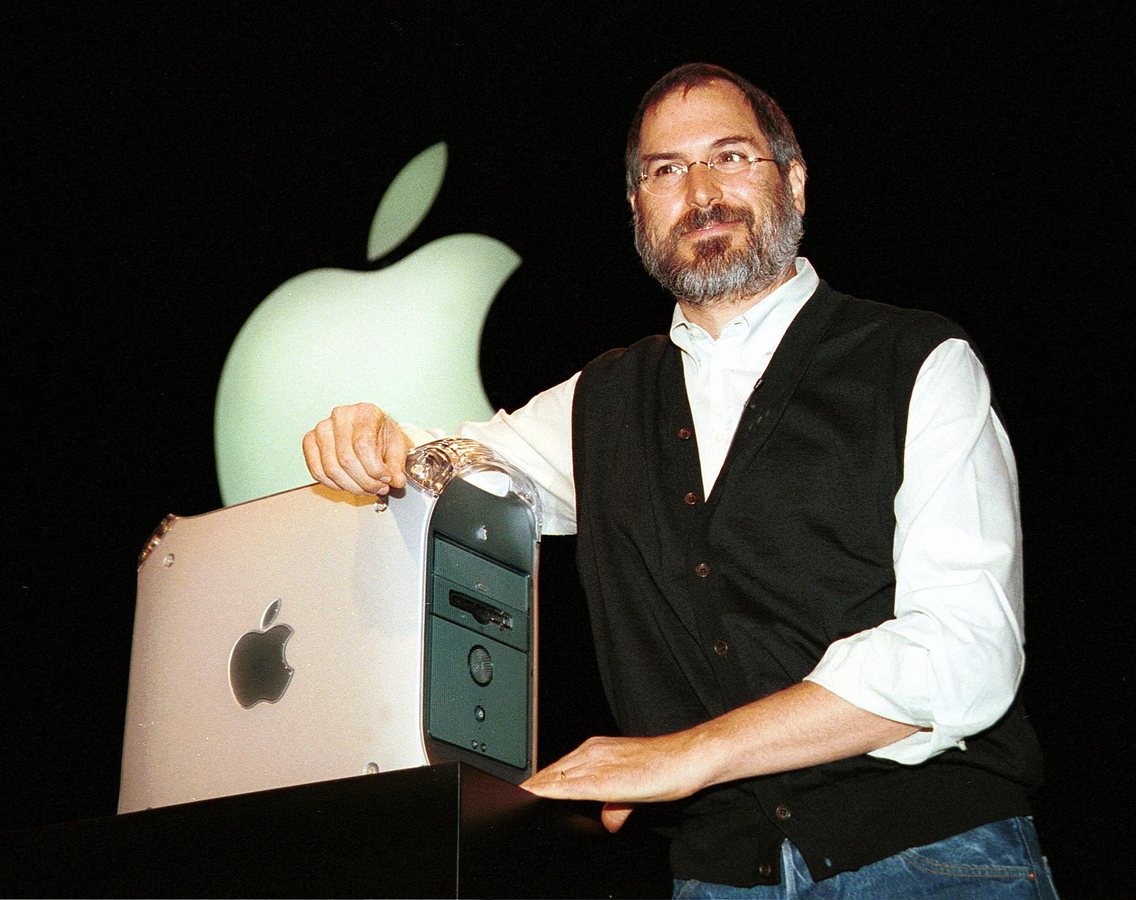
Apple has reached its 50th year as a public company valued at $4.85 trillion, a milestone that underscores how completely the maker of the Macintosh remade itself around the iPhone and a fast-growing services business. The company that first won over consumers with distinctive product design now draws roughly half of its sales from a single device and is on track to generate more than a quarter of its revenue from Services, a division that barely existed 15 years ago.
That services arm — spanning the App Store, iCloud, Music, TV, payments and advertising — has become the steadiest part of Apple's financial engine, converting a hardware installed base into recurring revenue. The shift matters because it gives the company a revenue stream less dependent on the timing of product launches and more tied to the hundreds of millions of devices already in customers' hands.
Apple's geographic reach has broadened along the way. The United States accounts for 36 percent of sales, while Europe follows at 27 percent. The rest of the Americas and the Asia-Pacific region together contribute another third, a distribution that reflects how far the company has moved beyond its home market. Its retail footprint now exceeds 500 locations, with stores outside the United States driving much of the recent expansion.
The financial trajectory has been just as striking. Annual profits climbed from about $2 billion in 2006 to $112 billion in 2025, a scale that few corporations have ever approached. For early investors, the returns are even more dramatic: a $10,000 stake at Apple's 1980 initial public offering would have grown to roughly $40.5 million by mid-2026.
Those numbers help explain why Apple's anniversary is being treated as more than a nostalgic look back at the Mac, the iPod or the iPhone. The company's story is often told as a procession of blockbuster devices, and that remains a central part of its identity. But the more consequential development may be the ecosystem built around those devices — one that turns each new customer into a long-term source of subscription and transaction revenue.
The iPhone itself still anchors the business, accounting for about half of sales in 2025. That concentration has long prompted questions about what happens if demand cools, yet the device's durability has repeatedly defied predictions of decline. Its successor products, from wearables to services, have been designed to keep users inside Apple's software and hardware environment rather than replace the phone as the primary revenue driver.
Apple's half-century also reflects a broader shift in the technology industry, where the most valuable companies increasingly depend on recurring revenue rather than one-time hardware purchases. Services carry higher margins than devices in many cases, and they scale with the existing customer base rather than requiring entirely new buyers. That model has helped Apple sustain profit growth even in years when device sales have been uneven.
The company's global balance is another marker of its maturity. With more than a third of sales coming from the United States and roughly a quarter from Europe, Apple is less exposed to any single economy than it once was. The Asia-Pacific region and the rest of the Americas add further diversification, though each brings its own regulatory and competitive pressures.
For investors who missed the early years, the IPO comparison serves as a reminder of how much value Apple created over five decades. A $10,000 investment in 1980 turning into $40.5 million by mid-2026 is the kind of figure that defines a generation of market history. It also sets a high bar for the next 50 years, when Apple will need to prove that its services engine and its device franchise can keep growing together.
11