Amata Pivots to Laos as CEO Vikrom Kromadit Eyes 200 Square Kilometers
Thai industrial park developer Amata Corporation is making Laos its largest focus, betting on hydropower, Chinese manufacturing shifts, and a land bank that could reach 200 square kilometers.
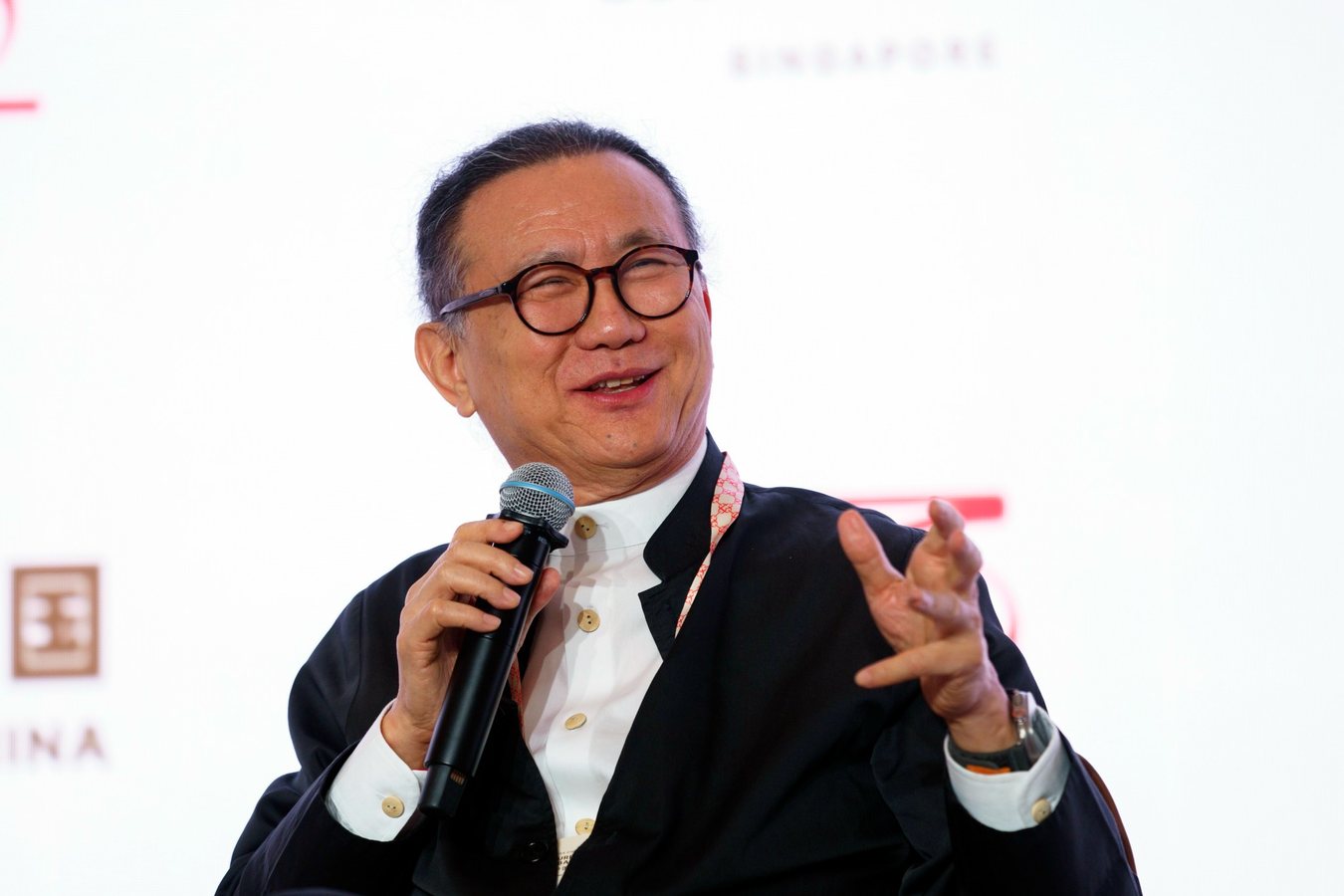
Thai industrial park developer Amata Corporation is making Laos its largest focus in the coming years, CEO Vikrom Kromadit said, betting that the landlocked country's vast land bank and hydropower surplus will draw manufacturers seeking alternatives to China.
«Laos will become our largest focus because of the land bank that they have,» Kromadit said. «They also have lots of green energy — that's why they're called the battery of Southeast Asia.»
Amata entered Laos in 2022 with Amata City Namor, a 31.5-square-kilometer development beside a station on the China-Laos Railway. The company says its long-term vision for the country could reach 200 square kilometers, a scale that would dwarf its existing footprint in Thailand and Vietnam.
The pivot reflects a broader shift in Southeast Asian manufacturing. Laos, the region's only landlocked nation, has positioned itself as a low-cost alternative for Chinese and global manufacturers pursuing «China plus one» strategies — moving some or all production abroad to reduce costs and avoid tariffs on Chinese-origin goods. China invested $18 billion in Laos in 2025, primarily in industry, mining, and agriculture, according to the Vientiane Times.
«China is the largest manufacturer of all products, so they can't just keep building only within their country,» Kromadit said. «They're also being hit by political pressure from the U.S.»
Laos's appeal rests heavily on energy. Its rivers and mountainous terrain supported a government-led push to build more than 80 hydroelectric dams, generating over 12 gigawatts of capacity. The country exports roughly 80% of its electricity to Thailand, China, and Singapore. Kromadit describes the combination of land and water as «the best natural conditions» for industrial development.
That energy surplus comes with complications. Most cross-border transmission lines bypass local communities, leaving many Laotians with frequent blackouts even as the country powers its neighbors.
Amata's expansion into Laos follows a decades-long trajectory. Kromadit founded the company in 1989 after an earlier career in import-export. A graduate of National Taiwan University with a degree in mechanical engineering, he returned to Thailand in 1975 and built V&K Enterprise around agricultural products, minerals, and seafood. By the 1980s, he was frustrated with being «just a middleman.»
«I wanted to make more money,» he said. «When I was in the food business, even though I was the one who created all the channels and brought in business, once companies achieved success, they kicked me out.»
In 1988 he co-founded the Bang Pakong Industrial Estate on Bangkok's eastern coast, then established Amata Corporation a year later. Amata City Chon Buri, the company's first industrial facility, opened in 1989. After visiting Vietnam in 1990, Kromadit made the country Amata's first overseas market, launching Amata City Bien Hoa in Dong Nai province in 1994.
His early bet on Vietnam has largely paid off. The country is now Southeast Asia's fastest-growing economy, with third-quarter GDP growth of 9.95%, and Hanoi aims for high-income status by 2045.
Amata today hosts more than 1,500 factories across 12 locations in Thailand, Vietnam, and Laos. The company positions its developments as industrial cities rather than factory zones, incorporating housing, schools, hospitals, and shopping malls. Its flagship Chon Buri campus includes the 38,000-square-meter Lotus Plus Mall, featuring a hypermarket, retail stores, banks, restaurants, and an international cinema. The company also operates kindergartens, schools, and technical training institutes, and Kromadit says it is now looking to build a university.
Not every expansion has succeeded. Amata briefly attempted to enter Myanmar in 2019 with a facility in Yangon, but halted those plans in early 2021 following a military coup and the ensuing civil war.
Asked whether Amata might expand into other Southeast Asian markets such as Indonesia or Cambodia, Kromadit said the company already has enough land to occupy him for the rest of his life.
«The land that we have on hand is around 700 square kilometers,» he said. «It's big enough to make me busy until I go to heaven.»
9