Wozniak Says He Built Apple After Five HP Rejections, Not for Money
Apple cofounder Steve Wozniak told Grand Valley State University graduates that he started the company to win the respect of fellow engineers, not to get rich, and that his weekly paycheck was once just $50.
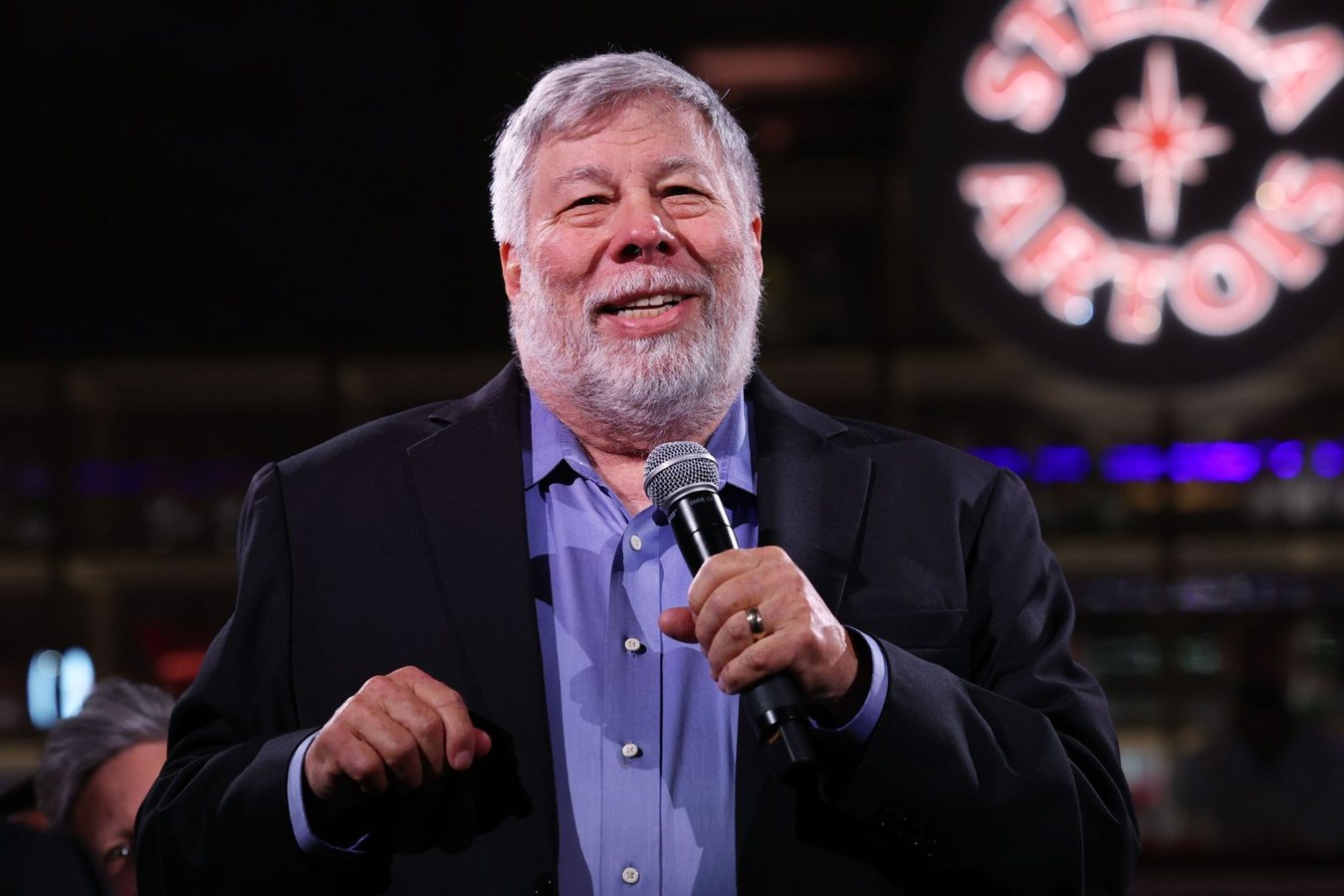
Apple cofounder Steve Wozniak says he never set out to build a technology empire or make a fortune, telling graduating students that he started the company only after Hewlett-Packard turned down his personal computer idea five separate times.
Wozniak, who founded Apple with Steve Jobs and Ronald Wayne in 1976, said in a commencement address at Grand Valley State University that his motivation was never money. «When you try things, they don't have to be for obvious money,» he said. «When we started Apple, did I want to make money? Start a company? Start an industry? No.»
What drove him, he said, was the desire to bring his design for a personal computer to life and to earn the admiration of other engineers. «I wanted other engineers or other computer people to look at my designs and say, 'Whoa' and appreciate me and my brilliance, 'How did he come up with these things?'»
In the 1970s, after taking a break from his studies at the University of California, Berkeley, Wozniak took a job at Hewlett-Packard, where he hoped to spend his entire career. He pitched his personal computer concept to the company five times and was rejected each time. Only then did he warm to Jobs' suggestion that they go into business for themselves — a decision that laid the groundwork for Apple.
That experience shaped one of his central messages to graduates: do not be afraid to take an unconventional path. «Don't follow the same steps as a million other people,» he said. «Think: 'Is there something I can do a little different?'»
Wozniak's stake in Apple could theoretically have made him the world's first trillionaire had he held onto it. When the company was founded, he and Jobs each received a 45% share, while Wayne received 10% — a stake Wayne famously sold back days later. Wozniak also gradually sold much of his stock in the 1980s, giving some shares to early employees who had missed out on equity and donating money to charity.
His approach reflects a long-standing skepticism toward wealth accumulation. He has said he spent nights typing college term papers for strangers for just pennies, and tutoring students, not because it paid well but because he enjoyed it. «When you had to type them on a real typewriter from midnight to 6:00 in the morning for a stranger I would never see again, I would charge 5 cents,» he recalled. «If you do something you love — and I love typing — you don't need to prove it by charging a huge amount of money.»
He carried those feelings into later life as well. «I do not invest. I don't do that stuff,» he previously told Fortune. «I didn't want to be near money, because it could corrupt your values.»
Wozniak stepped back from full-time involvement at Apple in 1985, but he remained on the payroll for years afterward. «I'm still an Apple employee — the only person who's received a paycheck every week since we started the company,» he said in a 2020 podcast interview, adding that after savings and taxes he received «$50 a week or something» into his bank account.
Education remained central to his life. Growing up in California, he had two dream careers: becoming an electrical engineer like his father and teaching fifth grade. Twelve years after cofounding Apple, he reenrolled at UC Berkeley to finish the degree he had left unfinished, graduating at age 35 under an alias to avoid attention. «My Berkeley diploma says Rocky Raccoon Clark,» he said.
He also fulfilled his teaching ambition, spending a decade teaching elementary and middle school students about computing. Reflecting on his roundabout career, he offered advice to graduates worried about finding the perfect path immediately. «It doesn't even have to be working in the job you want to do for the rest of your life,» he said. «Take some job to get enough money for an apartment. That's the most important thing.»
Wozniak acknowledged that uncertainty is an inevitable part of life, but said he has always tried to meet it with humor and fun. His final message to graduates was simple: «Do your best.»
7