Andreessen tells Fed AI may disappoint and fail to lift productivity
Venture capitalist Marc Andreessen, co-leading a Federal Reserve task force on AI, told the central bank that AI may not cure Baumol's cost disease and could leave growth stagnant.
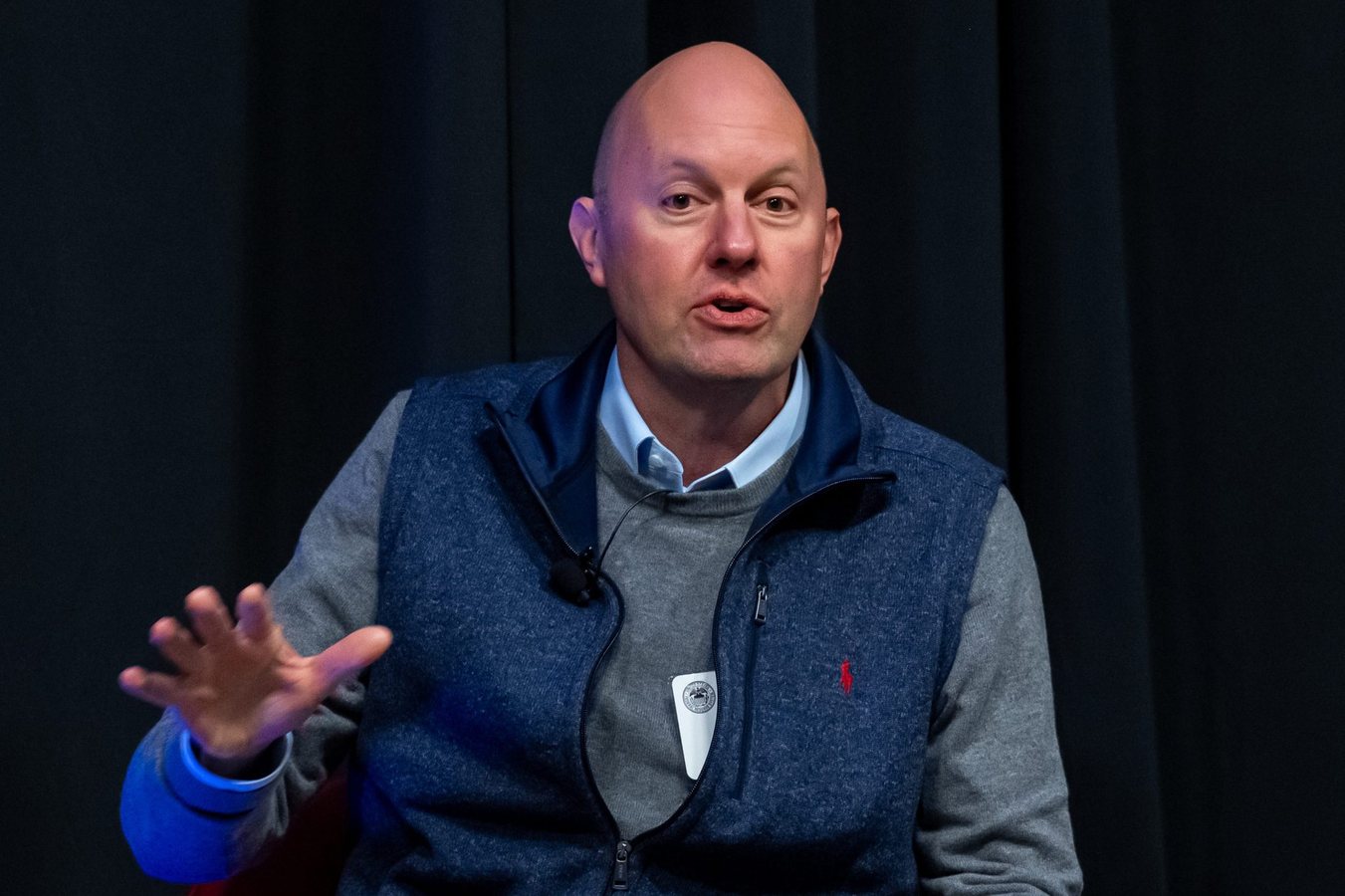
Venture capitalist Marc Andreessen closed the Federal Reserve's AI conference in San Francisco on Monday by warning the central bank that both AI optimists and AI skeptics are likely to be disappointed. He said the real-world and economic impact of artificial intelligence may fall well short of expectations, and he argued that the technology may not solve one of economics' oldest problems.
Andreessen co-leads the Productivity and Jobs Task Force, which Fed Chairman Kevin Warsh created to assess how super intelligence, a term the White House prefers, could affect growth, prices and jobs. The task force is advisory and Andreessen has no vote on interest rates. He co-leads it with Stanford economist Charles Jones and Microsoft executive Asha Sharma. It is one of five outside panels the Fed named in June to rethink how the central bank works. The panels report to the rate-setting committee, with recommendations due by year-end, although Warsh said in October that some but not all would finish on time.
Warsh opened the day by outlining three illustrative scenarios that Fed board staff have begun to evaluate. In the first, AI lifts productivity, the gains are broadly shared and the economy stays near full employment. In the second, growth still runs above its long-term average, but automation pushes unemployment higher. In the third, AI disappoints after heavy capital investment and stock market gains, stocks fall, the economy slows and eventually recovers without the productivity gains. Andreessen previewed a view that does not fit neatly into any of these outcomes, and he said the task force's report would reflect it.
Andreessen drew on William Baumol's cost disease, the economist's observation that prices of goods with rapid productivity gains fall while prices of labor-intensive services keep rising. He divided the economy into two groups. Fast sectors, including consumer electronics, media and commodity goods, adopt new technology quickly, and their prices fall rapidly. Slow sectors, including health care, education, housing, and law and government, are, in his words, not legally allowed to change rapidly. He said that a machine cannot get an MD, cannot prescribe medication and cannot be admitted to the bar.
In his account, the slow sectors combine restricted supply with subsidized demand. Building new housing or opening new hospitals is difficult, and when voters object to rising costs, Washington responds with student loans and housing subsidies, which he argued only push prices higher. As prices fall in fast sectors, those sectors shrink as a share of gross domestic product and slow sectors take over. Health care already accounts for about a fifth of US GDP, and Andreessen said he could see it grow toward a fourth, a third, half and eventually 80 percent. The government's count was 18 percent of GDP in 2024, or $5.3 trillion, according to CMS actuaries.
Andreessen said this trajectory could be read two ways. It might mean AI will not destroy all jobs or harm humanity, but it could also mean productivity and economic growth may not increase much, leaving the economy to stagnate. He called himself extremely optimistic about the technology, describing AI as a magic formula and an elixir for boosting productivity growth. He said, however, that policy decisions about how to deploy AI would matter far more than the technology's capabilities, because without them the technology would not be rolled out.
The question of stagnation was already on the table. Earlier in the day, Warsh had raised secular stagnation, the concern from the 1930s that economists revisited after the financial crisis, and asked whether superintelligence would dramatically change that picture. Andreessen's remarks gave a pointed answer that the Fed's panels will have to weigh as they prepare recommendations for the rate-setting committee.
Source: fortune.com
13