VR Kept Promising the Future. Consumers Kept Taking the Headsets Off
Virtual reality has survived repeated hype cycles because the experience keeps improving. What it has not yet solved is the everyday test: giving ordinary people enough value to justify price, weight, isolation and the ritual of putting a computer on their face.

Virtual reality has a strange superpower: it can feel like the future within thirty seconds and like a piece of equipment ten minutes later.
That tension has followed the industry for decades. In 1995, Nintendo launched Virtual Boy as a futuristic stereoscopic game system. It sold roughly 770,000 units worldwide and vanished quickly. Two decades later, Google went in the opposite direction with Cardboard, a nearly disposable viewer that used the phone people already owned. Google said it had reached five million users by early 2016. Curiosity was real. A new daily computing habit was not.
Oculus made the dream serious again. Facebook agreed to acquire the company for about $2 billion in 2014, describing VR as a possible next social and communications platform. Modern tracking, better displays and eventually standalone Quest headsets solved problems that had made earlier systems awkward. Then Facebook renamed itself Meta in 2021 and put the metaverse at the center of its corporate identity.
The money behind that conviction is extraordinary. Based on Meta's reported segment results, Reality Labs accumulated about $92.2 billion in operating losses from 2020 through the first half of 2026. The full chronology and source trail are laid out in Science Official's research “Why Virtual Reality Keeps Missing the Mass Market.”
There is an important catch to the viral version of that number. Reality Labs is not a pure “metaverse bill.” Meta uses the segment for VR and AR hardware, software, content, wearables and foundational technologies. Some of those investments may pay off in products that look nothing like the virtual worlds imagined during the 2021 hype peak. Still, the gap between spending and consumer-scale headset economics is hard to ignore. Reality Labs generated $2.2 billion in revenue in 2025 while posting a $19.2 billion operating loss.
Apple then offered the cleanest test of the theory that VR's problem was simply mediocre hardware. Vision Pro is far more polished than the clunky systems that came before it. Eye and hand tracking make the interface feel natural. Passthrough keeps the physical room visible. Yet the current M5 version still starts at $3,499 in the United States. The headset weighs roughly 750 to 800 grams, depending on configuration, and the separate battery adds another 353 grams.
Those numbers matter because the human body does not care how impressive a keynote looks. Research on head-mounted displays continues to find cybersickness and physical comfort as meaningful constraints. A 2025 ergonomics study found that both weight and center of mass change how comfortable a headset feels over time. Apple itself added a counterweighted Dual Knit Band to improve balance.
But discomfort is not the whole story. Phones became universal despite fragile glass, bad early battery life and endless distractions because they made communication, maps, cameras, payments and the web immediately available. The friction was tiny: reach into a pocket.
A headset asks for a decision. Put it on. Adjust it. Enter a session. Accept that the people around you now have to interact with someone wearing a computer on their face. That can be worth it for games, simulation, design, training and other tasks where spatial presence is the point. It is harder to justify for checking a message or watching a quick clip.
The market is beginning to reflect that difference. IDC says XR grew sharply in 2025, but the growth came primarily from smart glasses while traditional VR and mixed-reality headsets continued to decline. For 2026, IDC forecasts about 13.6 million display-less smart glasses versus roughly 3.2 million mixed-reality devices.
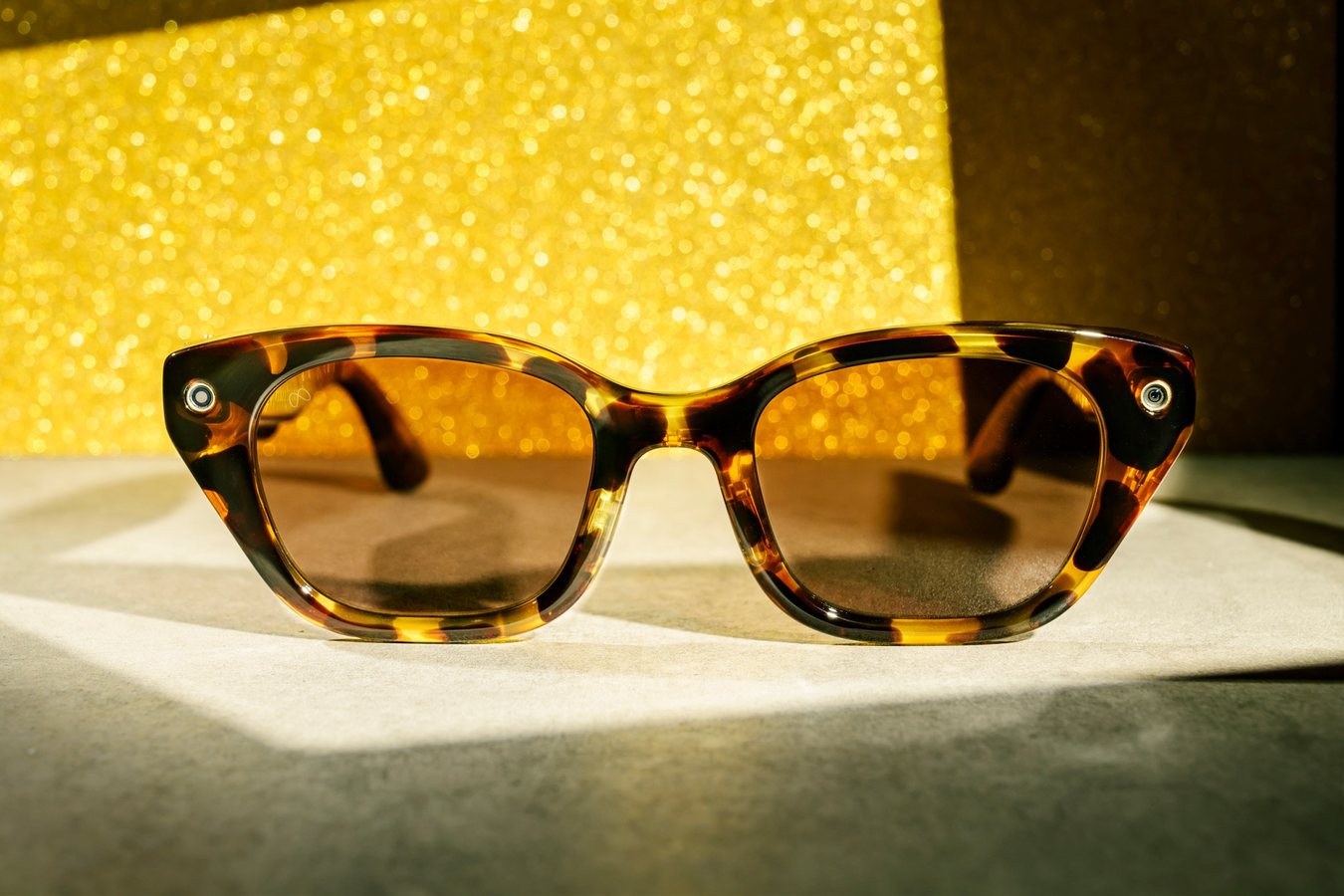
Consumers may not be rejecting wearable computing. They may be rejecting the demand that wearable computing take over the room. The next mass-market victory could come from technology that adds a camera, audio and AI to ordinary-looking glasses rather than replacing a person's surroundings with a digital environment.
After decades of companies trying to make virtual reality feel more real, the breakthrough may arrive when the hardware finally asks people to be less virtual.
78