Trump calls NASA officials after Roman Space Telescope launch
President Donald Trump surprised NASA officials with a congratulatory phone call after the Nancy Grace Roman Space Telescope launched aboard a SpaceX Falcon Heavy rocket from Florida, beginning its journey to Lagrange point L2.
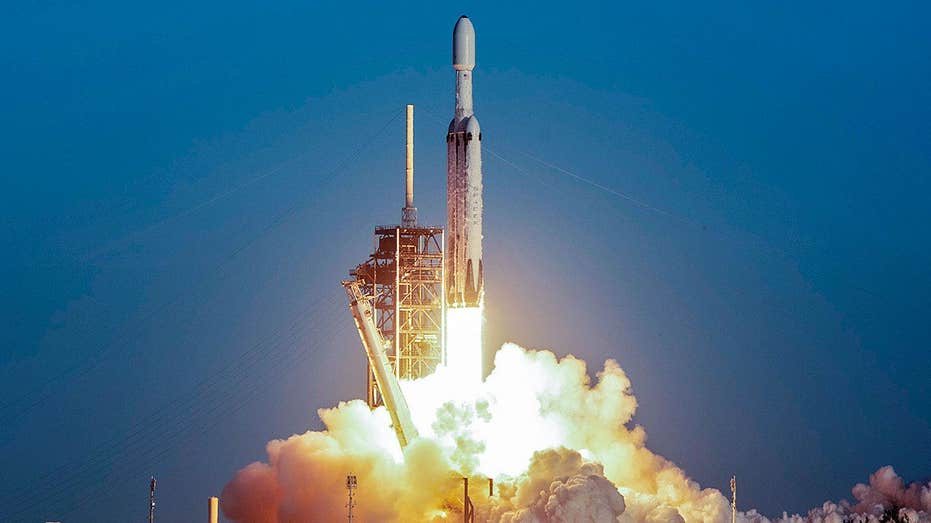
President Donald Trump unexpectedly joined a NASA press conference by phone Sunday, congratulating the agency after the Nancy Grace Roman Space Telescope successfully launched on a nearly one million-mile journey into space. The call came shortly after the telescope lifted off aboard a SpaceX Falcon Heavy rocket from Kennedy Space Center in Florida, with NASA officials confirming the spacecraft separated from the rocket and began transmitting telemetry as it headed toward its destination.
NASA Administrator Jared Isaacman stepped out of the press conference holding his cell phone, telling reporters, "The president is excited about Roman." He returned moments later with Trump on speakerphone. The president thanked and congratulated the team, joking, "I just called Jared to find out, is there anything negative that I should know about, like, it will never be able to return? Little things like that." Isaacman assured him the mission was on track, and Trump praised the agency's progress since he first took office, saying, "We're the hottest in space, we have the hottest country anywhere in the world."
The Roman Space Telescope is designed to investigate some of the deepest questions in astrophysics, including the nature of dark energy and the origins of the universe. Over the next several months, the observatory will travel nearly one million miles from Earth to Lagrange point L2, a gravitationally stable location where it will begin capturing imagery and data. Isaacman predicted Roman would become a household name alongside the Hubble Space Telescope and the James Webb Space Telescope, noting the mission will contribute to "world-changing science."
The telescope carries a 300-megapixel camera, making it one of the most powerful survey instruments ever sent into space. Its wide-field view is expected to help astronomers map dark matter, study exoplanets, and observe distant galaxies in unprecedented detail. The launch marks a significant milestone for NASA's astrophysics program, which has increasingly relied on commercial partners like SpaceX for heavy-lift capabilities.
Trump's call capped a day of celebration for the agency, which has also announced three new Moon missions as part of its push to build a permanent lunar base by the end of 2026. The president's remarks underscored his administration's focus on expanding American spaceflight activity, with officials describing a goal of reaching three launches per day. NASA leadership framed the Roman mission as a cornerstone of the nation's scientific ambitions, with Isaacman emphasizing that the data returned will reshape understanding of the cosmos.
82