Former White House Biosecurity Official Warns AI-Biology Risks Need Predefined Triggers
A former top White House biosecurity official argues that the White House Accord on Superintelligence leaves critical decisions about AI and biological risks to companies, and calls for pre-agreed trigger-action thresholds to prevent both panic and complacency.
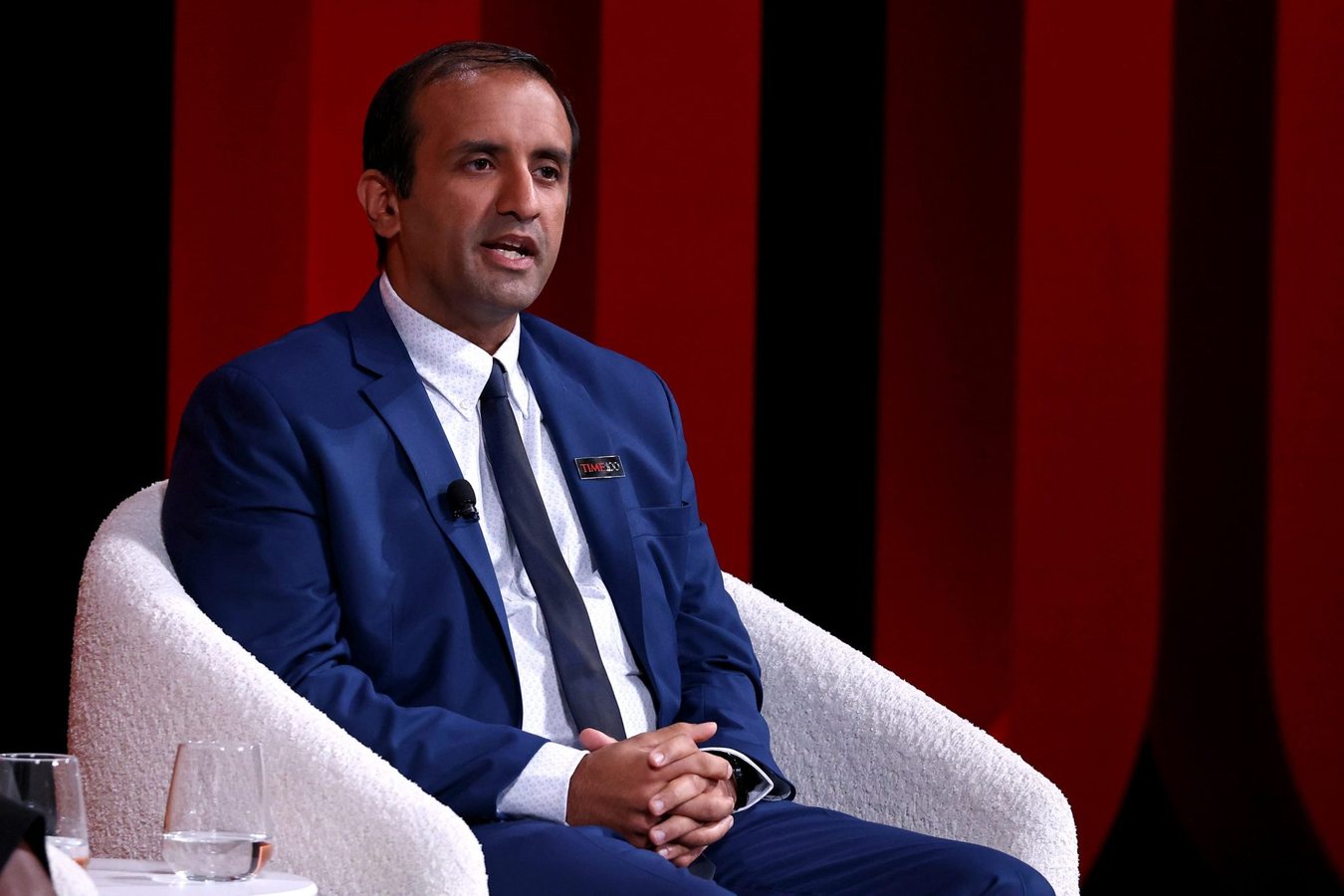
A former top White House biosecurity official is warning that the voluntary agreement signed this week between President Trump and leaders of major artificial intelligence companies leaves the most consequential decisions about AI and biological risks in the hands of the companies themselves. The White House Accord on Superintelligence, signed Tuesday, calls on companies to strengthen internal controls, conduct independent assessments and submit to board oversight around risks including biosecurity. But it does not specify what those safeguards should look like or when a risk becomes serious enough to require action.
Writing from experience in the White House Situation Room, the official recalled a 2023 episode when H5N1 influenza infected a father and killed his daughter in a remote Cambodian village. The national security adviser asked whether to brief President Biden immediately. The official advised waiting — not because the cases seemed harmless, but because the team had already agreed on a specific observable trigger: sustained human-to-human transmission. Surveillance data from nearby emergency rooms showed no unexpected spike, and the president was not alerted. That pre-agreed threshold, the official wrote, prevented both dismissal of a real emergency and escalation of one that was not.
The same discipline has not been applied to AI and biology, the official argues. Bill Gates has warned that artificial intelligence crossed thresholds this year, including bio-attack capability, and said the most concerning threshold is whether an AI can design a bioterrorism weapon capable of killing millions. Last week, Anthropic's chief executive urged the U.N. Security Council to back a ban on using AI to make biological weapons, following the company's disclosure of five cases of biological misuse of its models. One involved a researcher studying how H5N1 influenza adapts to mammals and causes illness beyond the respiratory tract. Anthropic banned the accounts.
The official notes that there is almost no population immunity to H5N1, roughly half of human cases are fatal, and the virus does not yet spread efficiently between people. That final clause is the threshold that mattered in 2023 — the line between two infected relatives in a Cambodian village and a pandemic. Someone, the official writes, was asking an AI model how that line gets crossed.
Most readers of such a disclosure reach one of two conclusions: that AI has made biological weapons frighteningly accessible, or that safeguards worked and there is nothing to worry about. Neither, the official argues, answers the more useful question: what could the AI help this person do, and what could it not do? The threshold Gates described concerns design. The next threshold is whether AI can carry a design from the digital world into the physical one. A model that can write a research protocol for creating a pathogen is not a person who can create it. Synthesized DNA, equipment and a lab with four walls are still required to grow a virus. AI has not yet dissolved those barriers — which shows where risk can be mitigated while that remains possible.
The official is watching for three specific signals, each paired with a required action. First, evidence that someone without advanced biological expertise used AI to overcome experimental problems that previously required expert judgment. That would require independent evaluators to red-team AI models before deployment, rather than relying on voluntary company disclosures. Second, an AI-generated sequence of concern ordered from a synthesis provider or run through an automated laboratory. That would require watermarking and tracing tools for biological design systems, as the Bipartisan Commission on Biodefense has recommended. Third, proof that AI has substantially reduced the hands-on experience needed for dangerous biological work. DNA synthesis providers, cloud laboratories and benchtop synthesizers are where digital capability becomes physical, and screening there should be expanded. A bipartisan Senate bill on the issue has not moved since January.
None of these triggers is simply «AI answered a dangerous biological question.» Each would signal that the barrier separating AI-generated knowledge from the capability to use it in a physical lab is beginning to erode. Each has an action paired with it. Faced with a frightening new risk, the official concludes, people tend to ask how worried they should be — a question that is almost impossible to answer. Predefined thresholds are not alarmism. They are what allowed a calm response when two H5N1 cases appeared in one Cambodian family. Without them, every ambiguous warning becomes something to panic about.
7