
China’s nuclear build-out underpins its renewable-heavy grid
China connected 27 new nuclear reactors to its grid between late 2016 and August 2026, while the U.S. added two. The reactors provide steady baseload power that keeps a grid dominated by intermittent wind and solar from crashing, as the country adds nearly one Germany’s worth of electricity demand each year.
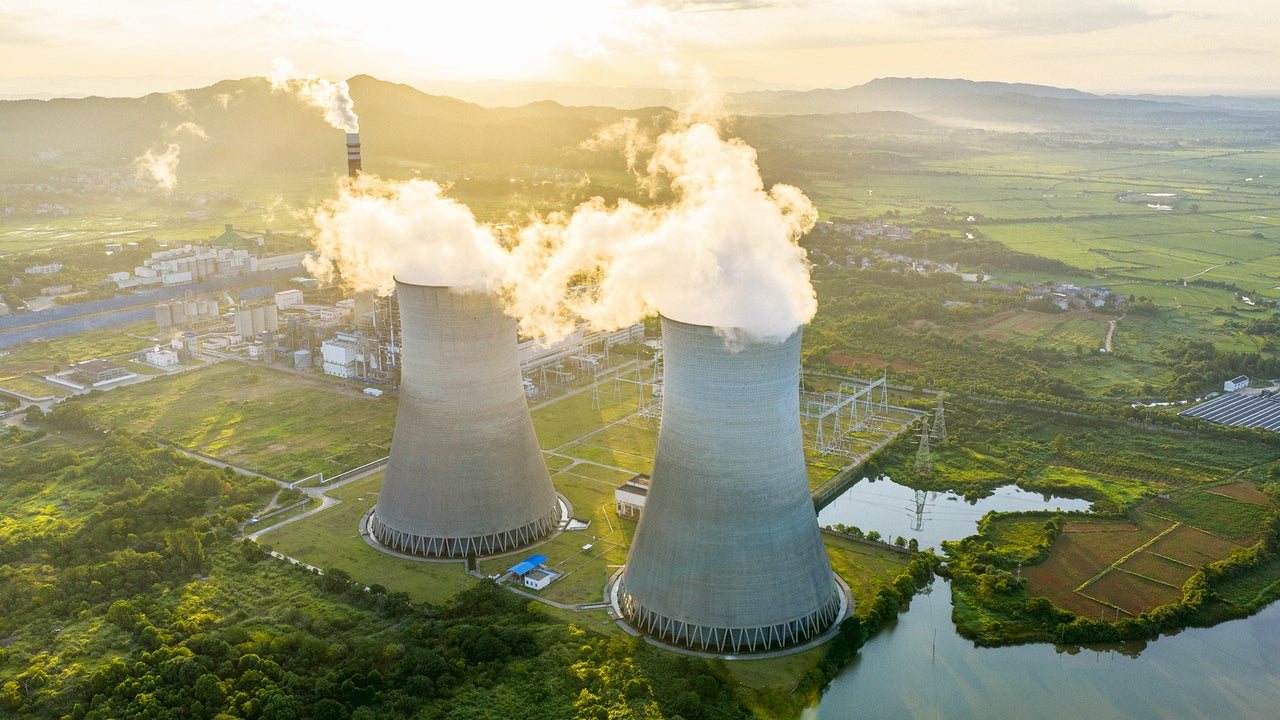
China has connected 27 new nuclear reactors to its power grid since late 2016, while the United States added two in the same period, a gap that underscores Beijing’s strategy of using atomic energy as the foundation for a grid built largely on renewables. Jacopo Buongiorno, professor of nuclear science and engineering and director of the Center for Advanced Nuclear Energy Systems at MIT, said China is now the world leader in nuclear plant construction. The reactors supply a small share of the country’s total electricity, but they play an outsized role in keeping the network stable as wind and solar output fluctuates.
Chinese engineers have designed a power system that leans heavily on renewables and aims to be fully green, but intermittent sources like wind and solar cannot provide constant output. Nuclear generation supplies what grid operators call continuous baseload power, a fixed floor under the system that prevents fluctuations from crashing the network. The approach follows a cautionary example: Spain suffered a major power outage last year despite heavy renewable generation, because the grid was not balanced well enough.
The scale of China’s electricity demand makes the balancing act urgent. The country’s power consumption surpassed 10,000 terawatt-hours in 2025, driven by advanced manufacturing and artificial intelligence. Demand grew by 503 TWh that year alone, roughly equal to Germany’s entire gross electricity consumption of about 517 TWh. David Fishman, a principal at energy consultancy The Lantau Group, described the situation as an incredible race to add enough generation capacity to meet what amounts to one extra Germany of new consumption every year.
Coal still supplies the largest share of China’s electricity, but renewables are closing the gap. Wind and solar rose to 22% of national generation in 2025, up from 18% the year before, and by the first half of 2026 coal’s share had fallen below 50% for the first time on record. Nuclear holds steady at about 5% of the mix. The country’s industrialization push, which traces back to Deng Xiaoping’s reform policies launched in December 1978, drove the electrification surge that was originally fed by coal and is now increasingly powered by clean sources.
China currently operates 64 commercial reactors producing 63.9 gigawatts, the second-largest fleet in the world behind the U.S. Domestic companies are building 37 more units totaling 38.5 gigawatts. The State Council has approved 10 or more reactors annually since 2022, including eight units across four projects greenlit on July 31, 2026, worth $25 billion. The country is on track to reach 110 gigawatts of installed nuclear capacity by 2030 and a power mix that is 50% non-fossil.
The speed of construction comes from standardization. China builds two pressurized water reactor designs almost exclusively: the domestic third-generation Hualong One and the CAP1000, adapted from a Westinghouse design. Victor Nian of the Centre for Strategic and Energy Resources said the supply chain is built around this standardization, with domestic suppliers manufacturing nearly every component a new reactor needs. That repetition compresses build time to about five years per unit, compared with a decade or more in the West.
Buongiorno said China is not skipping safety steps. The existing fleet, essentially all water-cooled reactors, operates safely and reliably, and there is no reason to believe the plants being built now, which are essentially identical, will perform any differently. China belongs to the World Association of Nuclear Operators, which conducts periodic reviews and inspections of member fleets, and does not run these plants in isolation. State financing also compresses the cost curve the same way standardization compresses the timeline, making the nuclear build-out both faster and cheaper than comparable Western projects.
67