AI economy resembles a bad dating app, strategist warns of a bubble in corporate spending
Futurist Amy Webb compares the current AI investment cycle to a bad dating app, warning that endless pilots and rising costs are creating a bubble in corporate AI spending that could burst like the dotcom era.
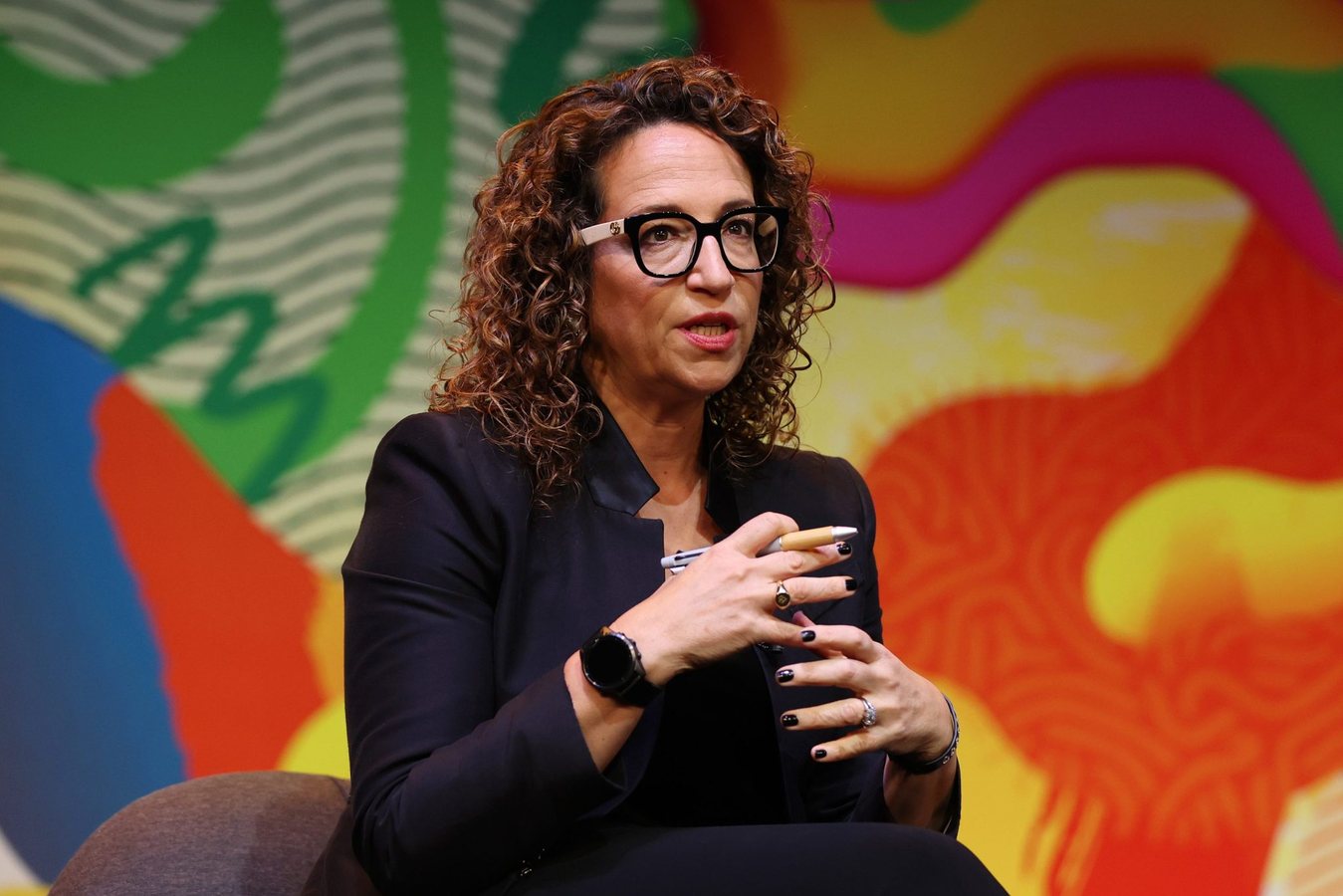
Futurist and NYU Stern professor Amy Webb sees a bust coming for corporate AI spending, and she compares the current cycle to a bad dating app. In a recent interview, Webb, who runs the foresight firm Future Today Strategy Group, said executives are stuck in what she calls “pilot purgatory,” running endless generative AI pilots that produce enormous productivity gains but no clear path to scale. “AI is making production cheap,” she said, “but it’s making everything else in companies much more expensive.”
Webb, who speaks with between 100 and 150 CEOs a year, said the dynamic feels like the fatigue millennials and Gen Zers experienced with dating apps. “The best thing [for a dating app] is to never get married,” she said, drawing a parallel to companies that keep experimenting without ever committing to a full rollout. One client had run 14 or 15 generative AI and agent pilots since the start of the year, using Amazon’s two-pizza rule to keep teams small, yet none of them scaled. “They’ve gone through a lot of pizza,” Webb said.
The problem, she explained, is that pilots often run without integration into legal and IT, so executives restart from zero each time instead of embedding the pilots into their infrastructure. “That costs a lot of money,” she said. The pattern shows up in the data: a Bain & Company survey of 951 global companies published in June found that nearly 40% of companies that measured their AI cost savings landed below 10%, despite having targeted returns of 11% to 20%. Still, 90% of companies surveyed said they’re increasing their AI budget anyway.
Beyond pilot purgatory, Webb pointed to what she calls the “drowning in decks” issue. Executives tell her their teams are experiencing decision paralysis, not from too little information but from being buried in too much analysis. One executive described “insta-decks”: presentations that used to take a week to build now take a day, but the same team is receiving five times as many of them. Webb also noted that AI tools like Claude have “a little bit of a verbosity problem,” producing 10 pages when only one is needed.
Webb said she asks nearly every CEO she meets: if AI freed up 10% of your total capacity tomorrow, where would you deploy it? “So far, I haven’t gotten an answer,” she said. She worries that companies are prioritizing speed over creating new ways of thinking, and that nobody seems to be harvesting the productivity gains. Psychologists have begun studying “cognitive offloading,” and recent research finds that when AI takes over core reasoning tasks, people’s sense of ownership over the resulting work declines.
Venture capitalist Marc Andreessen said in March that large companies are overstaffed by as much as 75% and were using AI as a “silver bullet excuse” for cuts that reflect pandemic-era overhiring. A separate analysis by Oxford Economics found AI-cited layoffs accounted for just 4.5% of total U.S. job losses despite outsized headlines. Webb, who published “The Big Nine” about the tech cold war, stressed that “AI is cheap to get started with,” but the costs start to compound in ways that quickly get “shockingly uncomfortable.”
100