Hurricane Isaias Forces Changes at Alabama-Georgia Showdown in Tuscaloosa
Hurricane Isaias made landfall near the Florida Gulf Coast and disrupted college football, forcing ESPN's College GameDay indoors and delaying tailgating at Alabama's game against Georgia. The storm also prevented President Trump from attending the SEC matchup.
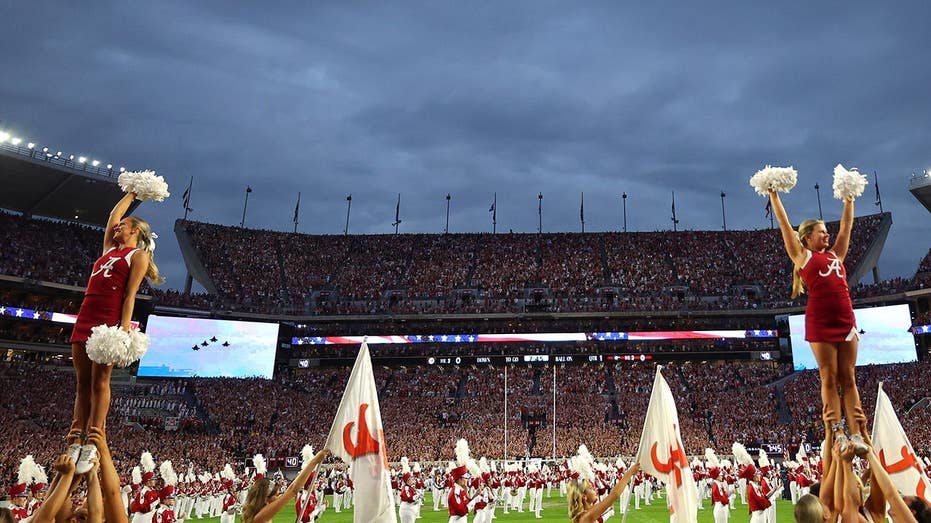
Hurricane Isaias made landfall near the Florida Gulf Coast and has disrupted college football, forcing changes to the highly anticipated SEC showdown between No. 6 Alabama and No. 2 Georgia in Tuscaloosa. The storm, which has since weakened to a post-tropical cyclone, caused ESPN's «College GameDay» to move indoors and led school officials to halt tailgating until noon local time on Saturday.
The storm also prevented President Donald Trump from attending the game, which was expected to draw national attention as both teams entered with 5-0 records. It is the ninth time since the 2018 national championship that both squads are ranked inside the top 10. The game is seen as a tone-setter for the season, with Alabama hoping to make a statement under coach Kalen DeBoer and Georgia's Kirby Smart seeking a regular-season win against the Tide.
While the storm did not stop the game from being played, it could affect on-field conditions. Nearly 24 hours of rain may have turned the grass surface at Saban Field at Bryant-Denny Stadium into a swamp, despite the stadium's advanced draining system. The rain was expected to stop by kickoff, but the aftermath could impact both teams' offensive strategies.
Both Alabama and Georgia rely heavily on their rushing attacks. Georgia averages 198.3 rushing yards per game, ranking 28th nationally, while Alabama is 10 spots below at 186.4 yards per game. The Bulldogs attempt 34.3 rushes per contest, and the Tide average 38.4. If the field remains wet, the passing game—already not a strength for either program—could be further limited. Alabama throws the ball 27.2 times per game, ranking 99th, while Georgia is 105th with 26.3 passes per contest.
The hurricane's impact extended beyond Tuscaloosa. Isaias made landfall as a Category 2 hurricane near Destin, Florida, late Friday with maximum sustained winds of 105 mph. The storm killed at least four people in Florida, according to officials. Three died when trees crashed into their homes, and another was killed by generator fumes. At least five others were hospitalized. More than 670,000 customers were left without power.
Florida Governor Ron DeSantis said no requests for search and rescue assistance had been received, calling it «cautiously, a good sign.» He noted that people appeared to have heeded warnings and taken precautions. «I'd rather be over-prepared, and not have to use them, than not have what you need,» DeSantis said.
The National Hurricane Center reported that Isaias weakened to a post-tropical cyclone early Saturday as it moved across Alabama and into the Tennessee Valley, with maximum sustained winds dropping to near 35 mph. The storm's remnants continued to bring heavy rain and gusty winds to the Southeast.
For Alabama and Georgia, the game proceeded as scheduled, but the unusual circumstances added a layer of unpredictability to a matchup that already carried significant weight in the SEC race. Both teams entered the game undefeated, and the outcome could shape the College Football Playoff picture. The storm's disruption—from the indoor GameDay set to the delayed tailgating—served as a reminder of how weather can intersect with even the most anticipated sporting events.
As the storm moves away, officials in Florida and other affected states are assessing damage and restoring power. The deaths and widespread outages underscore the storm's severity, even as it weakened. For college football fans, the focus remains on the field, where Alabama and Georgia are battling not only each other but also the elements left behind by Isaias.

6