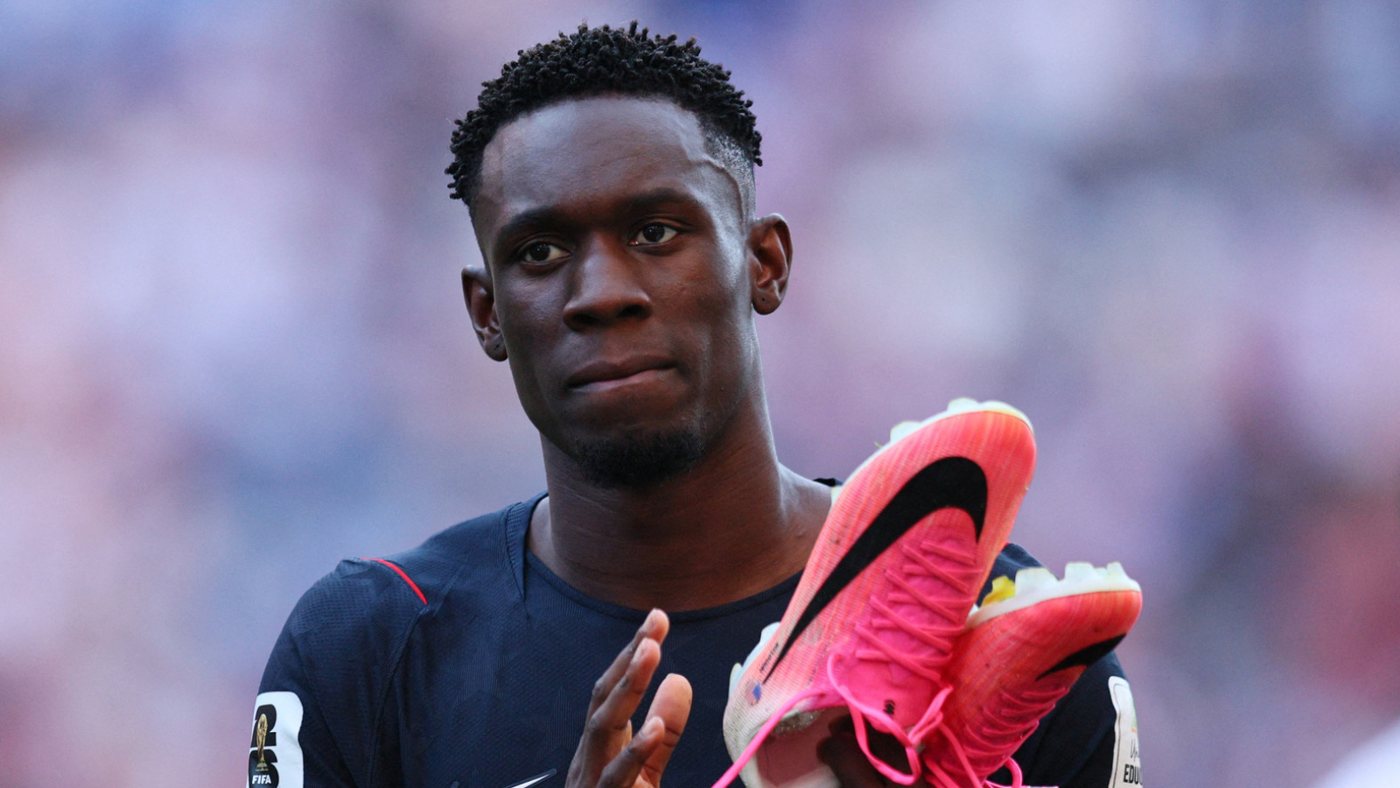
FIFA President Gianni Infantino may still be grappling with the lingering issue surrounding Folarin Balogun, even after the end of the World Cup. The matter, which involves the international eligibility of the young striker, has not faded from the spotlight as some might have assumed. Balogun, a dual-national talent, has been at the center of a tug-of-war between national football associations, raising questions about FIFA's rules on player eligibility and the broader implications for international football.
Balogun, who was born in New York and raised in England, has represented both the United States and England at youth levels. His impressive performances in European club football have made him a coveted asset for national teams. The United States Soccer Federation has been actively pursuing his commitment to the senior national team, while the English Football Association has also expressed interest in securing his services. This situation has placed Infantino and FIFA in a delicate position, as they must navigate the complex regulations governing player nationality switches.
The controversy highlights a broader debate within the football community about the rules that allow players to change national teams under certain conditions. FIFA's statutes permit players to switch national teams if they have not played in a competitive match for their current senior team before turning 21. Balogun, who has yet to make a senior appearance for England, remains eligible to represent the United States. However, the process is not without its complications, as it requires approval from FIFA and the relevant football associations.
Infantino's involvement in the Balogun case underscores the challenges FIFA faces in maintaining consistency and fairness in its eligibility rules. Critics argue that the current system is too lenient and allows players to be swayed by financial incentives or national team prospects, rather than genuine allegiance. Supporters, on the other hand, see it as a way to give players more flexibility and to strengthen national teams in developing football nations.
The Balogun situation is not an isolated incident. Similar cases have emerged in recent years, involving players from various countries who have switched national teams after representing one nation at youth level. These cases have sparked debates about the integrity of international football and the need for clearer guidelines. FIFA has attempted to address these concerns by updating its eligibility rules, but the Balogun case suggests that more work may be needed.
For the United States, securing Balogun's commitment would be a significant boost as the team prepares for future international competitions, including the 2026 World Cup, which the U.S. will co-host with Canada and Mexico. Balogun's skill set and potential make him a valuable addition to any national team, and his decision could have long-term implications for the balance of power in international football.
England, meanwhile, has a deep pool of attacking talent, but losing a player of Balogun's caliber to the United States would still be a notable loss. The English FA has reportedly been in discussions with Balogun and his representatives, hoping to convince him to commit to the Three Lions. However, the allure of being a key player for a rising U.S. team may prove difficult to resist.
Infantino's handling of the Balogun matter will be closely watched by football officials around the world. The outcome could set a precedent for future eligibility cases and influence how national associations approach the recruitment of dual-national players. As the football world moves on from the World Cup, the Balogun saga serves as a reminder that some issues remain unresolved, even after the final whistle has blown.
In the coming months, Balogun is expected to make a decision about his international future. Until then, Infantino and FIFA will continue to face scrutiny over their role in the process. The situation highlights the complexities of modern football, where national boundaries are increasingly blurred, and players have more choices than ever before. For now, the football community waits to see how this story unfolds and what it means for the future of the sport.