Dolores Huerta, co-founder of United Farm Workers, dies at 96
Labor leader Dolores Huerta, who co-founded the United Farm Workers union and coined the rallying cry « Sí, se puede », has died at her home in Bakersfield, California. She was 96.
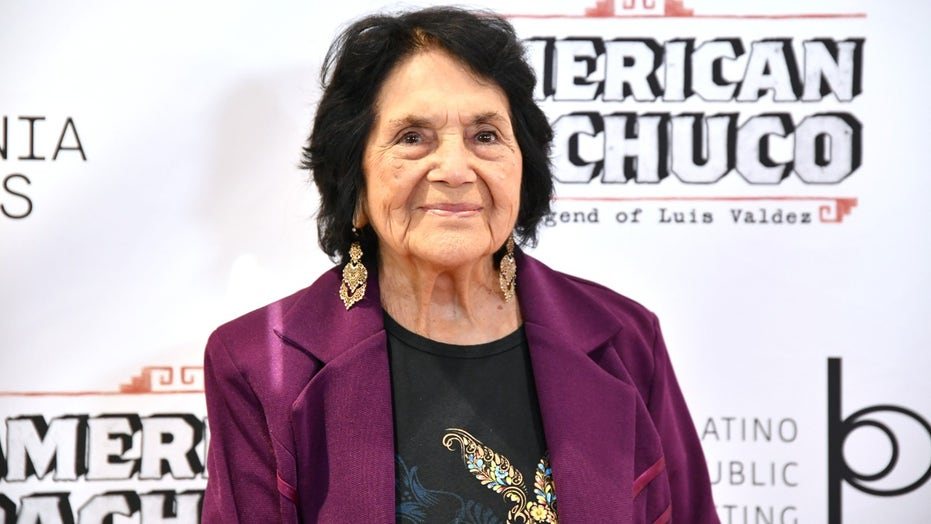
Dolores Huerta, the labor activist who co-founded the United Farm Workers union and spent decades fighting for better conditions for America's agricultural workers, has died at 96. Her family said she died Wednesday at her home in Bakersfield, California, and her foundation said she was surrounded by close family.
Huerta was born in 1930 in Dawson, New Mexico, to a father who was a miner and union activist and later won a seat in the state Legislature. After her parents divorced when she was 3, her mother took her and her brothers to California, where Huerta grew up among Mexican, Filipino, African American, Japanese and Chinese working families. She began her career as an elementary school teacher before helping establish a local chapter of a grassroots organization that challenged segregation and police brutality. Her focus later turned to organizing farmworkers, and in 1962 she and César Chavez built the National Farm Workers Association. Four years later, that group merged with another organization to form the United Farm Workers. Six decades on, the union remains the nation's longest-standing labor union representing agricultural workers.
Huerta became known for her three-word slogan, « Sí, se puede », which translates to « Yes, it can be done ». It reflected her belief that people who take action can affect political change. She was also a leader in the Delano grape strike, which ran from September 1965 to July 1970. Thousands of farmworkers walked off California's grape fields in 1965, and Huerta, alongside a coalition of Mexican and Filipino farmhands, accused grape growers in Delano of exploiting workers by underpaying them. She helped expand the strike into a nationwide consumer boycott of grapes. The strike ended in the summer of 1970 after the union signed collective bargaining agreements covering 10,000 workers.
Beyond the fields, Huerta was a prominent civil rights and women's rights advocate, working against discrimination and for gender equality in a labor movement that was dominated by men at the time. She remained active well into her 90s, marching in protests and speaking across the country about race, poverty, LGBTQ+ and women's rights through her Bakersfield-based foundation. Her decades of work earned her numerous awards, including the Presidential Medal of Freedom, the nation's highest civilian honor. In 2012, President Barack Obama presented her with the medal, praised her activism and joked that he had borrowed her slogan for his 2008 presidential campaign.
Huerta's death comes months after she publicly revealed that she had been sexually abused in the 1960s by César Chavez, the union's co-founder, a secret she said she had kept for about 60 years. In a 2026 interview with Latino USA, she said she had stayed silent because she feared coming forward would compromise her life's work and undo progress made for workers, calling it « my personal pain » and « my cross to bear ». Her later life partner was Richard Chavez, César's brother, and the couple had four children together. Huerta also had seven children from two earlier marriages.
In a statement shared by her foundation, her family said they would follow up on plans to recognize and celebrate her life and legacy. The story is developing, and further details about memorial plans have not yet been announced.
9