WNBA All-Star charity supports Chicago group that says it is ‘moving beyond the binary of girl’
The WNBA's 30th season All-Star charity initiative includes Girls in the Game, a Chicago organization that states on its website it welcomes 'gender-expansive participants' and is moving beyond the binary definition of 'girl,' raising questions about eligibility for girls' sports programs.
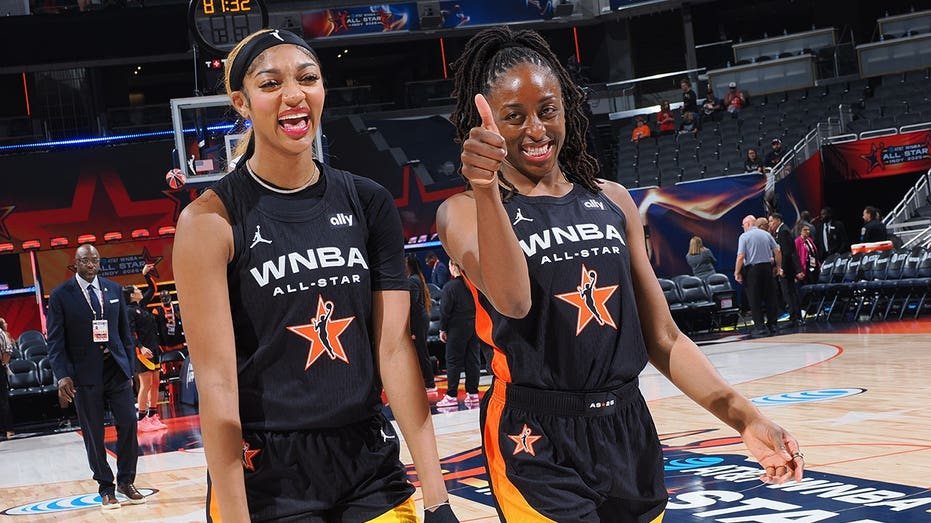
The WNBA is marking its milestone 30th season with a new All-Star charity initiative that the league says is designed to help keep girls involved in sports. However, one of the Chicago-area organizations selected to benefit from the league’s $100,000 All-Star prize pool states on its own website that it is “moving beyond the binary of ‘girl’” and welcomes “gender-expansive participants regardless of gender identity or expression.”
The organization is Girls in the Game, the charity affiliated with “Team Spoon” in the 2026 WNBA All-Star Game. According to the league’s July 15 announcement, the WNBA All-Star teams will compete for a $100,000 prize pool benefiting two Chicago-area organizations “dedicated to keeping girls involved in sports.” The winning team’s organization receives $70,000, while the runner-up’s organization gets $30,000. Team Coop is playing for Angels Athletics, while Team Spoon is supporting Girls in the Game.
The WNBA described Girls in the Game as an organization that “partners with schools, parks, and community centers in Chicago to offer sports, health, and leadership programs.” That description appears straightforward until one examines the organization’s website more closely. Under the heading “We stand for inclusivity,” Girls in the Game says: “Moving beyond the binary of ‘girl’, we welcome LGBTQ+ youth and gender-expansive participants regardless of gender identity or expression.”
Girls in the Game is not a generic youth charity that happens to work with girls. The organization repeatedly frames its mission around girls, girls’ sports, and girls-only spaces. Its 2025 annual report states that the organization served 3,059 participants in FY25. The report says its Chicago After School program alone served 921 participants, where girls “play sports, learn about healthy lifestyle choices, and improve their leadership skills in an all-girl setting.” The report also says the program provides a “safe, non-competitive environment for girls to learn and be physically active.”
The organization’s public-facing program materials do not clearly state whether participation is based on biological sex, gender identity, or another eligibility standard. Girls in the Game’s own LGBTQ resource pages also point users toward gender-identity-related services. One page lists Howard Brown as a resource that includes “gender-affirming health care” and “trans and non-binary care,” along with a support group intended for “BIPOC, trans, non-conforming, questioning individuals” and the Trans Lifeline hotline. Another LGBTQ resource page lists “Gender Affirming clothing, makeup, community resources,” along with God’s Closet, which it describes as offering “clothes and tailoring for gender-nonconforming/trans people.”
OutKick and Fox News Digital reached out to Girls in the Game and asked whether biological males who identify as girls, transgender girls, nonbinary, or gender-expansive individuals are eligible to participate in its girl-centered sports programming. They also asked whether any Girls in the Game programs operate as girls-only spaces, whether those programs are limited based on biological sex or gender identity, whether parents are told before enrollment that the organization is “moving beyond the binary of ‘girl,’” and whether the WNBA All-Star money would be unrestricted or directed toward a specific program. Girls in the Game did not respond to multiple requests for comment.
OutKick and Fox News Digital also contacted Angels Athletics, the organization affiliated with Team Coop, to ask whether its girls basketball and girls sports programs are limited to biological girls or open based on gender identity. Angels Athletics also did not respond to multiple requests for comment.
Then there is the WNBA itself. OutKick and Fox News Digital asked the league whether it was aware of Girls in the Game’s “moving beyond the binary of ‘girl’” language before selecting the organization for the All-Star initiative. They also asked whether the league believes an organization that says it is moving beyond the binary definition of “girl” fits an initiative described as keeping girls involved in sports, whether the WNBA asked Girls in the Game about eligibility for biological males who identify as girls or gender-expansive participants, and whether the WNBA supports biological males participating in girls’ youth sports programming if they identify as girls. The WNBA did not respond to the request for comment.
Girls in the Game might argue that its programming is non-competitive or centered on youth development rather than formal leagues. But that would not answer the important question of who is actually eligible to participate in programs that are publicly described as being for girls. The lack of response from the organization, the other charity, and the league itself leaves the matter unresolved as the WNBA prepares to celebrate its 30th season with this charitable initiative.
93