
Ukrainian Orthodox leader says church unity must remain centered on Christ
Metropolitan Epiphanius used an August sermon to argue that Christian unity depends on Christ, received teaching and discernment rather than loyalty to personalities.
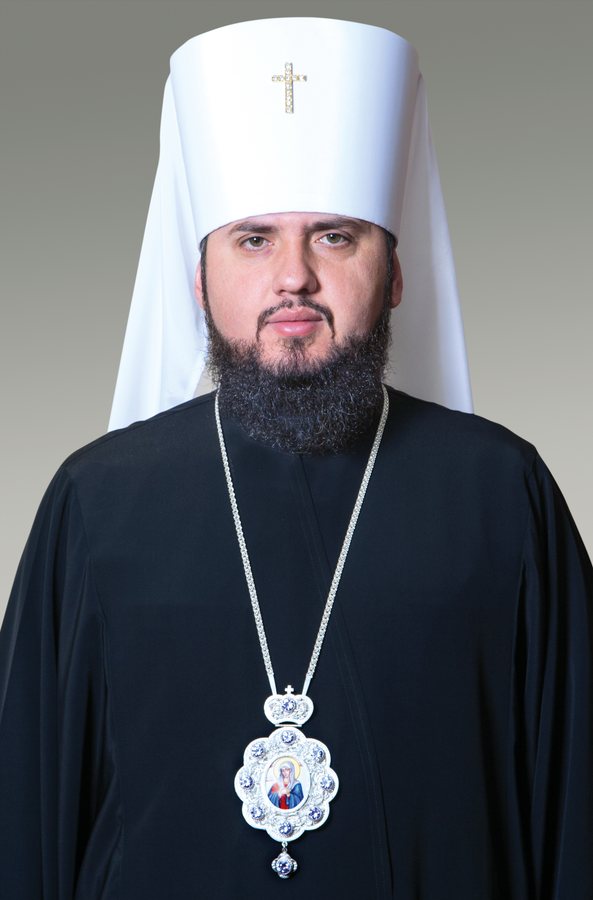
Metropolitan Epiphanius of Kyiv and All Ukraine has used a sermon for the tenth Sunday after Pentecost to urge believers to hold firmly to the unity of the Church in Christ, listen to the guidance of its fathers and teachers, and avoid temptation. The occasion fell on August 9 in the 2026 Orthodox liturgical cycle, following Pentecost on May 31.
The line may sound purely devotional, but it addresses a recognizable problem in any community: what happens when loyalty to a person becomes stronger than loyalty to the purpose that person is supposed to serve. Epiphanius places the answer outside the individual leader. For him, the center of Christian unity is Christ, while teachers are valuable insofar as they transmit rather than replace that center.
He made the same point explicitly on June 29, the feast of the apostles Peter and Paul. The two apostles are among Christianity’s most influential figures, yet Epiphanius said their joint commemoration is evidence that the Church is not Peter’s or Paul’s. It is Christ’s. The lesson depends on difference: Peter and Paul had distinct histories, temperaments and missions, but their differences did not require separate spiritual ownership.
That distinction matters in the age of personal brands. Religious life is not immune to the dynamics that shape politics, entertainment and online culture. Charismatic speakers can build intense followings, short clips can turn a complicated theological claim into a slogan, and communities can divide over personalities faster than they can explain the substance of the dispute. Epiphanius’s formulation pushes in the opposite direction: the leader is not the endpoint.
The second part of the sermon — listening to the fathers and teachers of the Church — explains how authority is supposed to be tested. In Orthodox Christianity, the Church Fathers are not simply famous writers from the past. Their work has been received over generations as part of a broader tradition of interpreting Scripture, worship and doctrine. Tradition therefore functions less like nostalgia and more like a long memory against which new claims can be measured.
Epiphanius emphasized that structure in March, during a sermon for the Triumph of Orthodoxy. He connected Christian life with what he described as true church teaching, apostolic continuity and participation in the sacraments. The argument is that faith is not reinvented by each generation from whatever voices happen to be most persuasive at the moment.
The third part of the August message is the warning against temptation. In common speech, temptation often means an attractive but unwise choice. Christian usage is broader. Temptation can include pride, resentment, the desire to win a dispute at any cost, or the comfort of believing a claim simply because it confirms what someone already wants to think. A community can formally defend unity while feeding the habits that make unity impossible.
Epiphanius addressed the positive side of that problem in April. He described the Church as a place of spiritual unity among believers and with Christ, and said that this communion allows personal faith to grow. That is important because it rejects a false choice between individual maturity and community belonging. The community is not supposed to erase the person; it is supposed to provide a setting in which the person can learn, be corrected and become more responsible.
The institutional context is also relevant. In July the Orthodox Church of Ukraine held an expanded Bishops’ Council under Epiphanius’s chairmanship. Councils, synods and episcopal structures are formal expressions of church order, but they cannot create trust by themselves. Rules may settle authority, yet they do not prevent pride, fear or factionalism from entering the relationships those rules are meant to organize.
For an American audience, the sermon offers a window into a wider question about religious authority. Many U.S. readers encounter faith through a highly competitive media environment in which churches, podcasts, influencers and digital ministries all speak at once. Epiphanius’s model is intentionally slower. It asks where a teaching comes from, how it relates to a received tradition, and what kind of community it produces.
That does not mean every inherited answer should be repeated without thought. Tradition, in the Orthodox understanding reflected here, is itself communal and interpretive. It involves Scripture, worship, councils and the accumulated experience of teachers whose authority has been tested rather than created by a single viral moment. The point is not to stop asking questions, but to ask them inside a framework larger than one person’s certainty.
Pentecost gives the sermon an additional symbolic frame. The feast is understood as the birth of the New Testament Church. Ten Sundays later, the focus on unity asks what allows a community born in a moment of spiritual intensity to endure through disagreement, leadership changes and cultural pressure. Epiphanius’s answer is a hierarchy of loyalties: Christ before personalities, received teaching before novelty for novelty’s sake, and discernment before impulse.
The message is demanding because it puts responsibility on both leaders and followers. Leaders cannot claim ownership of the Church, and followers cannot outsource conscience to a leader. Teachers deserve attention, but their authority exists within a tradition. Strong feelings matter, but they require examination. In that combination, the sermon becomes more than a call for harmony. It is a proposal for how a religious community can resist becoming a collection of competing personal loyalties.
67