Smithsonian Director Described History as a Tool of Social Justice in Resurfaced Video
A resurfaced video shows Smithsonian director Anthea Hartig telling UCLA students that history is a tool of social justice, after she defended the institution as nonpartisan before Congress.
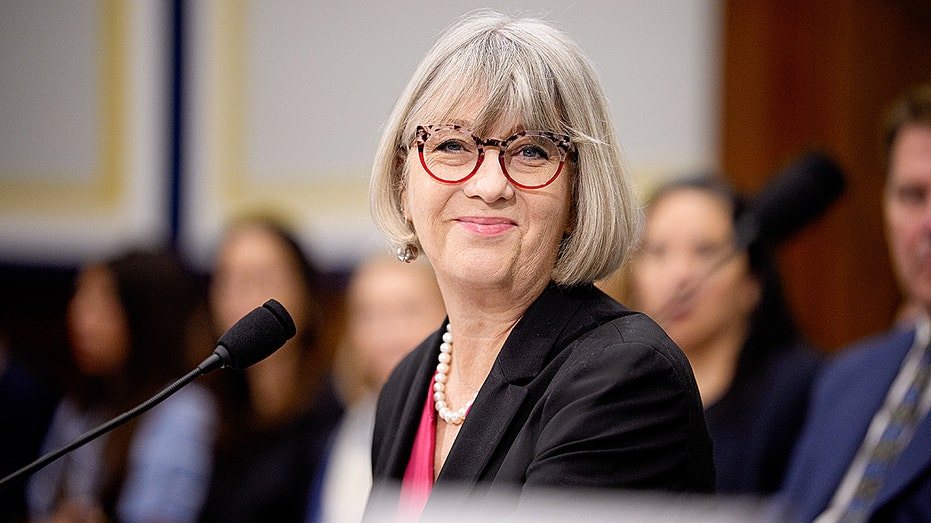
A newly circulated video shows the director of the National Museum of American History telling university students that she views history as a tool of social justice, remarks that have added to political pressure on the Smithsonian after a series of congressional hearings.
Anthea Hartig, who leads the National Museum of American History, made the comments during a presentation to students at the University of California, Los Angeles, in February 2025. The clip resurfaced after Hartig testified before Congress in July, where she defended the commitment of the institution to scholarship, accuracy and nonpartisanship. In the recorded talk, Hartig described «history as a practice» as, for her, a «prime tool of social justice.» She also said the museum was taking an «equity-based, justice forward, community driven and necessarily humble approach» to public history and public service.
During her testimony, Hartig said the work of the museum was governed by Smithsonian standards of scholarship, accuracy, independence and nonpartisanship. She told lawmakers that the museum does not take sides in the political debates of the nation and instead preserves and documents evidence of American life so that the public can encounter the past and draw their own conclusions. The newly surfaced presentation, however, shows her discussing history in terms directly tied to social and racial justice. Hartig told students that redress in the form of reparation should go beyond acknowledging wrongdoing, adding that it should leverage responsibility and consider acts of correction as the museum pursues what she called restorative justice through history.
The February presentation included a land acknowledgement and a slide showing an American flag that appeared to have been altered with the words «Defund the Police.» Hartig identified the image as a photograph from a Black Lives Matter protest in Washington, D.C., in 2020. Another slide showed a protester holding a sign that read «America loving you is complicated.» She spoke approvingly of protest signs displayed outside the White House during the summer of 2020, calling them «phenomenal, ephemeral statements» that expressed a heartfelt and poignant message.
Hartig also discussed a «bold new vision» for the museum to become the «most accessible, inclusive, relevant, and sustainable public history institution in the country.» She said the goal was to serve an audience reflecting the full racial, class, gender, ethnic and geographic diversity of the United States. She noted that the museum opened in 1964 as a Cold War institution intended to demonstrate American achievement and technological leadership, adding: «We clearly have moved away from that.»
She highlighted a Smithsonian-wide collecting effort around Black Lives Matter, saying the museum wanted to document and preserve objects related to the movement since 2012. Hartig praised Tsuru for Solidarity, an organization described on its website as a nonviolent direct action project of Japanese American social justice advocates working to end immigrant detention and support communities targeted by immigration policies. The group says it stands on the moral authority of Japanese Americans who endured U.S. concentration camps during World War II and uses the motto «Stop Repeating History!»
Hartig also said the museum was pursuing a «proactive multilingual strategy to support language justice.» She explained that everyone should be able to communicate in the language in which they feel most comfortable, and she said the policy, in place since fall 2019, required all exhibitions, signage and digital projects to be at least bilingual in English and Spanish, with additional languages depending on the project and the communities involved.
The resurfaced remarks come amid a broader political fight over how the Smithsonian presents American history. The July hearings focused on allegations of what critics described as «ideological capture» at the institution, and the White House has also intervened in disputes over museum content. Hartig defended the record of the museum before lawmakers, and the resurfaced video has become part of the continuing national debate over the role of history and museums in public life.