Mormon Leader Calls Prediction Markets Gambling, Putting Church at Odds With Trump Administration
D. Todd Christofferson, a top leader of The Church of Jesus Christ of Latter-day Saints, warned that the rise of online prediction markets and sports betting is fostering greed and harming young people, drawing a sharp contrast with the Trump administration's position that such platforms are not gambling.
A top leader of The Church of Jesus Christ of Latter-day Saints warned that the rapid expansion of online prediction markets and sports betting is fueling greed and harming young people, placing the conservative faith in direct conflict with the Trump administration over how such platforms should be regulated.
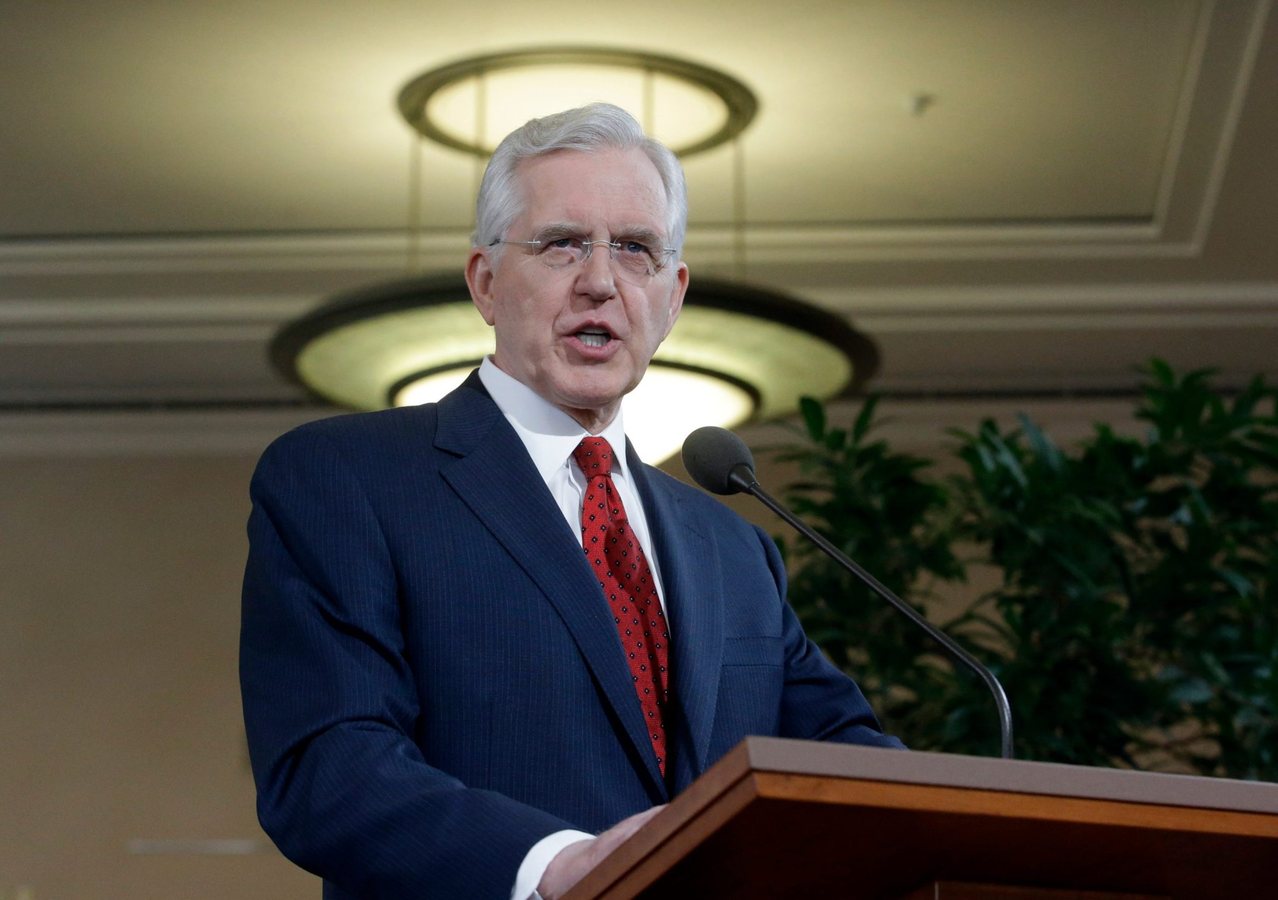
D. Todd Christofferson, one of the three highest-ranking leaders of the church widely known as the Mormon church, told the faith's twice-annual general conference that rampant betting among teenagers and young adults is stealing time from their studies and relationships as smartphones make gambling possible anywhere. «For us as Latter-day Saints, overarching all other concerns is the fact that gambling is morally wrong. Gambling is built on the desire to obtain something for nothing,» Christofferson said.
His declaration that prediction markets constitute gambling puts the church at odds with President Donald Trump's administration, which has argued that platforms such as Kalshi and Polymarket do not constitute gambling and therefore should not be subjected to restrictions in states such as Utah, where the church is headquartered. Utah has been at the forefront of the legal dispute over who regulates the markets and whether they should be considered finance or gambling. A federal judge ruled in August that Utah officials can enforce the state's strict anti-gambling laws on prediction markets. Legislation enacted this year made Utah's gambling laws stricter and amended some language so that they would almost certainly apply to prediction markets.
Prediction markets allow wagers on a wide range of outcomes, from whether it will rain in Los Angeles to whether the United States will go to war. Christofferson noted the breadth of such markets with a pointed example. «Or even, if you can imagine, the timing of the Second Coming,» he said. «Where do you go to collect on that bet?»
Opposition to gambling is common among religious organizations. The United Methodist Church refers to it as «a menace to society.» The Southern Baptist Convention, the largest Protestant denomination in America, has condemned gambling several times and in 2025 declared sports gambling inconsistent with biblical principle. Gambling is forbidden in Islam and considered a vice among Hindus. In the Catholic Church, gambling is not in itself a sin but is considered potentially problematic.
For more than a century, Utah kept gambling almost entirely out of the state. There are no casinos, no lotteries and no racetracks that allow bets. The prohibition is rooted in the ideals of members of the Latter-day Saints church, who view gambling as a path to selfishness and addiction.
«The rise of predictive markets, and the legalization of sports gambling, this is just really taking off all across the country,» said Matthew Bowman, a professor of religion and history at Claremont Graduate University in California. «And a lot of institutions — religious, state and otherwise — are grappling with this problem.»
The speech comes as the church has been wading into political issues under President Dallin Oaks, a former Utah Supreme Court justice who became the faith's top leader last October. Church leaders this year have opposed state ballot measures that would establish rights to abortion in Idaho and Nevada. Yet the institution's approach to political issues — using public statements and behind-the-scenes lobbying to convey its message — has become more calculated in recent years, Bowman said. The shift followed public blowback to the church's stance against California's Proposition 8, a 2008 ballot measure that sought to ban gay marriage. In that case, Bowman said, church leaders encouraged members to get directly involved.
Christofferson's remarks underscore a growing tension between religious institutions and a gambling industry that has expanded rapidly across the United States in recent years, driven by online platforms and shifting legal landscapes. For the Latter-day Saints, the concern extends beyond doctrine to the practical effects on young members, whose attention and resources are increasingly drawn to betting apps accessible on their phones.
The church's position also highlights a broader national debate over whether prediction markets should be treated as financial instruments or as a form of wagering subject to state gambling laws. That question remains unresolved in courts and legislatures across the country, even as the platforms continue to attract users and investment.
8