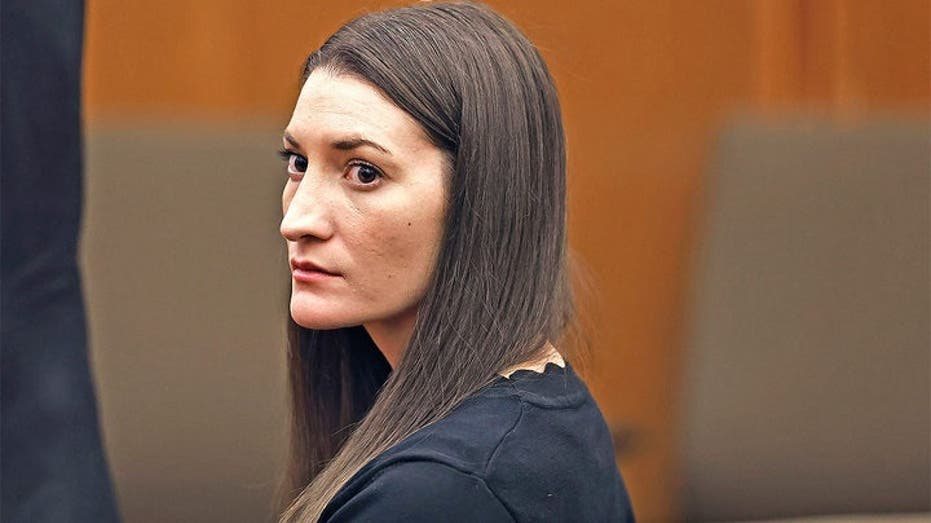
The husband of Lindsay Clancy, the Massachusetts mother charged with murdering her three young children, is expected to testify on her behalf when her trial begins this week. Patrick Clancy is listed among more than 200 potential witnesses who could be called to the stand in Plymouth Superior Court, where jury selection is scheduled to start Monday.
Lindsay Clancy, a 35-year-old former nurse at Massachusetts General Hospital, faces charges in the deaths of her children: Cora, 5, Dawson, 3, and Callan, 8 months. The children were found dead in their Duxbury home on January 24, 2023. Prosecutors allege Clancy strangled them before attempting suicide by overdosing on medications and cutting her wrists.
Patrick Clancy and his wife have consistently maintained that the doctors who treated her misdiagnosed her condition and overmedicated her, causing her to experience auditory hallucinations that commanded her to kill the children. This claim is central to a civil lawsuit filed by Lindsay Clancy against a network of psychiatric providers, alleging medical malpractice and negligence.
According to an amended complaint filed in Norfolk Superior Court, Clancy alleges that the providers failed to properly diagnose what she says was bipolar disorder with postpartum onset. Instead, they prescribed a changing regimen of medications that allegedly worsened her condition. The lawsuit claims that Clancy’s reported «intrusive thoughts» were actually auditory hallucinations that should have been recognized as a danger to herself and her children.
«Lindsay Clancy did everything a mother in her situation could do,» the lawsuit states, asserting that she sought treatment, went to emergency rooms, contacted crisis services, admitted herself to hospitals, and repeatedly reported her worsening symptoms. The filing portrays Clancy as a woman unraveling in the months before the killings, despite her efforts to get help.
The complaint details a timeline of Clancy’s mental health decline. After giving birth to Callan in May 2022, she began showing signs of hypomania. By about 12 weeks postpartum, her condition shifted into severe anxiety, depression, exhaustion, and insomnia. She was reportedly sleeping only a few hours a night and struggling with basic daily activities.
Clancy first sought psychiatric care in September 2022 and was prescribed Zoloft. After the dose was increased, she allegedly went 48 hours without sleep, developed racing thoughts, and suffered worsening anxiety. The lawsuit alleges that these symptoms should have triggered concern for antidepressant-induced activation and possible bipolar disorder, but instead, Clancy was moved through a series of medications — including Prozac, Ambien, Remeron, Klonopin, Seroquel, Trazodone, Valium, and Amitriptyline — without proper coordination among her providers.
In late November 2022, after taking Remeron, Clancy allegedly became dissociated, disoriented, and unsure what was real. Days later, after starting Seroquel, she developed suicidal ideation and began hearing a voice telling her she would not be the same and wanted to die. Her husband contacted nurse practitioner Rebecca Jollotta’s office on December 15 to report that his wife had suffered a «devastating week» and was hearing voices all day.
The lawsuit also alleges that Clancy told family members she had thoughts of harming the children. At the same time, she believed people could hear her thoughts and feared she would be locked in a hospital and lose her children. On December 20, she went to Massachusetts General Hospital, then entered a partial hospitalization program at Women & Infants Hospital in Rhode Island. The complaint alleges that Dr. Zobeida Diaz concluded Clancy did not have postpartum depression and rejected bipolar disorder despite severe depression and anxiety scores.
Days later, on New Year’s Eve, Clancy admitted herself to McLean Hospital. She was placed on a locked unit with suicide checks but did not see a doctor until January 3 because of the holiday weekend. She was discharged on January 5 after a five-day stay. Back in outpatient care, her condition continued to deteriorate. On January 16, she reported hallucinations saying, «You should harm the children» and «You should kill yourself.» Tufts then prescribed Amitriptyline, another antidepressant.
On January 23, Dr. Jennifer Tufts increased the Amitriptyline dose. That night, Clancy did not sleep. The next day, she was severely depressed and experiencing nonstop suicidal hallucinations. After her husband left to pick up takeout, a commanding voice allegedly told her it was her «last chance» and ordered her to kill the children so she could kill herself. The lawsuit claims Clancy then entered a dissociative, dream-like state before strangling the children and attempting suicide.
The trial is expected to focus on Clancy’s mental state at the time of the killings. Her defense has signaled an insanity plea, arguing that she was not criminally responsible due to severe postpartum psychosis. The case has drawn widespread attention, highlighting the challenges of diagnosing and treating postpartum mental health disorders.