Denver Jewish Leaders Warn of Antisemitism Risk After Melat Kiros Primary Victory
Denver Jewish leaders say Democratic Socialist Melat Kiros's primary victory over Representative Diana DeGette has fueled fears of antisemitic violence, citing her comments on the Oct. 7 attacks and the Boulder firebombing.
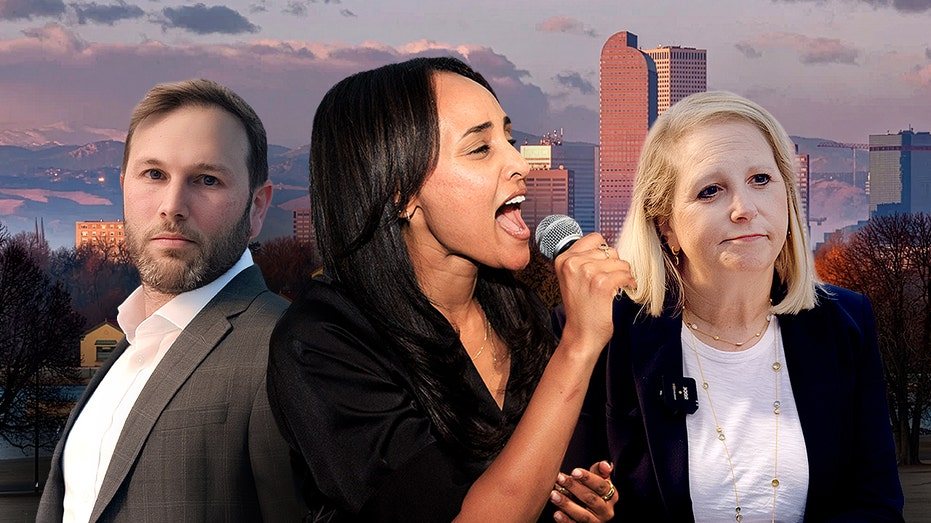
Denver's Jewish community is on high alert after Democratic Socialist Melat Kiros defeated 15-term Representative Diana DeGette in Colorado's 1st Congressional District primary in June, with local leaders warning that her rhetoric on Israel has intensified antisemitic hostility and made everyday life less safe. The 29-year-old candidate's upset win was celebrated by progressive groups, but Jewish leaders say it has left many residents anxious about what comes next.
Kiros has drawn criticism for a series of statements about the Middle East and about antisemitism in the United States. She has described the Oct. 7 attacks as «inevitable», accused Israel of genocide and apartheid, and refused to label the deadly firebombing of a pro-Israel gathering in Boulder as an antisemitic attack. Leaders in Denver's Jewish community say the language has contributed to a climate of fear.
Rabbi Menachem Lehrfield, director of the Jewish Outreach Initiative in Denver, said the danger felt immediate. Just one day after he published an op-ed explaining that wearing a yarmulke on Denver streets now feels dangerous, he said someone shouted «dirty Jew» at him from a passing car outside his office. «I don't know what's going to happen next time», Lehrfield said. «I don't know if next time, instead of hurling vile words, they'll be hurling an explosive like the person who killed Karen Diamond in Boulder.» He added that he fears for his family and community, and that many of his neighbors and voters in the district supported Kiros.
Lehrfield's reference to Karen Diamond points to an attack that still haunts the region. In June 2025, 82-year-old Karen Diamond was killed and more than a dozen people were injured when a man threw Molotov cocktails into a peaceful pro-Israel gathering on Boulder's Pearl Street Mall. Prosecutors charged 45-year-old Mohamed Sabry Soliman with murder and hate crimes, saying he shouted «Free Palestine» and spent a year planning to «kill all Zionist people».
Kiros was asked about that attack in a televised interview. She condemned the violence but would not call it antisemitic, saying she did not know «what was in the heart of the perpetrator». She later described the attack as horrific and acknowledged that it targeted Jewish people who were peacefully protesting, but she blamed Israel for rising antisemitism in the United States. «The actions of Israel are putting Jewish people in great danger», she said, while promising to prioritize combating hate and antisemitism if elected.
For some Jewish advocates, that response deepened the concern. Brandon Rattiner, senior director of the Jewish Community Relations Council, said Kiros's refusal to characterize the Boulder attack as antisemitic was frustrating because a judge had already determined that it was. «A Jewish person was killed, over a dozen were hurt, and it was one of the biggest and most prominent antisemitic attacks on Jews throughout the world», he said. Rattiner met with Kiros before the primary and thought the conversation went well, but said he felt betrayed when she appeared on anti-Israel podcaster Hasan Piker's livestream two weeks later and took positions contrary to their discussion. «I had asked for nuance and she spoke in absolutist positions», he said. «I had asked for empathy and compassion, and she seemed to only allow that for one side of the conflict.»
Kiros, a former attorney who became a doctoral student and barista, built her campaign around universal healthcare, housing reform, and universal child and elder care. Her positions on Israel became a polarizing flashpoint during the race. National progressives have framed her victory as evidence that voters want bolder policies, but local Jewish leaders say the normalization of extreme language has real consequences for safety in Denver.
Susan Rona, regional director of the Anti-Defamation League, said political rhetoric plays a direct role in violence against Jewish people. «When political leaders refuse to name something as a targeted antisemitic attack, it creates some distrust of leadership and causes additional fear because it minimizes and causes dehumanization of Jews, which leads to violence», Rona said. The ADL's latest report tallied 167 antisemitic incidents in Colorado in 2025, the third-highest number since the organization began tracking such incidents in 1979.