
Can AI ease women’s caregiving mental load? Report sees $330 billion potential
A new PwC analysis estimates that AI tools designed to manage family logistics and caregiving could create $330 billion in socioeconomic value. But researchers warn that technology alone may deepen women’s mental load by raising expectations for intensive caregiving.
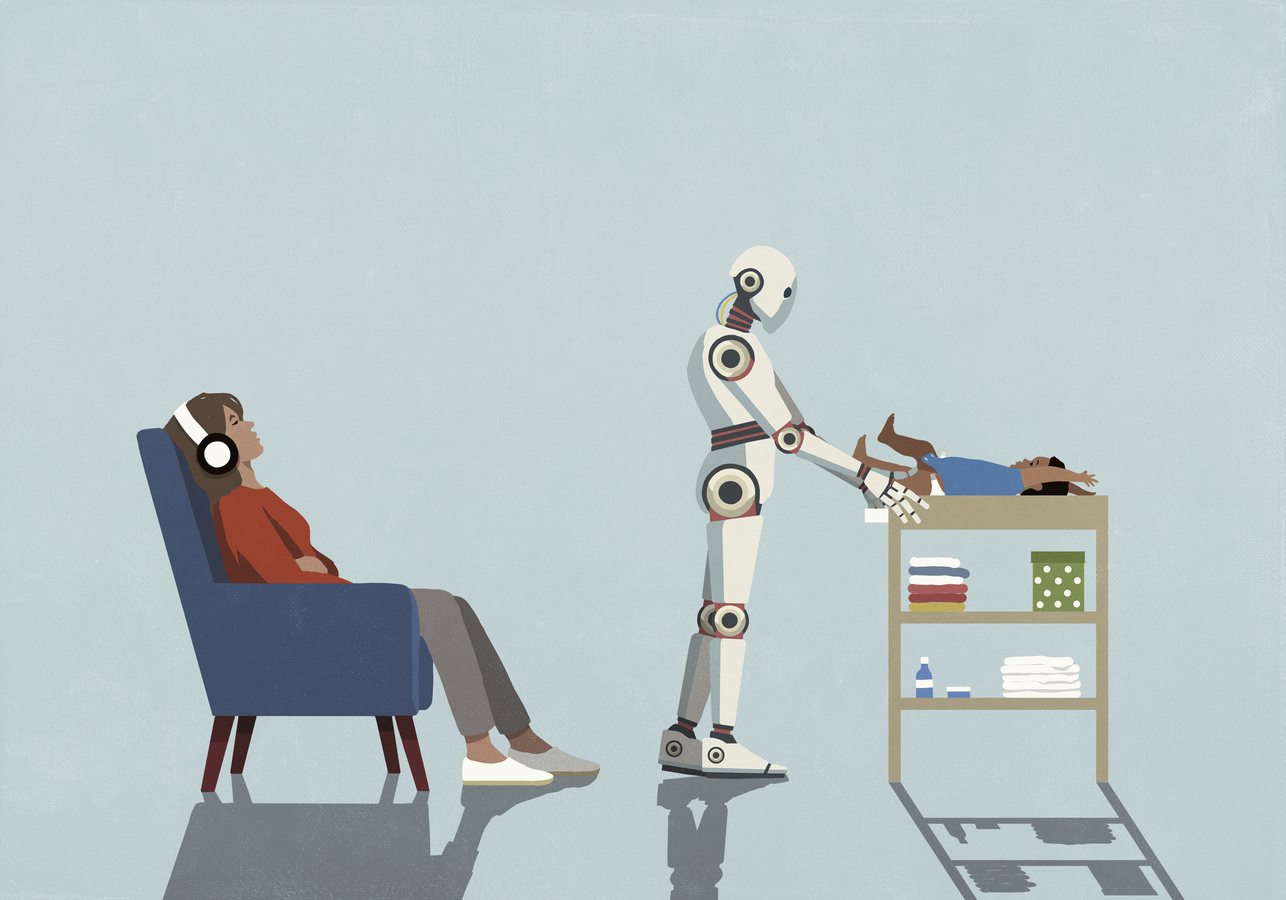
AI-powered tools that help families manage school messages, track an elderly parent’s medications, and smooth out daily household logistics are being promoted as a possible answer to the «mental load» that falls disproportionately on women. A new analysis from the consulting firm PwC estimates that such «care AI» technologies could unlock $330 billion in socioeconomic value by reducing friction in everyday life and easing the cognitive burden on caregivers, even at an assumed adoption rate of just 40 percent.
The report counts gains from time savings as well as from lower stress and improved well-being once caregivers no longer have to hold every family detail in their heads. It is the latest sign of growing interest in whether artificial intelligence, already disrupting the workplace, can also disrupt gender inequality at home.
The need is clear. Studies have consistently found that women do significantly more unpaid household work than men, and the gap is even wider for the invisible cognitive labor involved in planning, anticipating, troubleshooting, worrying, and remembering. Mothers who take on a disproportionate share of that mental load report higher rates of depression, stress, and burnout. They are also more likely to describe their romantic relationships as lower quality and to arrive at work already exhausted. An AARP survey found that four in 10 caregivers of adults say they rarely or never feel relaxed.
This unpaid work has long gone unrecognized. Tasks such as cooking, scheduling, and coordinating family logistics are typically excluded from measures of gross domestic product. The new PwC analysis, however, puts a dollar figure on what happens when technology reduces that invisible load: more time, less worry, and better health for the people who carry it.
Optimists point to a range of possible benefits. An AI personal assistant could summarize messages from a child’s school, prioritize action items, and remind parents about important dates. An AI agent could track medication schedules, flag warning signs in an elderly relative’s condition, and draft notes to doctors. Wearable monitors could alert caregivers to potential problems before they become emergencies. The PwC analysis is not alone in projecting large gains. An analysis of Japan and the United Kingdom estimated that automation could reduce time spent on unpaid work by 50 to 60 percent, cutting women’s domestic workload by about three hours a day and allowing 9.3 percent of working-age women in Japan and 5.8 percent in the U.K. to take up paid jobs. A separate survey by a provider of personal safety and connected-care technology found that almost eight in 10 caregivers would welcome or try AI that predicts health issues before an emergency occurs.
Yet historians and technology scholars caution that innovation has rarely delivered women’s liberation on its own. In her 1985 book «More Work for Mother,» historian Ruth Schwartz Cowan showed how so-called «labor-saving» devices such as washing machines and vacuum cleaners actually increased women’s workload by raising standards of cleanliness and expanding domestic responsibilities. Technology, in this view, is layered over existing cultural beliefs and social relations, so it tends to reinforce rather than fix social problems.
Digital life has already added new demands. Women often take the lead on family communications and manage children’s use of screens and social media, extending the uneven division of labor into the online realm. Always-on technology has also created a relentless form of caretaking, making many women feel they are never truly off the clock.
Care AI also arrives at a moment when parenting standards are becoming more demanding. The cultural dominance of intensive mothering — the expectation that mothers are entirely responsible for their children’s well-being and success — has raised the stakes. Research suggests mothers hold higher standards for good parenting than fathers but judge themselves more harshly and worry more about falling short. The result is a bitter irony: many women do more than their own mothers did yet still feel they are not measuring up.
To ensure the benefits of care AI are shared, experts argue, its development must be paired with a conscious effort to resist even more intensive care standards. If a «frictionless» family life becomes the new normal, the downtime or peace of mind these tools promise could be consumed by datafication and an endless quest for optimization. The technology may offer a lifeline for families stretched by a care crisis, but it is unlikely to be the engine of the gender revolution at home on its own.