Trump’s push to reinstate Nvidia CEO Huang gives Democrats a 2028 target
President Donald Trump’s intervention that returned Jensen Huang to Nvidia’s top job has sharpened Democratic criticism of big tech influence, corruption and national security risks heading into the 2028 race.
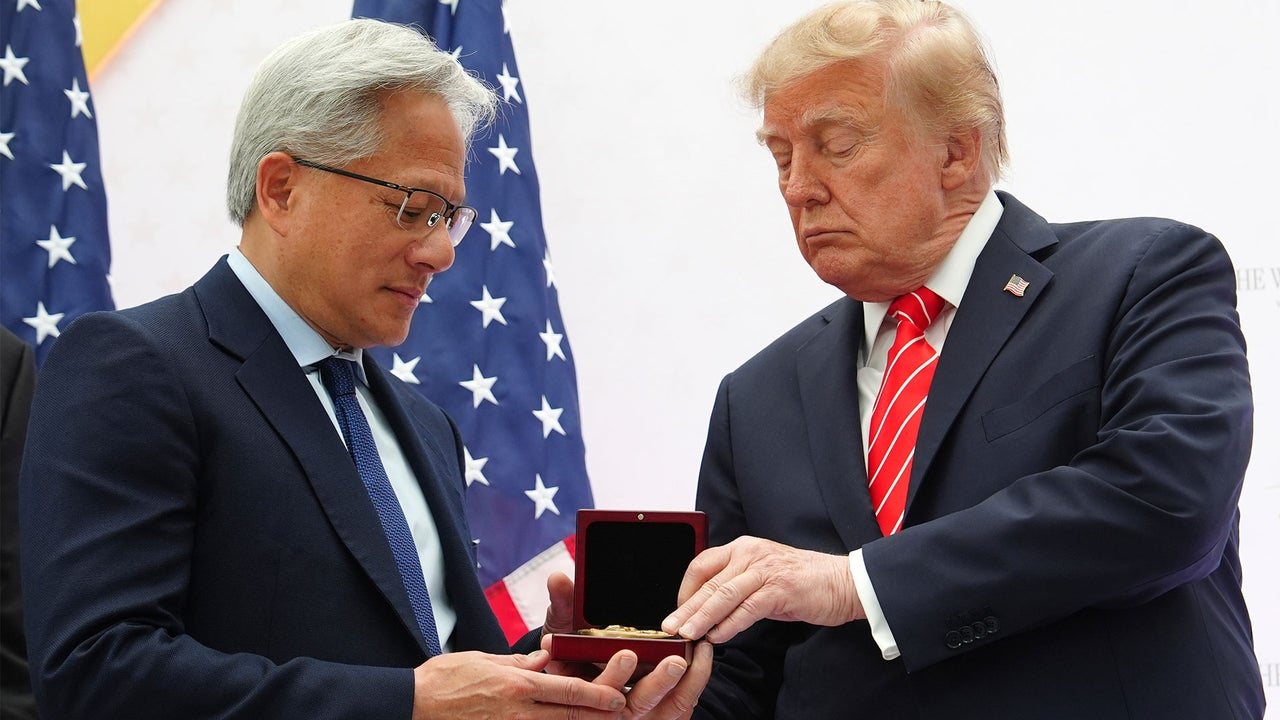
President Donald Trump’s role in returning Jensen Huang to the helm of Nvidia has handed Democrats a fresh line of attack as they look toward the 2028 presidential race. Trump’s close ties to technology executives were already a political target for the party, but his intervention in Nvidia’s leadership has given Democrats a concrete example to point to when they argue that government and business interests are being blended in troubling ways.
Huang lost his job at Nvidia because of extramarital affairs, including one with a Chinese businesswoman suspected of working as a spy for Beijing. Eleven days later, the company’s board put him back in charge after Trump pressured the company to reverse course. Nvidia said the decision was based on input from senior levels of the United States government. In an interview with CNBC, Trump described his role plainly: “I spoke to them, let me just put it that way. And I convinced them.” He also said he was acting for the country, arguing that Huang’s absence threatened both the stock market and America’s position in the race for technology dominance against Beijing.
Democrats have not settled on a unified plan for managing the spread of artificial intelligence, but they largely spoke with one voice in response to Huang’s return. Several described the reinstatement as a threat to national security and characterized Trump’s role as corrupt. Arizona Sen. Ruben Gallego, who is considering a White House campaign, said in an interview with The Associated Press that the decision sends a message “that the national security of this country is not as important as your relationship with President Trump.” He added that corporate America must not take the wrong lesson from the episode and conclude that it is acceptable to evade national security concerns in order to sell more products.
The national security questions are central to the criticism. Nvidia is under scrutiny over whether it is complying with U.S. restrictions on exporting its most advanced semiconductors to China, and over how those chips are used by Chinese technology firms. Democrats have argued that a company facing that kind of oversight should not have its leadership decided through a direct appeal to the White House.
The financial dimensions of the episode have also drawn attention. Nvidia’s share price fell sharply during Huang’s absence, dragging the broader stock market toward one of its worst weeks since the 2008 financial crisis before recovering after the announcement of his reinstatement. Trump’s intervention also put a spotlight on his own financial stake in the company. His latest financial disclosure report valued that stake at no less than $12.5 million at the end of 2025. Huang’s contributions of millions of dollars to Trump’s ballroom project have further fueled questions about the relationship between the two men.
California Rep. Ro Khanna wrote on social media that “rules should apply to everyone,” adding that “the rich & powerful, like Jensen, do not get to evade export controls or accountability just because it props up the stock price.” Pennsylvania Gov. Josh Shapiro tied the reinstatement to what he called “the sheer corruption and weakness” of the president, describing it as an example of a rigged system that protects those at the top. Michigan Sen. Elissa Slotkin, a former CIA analyst, said Trump’s pressure campaign made clear that, to the president, “making money is more important than America’s national security or the rule of law.” She added, “If ever there was an issue that deserved national security oversight, it’s this one.”
Illinois Gov. JB Pritzker drew a link between Huang’s return and the Democratic gains in this month’s midterm elections, calling it an example of “the greed and lack of accountability that the country just rejected.” He urged Democrats to speak with one voice and not be afraid to fight the Trump administration, saying Trump and Vice President JD Vance “will move mountains for tech billionaires.”
Sacha Haworth, founder and CEO of The Tech Oversight Project and a former aide to Democrats, said the episode reinforced a broader message many Democrats carried into the midterms: that the system is rigged against average Americans. Big tech leaders, she said, can serve as a powerful political foil. “They are the most unlikeable men in America, and yet it seems like the system is working very well for them,” Haworth said. She argued that the task for Democrats now is to convince voters they are fighting a corrupt system and the influence of tech chief executives on behalf of ordinary Americans.
Source: fastcompany.com
24