Supreme Court Opens Term With Climate Liability Showdown
The Supreme Court began its new term Monday with nearly two hours of oral argument over whether state or federal courts should hear lawsuits seeking billions of dollars from energy companies for climate change harms. Justice Samuel Alito recused himself, leaving open the possibility of a 4-4 tie that would let the Boulder County case proceed in state court.
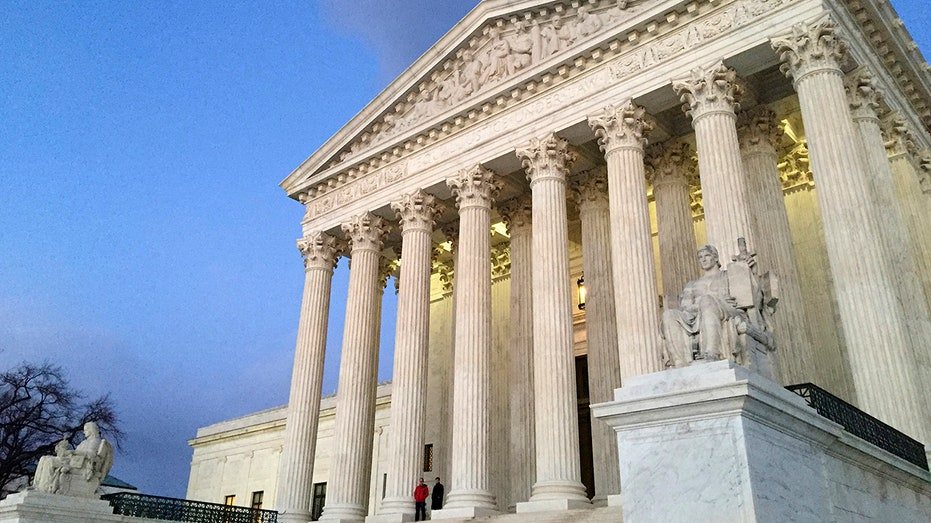
The Supreme Court opened its new term Monday with a closely watched argument over whether state courts or federal courts should decide civil lawsuits seeking billions of dollars from energy companies for alleged harms tied to climate change. Eight justices debated the jurisdictional question for nearly two hours, and it was unclear after the public session how the court might rule.
Justice Samuel Alito did not participate. He recused himself last week after calls for him to step aside because he owns stock in oil companies, though not in the two companies at the center of Monday's appeal. His absence leaves open the possibility of a 4-4 tie, which would allow the specific lawsuit to move forward in state courts.
The case, Suncor Energy Inc. v. Commissioners of Boulder County, CO, is part of dozens of lawsuits brought by states and municipalities across the country. Boulder County, located northwest of Denver, sued in 2018. Among the defendants is Suncor, a Canadian-based energy giant that operates the only major oil refinery in Colorado. ExxonMobil, the largest oil company in the United States, is also a defendant.
Local and state governments are seeking civil damages totaling billions of dollars, arguing the money is necessary to help pay for rebuilding after wildfires, rising sea levels and severe storms that they say have been worsened by fossil fuel pollution. Local officials claim the energy firms misled the public about their role in climate change and say financial penalties are needed to mitigate ongoing harms in their communities, including recent forest fires and worsening air pollution.
The companies, backed by the Trump administration, counter that emissions are a national issue that should be heard in federal court, where similar suits have been dismissed. They argue the Clean Air Act limits what individual states and counties can do, and that climate change is a global problem not limited to any one energy sector or country. Some states also accuse the current administration of rolling back mandated protections in the Clean Air Act and thereby abdicating its regulatory authority.
Chief Justice John Roberts could be the deciding vote. He asked tough questions of both sides and noted that the court has previously allowed similar claims to be decided outside federal venues. «There are a lot of familiar situations where conduct outside of the state has broad effects among other states, and yet we allow state courts in a particular state to bring litigation,» Roberts said. «I guess I'm not quite sure what makes this situation different from all those other ones, where we've allowed them to proceed in state court.»
Justice Elena Kagan compared the climate change lawsuits to earlier claims against tobacco and opioid companies brought by states on behalf of their citizens. «This is the same kind of lawsuit against the same kind of actors for the same kind of harm,» Kagan said. «Where does this principle come from, that states can't regulate in the air and water space?»
But Justice Brett Kavanaugh appeared to speak for many of his conservative colleagues when he raised concerns about the implications of multi-jurisdictional lawsuits playing out potentially for decades. «It is going to bankrupt — if there are enough of these — bankrupt these various defendants and certainly other defendants out there. Anyone is a potential defendant for a suit like this. Any manufacturer, any business,» Kavanaugh said. He added that Congress, when passing the Clean Air Act and its amendments, relied on the court's precedents establishing that this kind of pollution is a federal law matter unless Congress speaks otherwise.
Justice Department lawyer Sarah Harris told the court that interstate air pollution is an inherently federal area. «This suit egregiously exceeds constitutional limits on state authority,» Harris said.
The Supreme Court specifically asked both parties to address at argument whether it should even hear the case at this stage. That procedural off-ramp could put the larger federalism questions off for another day. Justice Ketanji Brown Jackson pressed the oil companies' lawyer, Kannon Shanmugam, on why the court should not wait for state courts to finish their federal considerations first.
Some litigators believe the companies could fare better in federal court because they would not have to juggle dozens of ongoing lawsuits in multiple jurisdictions. A decision is expected by next spring.
4