Iran raises the price of Trump’s hoped-for exit from the war
Trump had been preparing to treat a fully reopened Strait of Hormuz as a victory condition even without a nuclear deal, the Wall Street Journal reports. Tehran has now tied that outcome to sanctions relief, compensation and a U.S. military pullback.
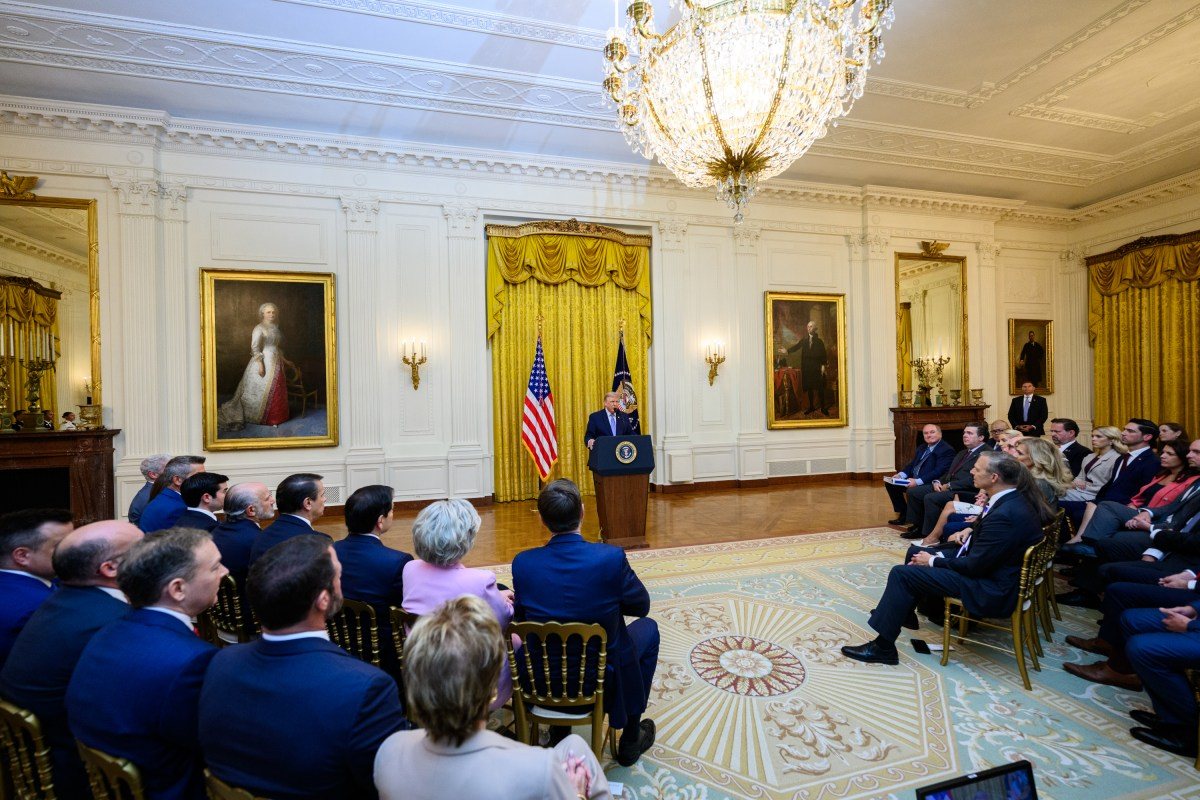
President Donald Trump had been moving toward a simpler definition of success in the Iran war: get the Strait of Hormuz fully open, reduce the pressure on energy markets, and leave the nuclear question for another day. The Wall Street Journal reported Sunday that U.S. officials said Trump had even privately floated the possibility of ending the war without a nuclear agreement if Tehran restored full traffic through the strategic waterway.
That option now looks harder. Iran’s Supreme National Security Council issued a far broader set of conditions on Saturday, linking a full reopening of the strait to major changes in U.S. policy. Tehran said Washington must stop threatening Iran, permanently end the war against Iran and its regional allies, lift the naval blockade and withdraw U.S. forces from around the country.
Iran also demanded full compensation for war damage, the lifting of sanctions and the unconditional release of frozen Iranian assets. Those are not narrow maritime terms. They amount to an attempt to use the strait as leverage over the broader military and economic architecture of the U.S.-Iran confrontation.
The shift matters because the White House had increasingly focused on Hormuz as a concrete outcome after nuclear negotiations proved difficult. A nuclear agreement requires technical commitments, verification and political trust. An open shipping lane is easier to show: tankers move, oil risk falls and the president can point to a visible change in the world economy.
Tehran appears to understand that political need. Gregory Brew, an Iran expert at Eurasia Group, told the Journal that Iranian leaders believe Trump wants out of the war and is focused on opening the strait, which helps explain why they are taking a harder bargaining position. In other words, Iran is trying to price the urgency it sees in Washington.
The situation is not a binary choice between an open and closed waterway. The Associated Press reports that Iran and Oman are in the final stages of talks over new maritime routes, but Iranian officials say those arrangements would not themselves amount to a full reopening. Tehran continues to link full access to the conditions it has passed through mediators.
Some oil is already moving. Axios reported that a U.S. official estimates roughly 8 million barrels are leaving the Gulf each day through the southern lane of the strait in coordination with the U.S. military. That reduces the immediate supply shock, but it is not the same thing as a normal commercial system in which shippers can assume stable rules without military coordination or a fresh political dispute.
The economic stakes remain substantial. U.S. Energy Information Administration data show about 14.6 million barrels per day of crude oil and petroleum liquids moved through Hormuz in the first quarter of 2026, down from about 20.7 million barrels per day in the fourth quarter of 2025. EIA has said the earlier disruptions contributed to high and volatile oil prices during the second quarter.
Washington still holds major pressure tools. The United States reinstated its naval blockade in mid-July, and Trump said later that month that it remained in force. Iran is now demanding that the blockade be lifted as part of the price for full reopening. That creates a direct contradiction: the White House wants the strait open while preserving one of the instruments designed to squeeze Tehran economically.
Trump’s public tone on Sunday suggested he is willing to wait. In a brief interview with Axios, he said the United States was “low-keying it” and only “semi-negotiating” with Iran. He emphasized Tehran’s inflation and financial strain rather than announcing a new military offensive. The message was that time and economic pressure can work for Washington too.
That sets up a contest over endurance. Iran faces sanctions, military damage and a blockade. The United States faces pressure to lower energy risk, bring the war toward an end and present a clear result to voters. Each side therefore has a reason to claim it can wait longer than the other.
For Americans, Hormuz matters because the strait is part of a global market. Disruptions affect international oil prices, shipping, insurance and eventually the cost of fuel and goods. That gives the White House a domestic incentive to stabilize the route.
The next breakthrough may therefore be narrower than a peace settlement. A technical maritime arrangement could increase traffic and calm markets while the larger political dispute remains unresolved. That would help both sides avoid immediate escalation, but it would not provide the clean ending Trump had been seeking.
The central question is whether Washington can separate freedom of navigation from the rest of the conflict. Iran is trying to prevent that separation by tying Hormuz to troops, sanctions, frozen assets and compensation. If Tehran holds that line, Trump’s proposed off-ramp becomes not a single concession but a negotiation over much of the relationship between the two countries.
61