Herzog tasks Eisenkot with forming Israel’s next government
Israeli President Isaac Herzog has chosen Yashar party leader Gadi Eisenkot to attempt to form the next government, a move that sets up a difficult coalition contest against Benjamin Netanyahu’s bloc and leaves the outcome uncertain.
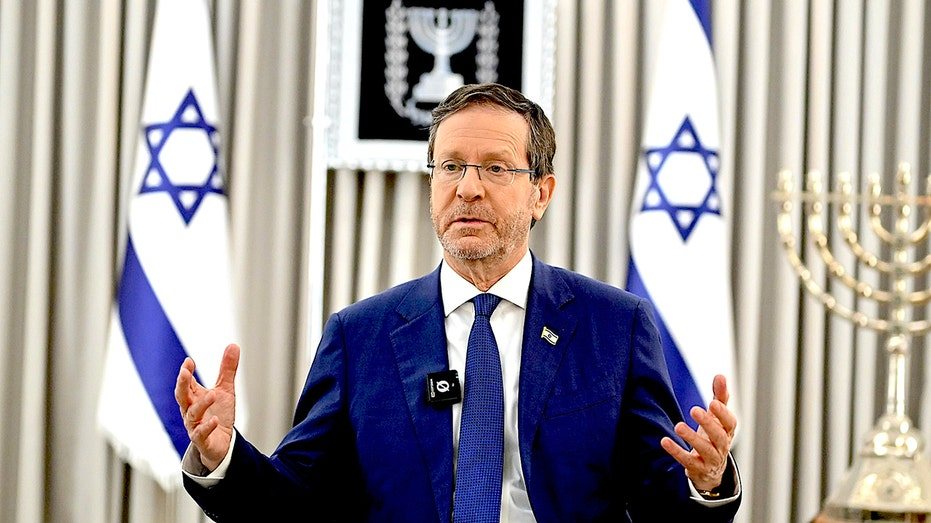
Israeli President Isaac Herzog has selected Gadi Eisenkot, leader of the Yashar party, to try to form the country’s next government, setting up a demanding coalition battle with Prime Minister Benjamin Netanyahu’s camp. Herzog announced the decision on November 7, and the formal mandate was due the following day. Eisenkot will have 28 days to assemble a governing coalition, a window that can be extended by another 14 days.
The choice followed consultations in which 67 of the Knesset’s 120 members recommended Eisenkot. Netanyahu received 46 endorsements, while seven ultra-Orthodox lawmakers abstained. The figures underline the scale of the challenge facing Eisenkot. The Likud party won 27 seats in the October 27 election, and the broader Netanyahu bloc took 53 seats. The anti-Netanyahu bloc totals 48 seats, well short of the 61-seat majority needed to govern. Netanyahu, who has challenged the election results, remains caretaker prime minister while the talks proceed, although the Central Elections Committee has said the integrity of the vote remains intact.
To close that gap, Eisenkot has proposed what he calls a “National Emergency Government” that would remain open to additional parties. The Joint List and Ra’am, which together hold 19 seats, endorsed him, but that backing is not uniformly welcome among his prospective partners, and some have rejected support from Arab parties. Eisenkot has framed his approach around four principles: preserving Israel as a Jewish and democratic state, upholding the values of the Declaration of Independence, introducing universal service, and designating Hamas as a terrorist group. Those principles are meant to serve as a shared foundation for a broad government rather than a narrow partisan platform.
Military conscription of ultra-Orthodox men remains the central obstacle between secular and religious parties. Avigdor Lieberman, whose Yisrael Beitenu party is part of the discussions, has signaled flexibility on the issue. United Torah Judaism, the ultra-Orthodox alliance, says it is waiting for a concrete proposal and that any agreement would need the approval of its religious leadership. Shas, which holds six seats, has recommended Netanyahu, placing another major religious party on the opposite side of the negotiating table from the Yashar leader.
Some participants have discussed the option of a minority government supported by outside abstentions, though that idea is contested and has not been settled. Such an arrangement would allow a government to take office without a formal majority of its own, but it would still depend on parties willing to step aside rather than vote against it. The debate reflects how narrow the arithmetic remains and how much depends on whether the conscription question can be resolved in a way that satisfies both secular and religious constituencies.
With neither bloc holding a clear majority, the outcome of the negotiations is uncertain. The 28-day period, extendable by 14 days, sets the timeline for Eisenkot’s effort. If he cannot assemble a workable coalition within that window, a deadlock or a renewed election remains possible, a prospect that would extend the political uncertainty gripping the country since the October 27 vote.
Source: foxnews.com
4