Ex-Dem Fundraiser Says Internal Poll Showed Harris Trailing Possible Biden Replacements
Lindy Li, a former Democratic fundraiser, claims internal party polling showed Kamala Harris ranked last among potential replacements for President Joe Biden before he withdrew from the 2024 race, and that party leaders chose her anyway out of fear of alienating key constituencies.
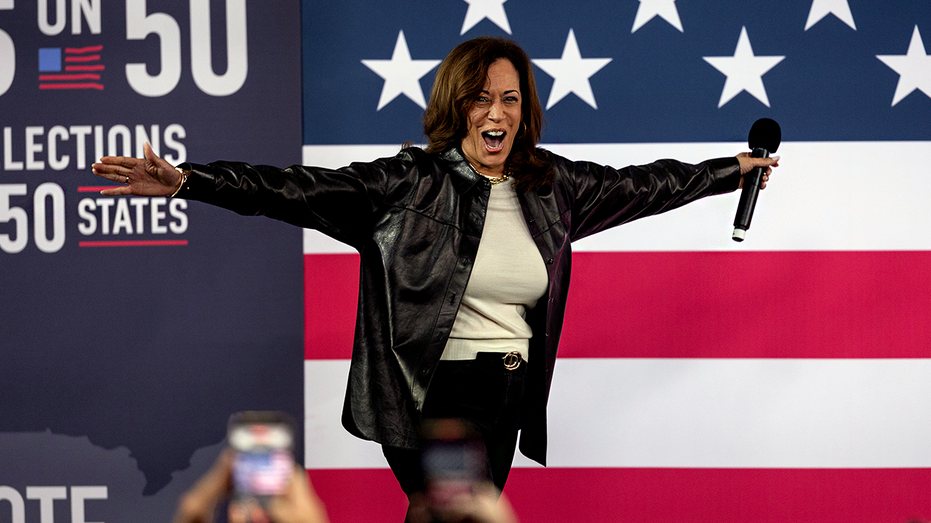
A former Democratic fundraiser who left the party over its handling of President Joe Biden's political decline says internal polling conducted before Biden withdrew from the 2024 race showed Vice President Kamala Harris ranked last among possible replacements — and that party leaders knew it.
Lindy Li, who served on the Democratic National Committee's National Finance Committee and raised money for both Biden and Harris, made the claim in an exclusive interview tied to her new book, «Unburdened,» which chronicles the months leading up to Biden's decision to step aside. According to Li, the internal survey tested several prominent Democrats as potential alternatives, including former Transportation Secretary Pete Buttigieg, California Gov. Gavin Newsom, Michigan Gov. Gretchen Whitmer and Harris.
Harris, Li said, finished at the bottom of the group. «Kamala Harris came in dead last. It wasn't even close,» Li said. «Pete Buttigieg, who hilariously received 0% support from the Black vote, did better than she did.»
Li described the polling as an internal effort meant to give party operatives an objective look at which candidate could mount the strongest challenge to Donald Trump. She said the results were closely guarded but circulated among a small circle of top fundraisers and party figures.
«The polling numbers went directly against the narrative that the party wanted to espouse,» Li said. She argued that party leaders understood that bypassing Harris would be perceived as a slight to a core Democratic constituency, particularly Black women, and that they were unwilling to accept that political cost.
«They knew that skipping over Kamala Harris would be a slap in the face to the bedrock of the party, which is Black women in particular, and they just wouldn't have it,» Li said.
Li also pointed to pressure from Harris's online supporters, sometimes referred to as the «K-Hive,» as a factor that made alternative scenarios difficult to pursue. She described that faction as small but highly organized and quick to label critics in racial terms, creating an environment in which party figures feared exploring other options.
«People were terrified of the online mob,» Li said. «The K-Hive isn't that numerous, but they're very, very toxic and they're very coordinated. No one wants to be labeled as a racist.»
According to Li, Harris's proximity to Biden's donor network and her status as the sitting vice president made her the default choice once Biden exited the race, even as internal data suggested she was not the party's strongest general-election candidate. She characterized the party's public positioning of Harris as the natural successor as a performance.
«Oscar-worthy. Honestly, truly Oscar-worthy,» Li said.
Li's account adds to a broader post-election reckoning inside Democratic circles over how the party handled questions about Biden's age and political viability. Biden's decision to end his re-election bid in July 2024 came after weeks of mounting pressure from donors, lawmakers and party strategists who worried that his candidacy would cost Democrats the White House and down-ballot races.
When Biden endorsed Harris, she quickly consolidated support from delegates and party leaders, effectively clearing the field. She went on to win the Democratic nomination but lost the general election to Trump.
Li's book also revisits her earlier warnings about Biden's decline, which she says went unheeded by party leadership. She has since changed her party affiliation, citing frustration with how Democratic officials managed the situation.
Representatives for Harris did not immediately respond to a request for comment on Li's claims. The internal polling Li describes has not been independently verified, and party officials have not confirmed its existence or its results.
Even so, Li's account is likely to intensify the debate among Democrats about how the party arrived at Harris as its 2024 standard-bearer and whether the decision was driven by data, political fear or a combination of both. For critics of the party's leadership, her claims offer fresh ammunition; for Harris's defenders, they represent an unverified narrative from a former insider with a book to promote.