D.C. ballot measure to ban foie gras backed by hundreds of thousands in outside funding
A proposed D.C. ballot initiative to ban foie gras and other fattened-bird liver products is drawing scrutiny over the scale of its outside funding, paid petition circulators and the national animal-rights network behind it.
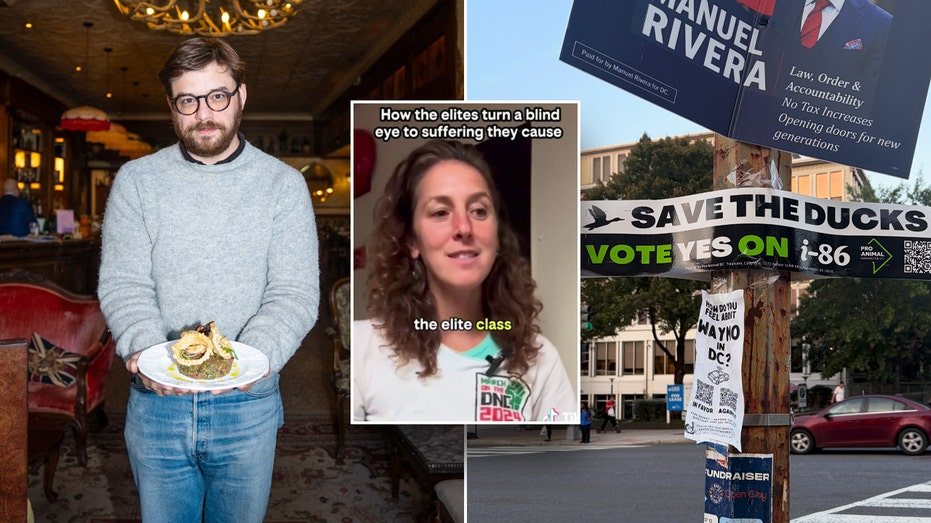
A D.C. ballot initiative to ban foie gras and other products made from fattened bird livers is being backed by a well-funded national animal-rights network, according to campaign-finance records and nonprofit filings reviewed by Fox News Digital. Known as Initiative 86, the measure is on the ballot in the District, where early voting has already begun, and it could reshape the city's restaurant industry.
Campaign filings show the local effort, run through a committee called Pro-Animal DC, collected $474,190.62 between September 23, 2025, and October 26, 2026. Pro-Animal Future, a 501(c)(4) nonprofit based in Portland, Oregon, provided $386,435.77 of that total. The organization launched the campaign, nicknamed I-86, and says its local ballot efforts are part of a broader push to change public attitudes toward common animal agricultural practices.
The largest single expense was $126,780.36 in stipends paid to Cady Witt, roughly a quarter of the campaign's spending. Witt's LinkedIn profile lists her as community impact coordinator at DC Voters for Animals, and she is also listed as treasurer of Pro-Animal DC. The committee separately reported $89,224.00, about 20 percent of expenses, for 293 payments to 64 people described as consultant-circulators between September 2025 and October 26, 2026, with an average payment of $1,394.13 per person.
The campaign has also drawn attention for its use of outside organizers. Olivia DiNucci, the D.C. coordinator of CodePink, appeared in a TikTok video last month supporting the measure, a departure from the group's usual focus on Cuba, Iran and Israel-related demonstrations. Pro-Animal Future said CodePink plays no role in the campaign beyond DiNucci's appearance in that video. CodePink co-founder Jodie Evans is married to China-based tech entrepreneur Neville Roy Singham, whose funding of activist groups has drawn scrutiny from congressional lawmakers and is the subject of a federal investigation. Neither Singham nor Evans is connected to the initiative in the filings reviewed.
Spending records also show outside lodging costs. Pro-Animal Future reported $7,703.70 for Airbnb accommodations last year and $22,418.69 on July 31 of this year. Pro-Animal DC said the lodging housed about 60 out-of-town volunteers who came to Washington in July for a signature-gathering effort called Goosapalooza, and the campaign's website promoted the free housing.
The group behind the measure has described a longer strategy. Pax Fauna, a 501(c)(3) nonprofit based in Denver that says it is related to Pro-Animal Future, outlined in 2024 a 10-year roadmap to build local ballot campaigns and eventually pursue statewide factory-farming bans. The document described such measures as a way to provoke an identity crisis for the voting public. The group sought to launch as many as 10 local chapters during the 2025-2026 election cycle. Pro-Animal Future says its current campaigns run in D.C. and Denver and that it worked with Portland's City Council to ban foie gras sales in June.
The text of the initiative has also raised questions about its reach. It defines a fattened bird liver product as any food or byproduct made from livers of birds fattened through any method or practice, and it specifically names pâtés, spreads and processed meat products. A separate definition of force-feeding covers causing a bird to eat more than it would voluntarily consume. Former D.C. Attorney General Karl Racine told City Cast DC, a local outlet, that the language includes poultry products beyond foie gras, a point that supporters and critics are likely to debate as voting approaches.
Pro-Animal Future alleges that birds are force-fed to gain the weight needed to produce foie gras and says its campaigns aim to end force-feeding and shift views on animal agriculture. D.C. residents will decide the measure on election day.
7