Declassified FBI Emails Show Doubts on Mar-a-Lago Raid as White House Slams Biden DOJ
Newly declassified internal FBI emails reveal agents doubted probable cause and sought alternatives before the 2022 Mar-a-Lago search, prompting the White House to accuse the Biden administration of weaponizing law enforcement.
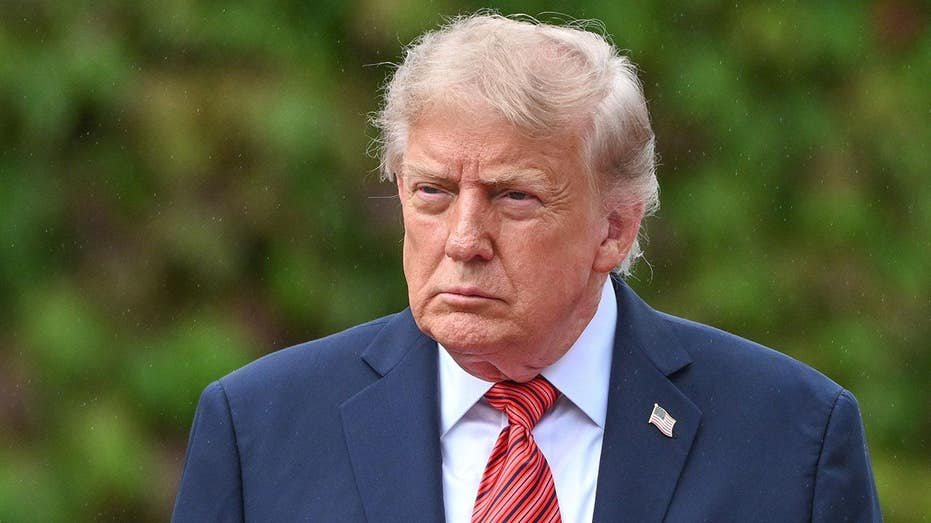
The White House accused the Biden administration of weaponizing federal law enforcement after newly declassified documents revealed internal FBI doubts about the 2022 search of former President Donald Trump's Mar-a-Lago estate in Palm Beach, Florida. The records, released Monday, show friction between the FBI's Washington Field Office and the Justice Department in the months before the August 2022 raid.
«Spying on political opponents is weaponization of law enforcement, plain and simple,» the White House said Tuesday. «This is further proof the Biden administration weaponized the DOJ to target political opponents. Those responsible must be held accountable.»
The internal emails, first reported in December, show FBI agents did not believe they had probable cause to execute the search warrant. In a May 24, 2022, message with the subject line «PE (Plasma Echo) Next steps - timeline preference - UNCLASSIFIED,» the special agent in charge of the counterintelligence division of the Washington Field Office outlined a proposed investigation timeline ending with a search warrant, targeting June 6 of that year. The raid ultimately took place on Aug. 8, 2022.
Another agent asked that the Justice Department be looped in on the timeline. The response reflected skepticism that a raid was necessary. «[REDACTED] and I also agreed if there was a way to obtain the records via the [REDACTED], without the execution of the SW (search warrant), it would be preferable,» the special agent in charge wrote.
Additional emails from June 1-2, 2022, show the FBI seeking an off-ramp from the path toward a search warrant. «Even as we continue down the path towards a search warrant, WFO believes that a reasonable conversation with the former President's attorney, [REDACTED], ought not to be discounted,» one email stated. «At a minimum, even if the former President's attorney is correct and that the documents were all declassified (or believed to be declassified), it can be reasonably argued that the documents remain sensitive and should be properly secured until the matter of classification is sorted out.»
The emails noted that Trump's defense attorneys would likely argue that a president has absolute authority to declassify documents. Agents also expressed frustration that the Justice Department, despite requests, had not provided a list of potential charges.
In a July 13, 2022, email less than a month before the raid, the assistant special agent in charge of the Washington Field Office stated flatly that the FBI did not believe probable cause existed. «WFO does not believe (and has articulated to DOJ CES), that we have established probable cause for the search warrant at Mar a Lago. DOJ has opined that they do, requesting the a wide scope including residence, office, storage space,» the email said.
The agent suggested the Justice Department was not focused on quickly recovering classified records. «Finally, if the goal is to identify and recover classified records quickly, so as to protect the information, the 5 weeks spent fixated on probable cause for a search warrant have been counterproductive,» the email said. The agent proposed re-interviewing Trump's attorney and seeking other material witnesses.
«A reasonable step would be to recontact the attorney and inquire about any further documents. WFO has made numerous suggestions to DOJ over the course of this investigation that the most expedient way to ensure recovery of all classified documents would be to go through [REDACTED]. DOJ has persistently disagreed,» the email added.
Other documents declassified Monday showed the FBI tapped the phone of now-White House chief of staff Susie Wiles and tracked the movements of Melania and Barron Trump.
The Mar-a-Lago raid was widely viewed as politically motivated, coming as Trump was considering a successful 2024 presidential bid. The Justice Department appointed special counsel Jack Smith to investigate the alleged retention of classified materials. Trump pleaded not guilty to 37 felony charges, including willful retention of national defense information, conspiracy to obstruct justice and false statements. A superseding indictment added three more charges: another count of willful retention and two additional obstruction counts. Trump again pleaded not guilty, and Smith dropped the case after Trump won the 2024 presidential election.
10