Bipartisan Bill Would Put $1 Billion a Year Behind Security for At-Risk Nonprofits
The Jewish American Security Act combines physical-security grants with law-enforcement coordination, education measures, threat assessments and new transparency rules for major platforms.
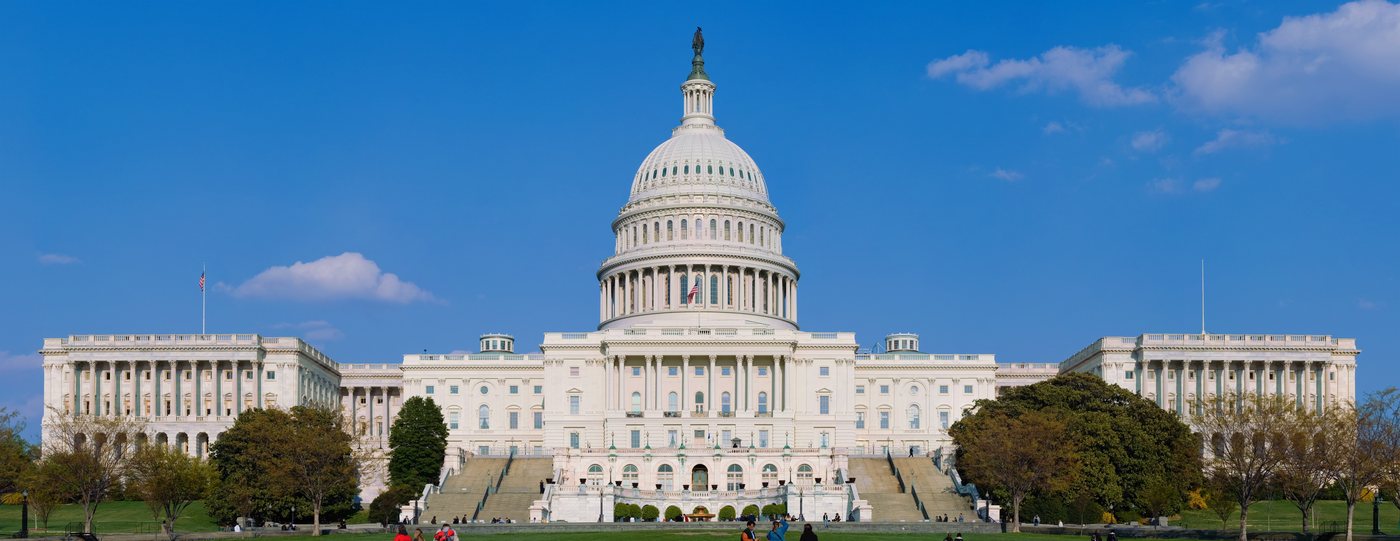
A bipartisan bill in Congress would sharply expand the federal framework for protecting Jewish institutions and responding to antisemitism, including authorization for $1 billion a year in the Nonprofit Security Grant Program from fiscal 2027 through 2031.
The Jewish American Security Act was introduced in the Senate on May 19 by Sen. Jacky Rosen, a Nevada Democrat, with a bipartisan group of original cosponsors that includes Republican Sen. James Lankford of Oklahoma. Rep. Daniel Goldman, a New York Democrat, introduced the House companion on June 9 with lawmakers from both parties, including Republican Rep. Mike Lawler.
The bill’s stated purpose is specific: strengthen federal efforts to counter antisemitism in the United States and protect the Jewish community. Its approach, however, reaches across several parts of government rather than creating a single new security office.
The largest funding provision would authorize $1 billion for the Nonprofit Security Grant Program in each fiscal year from 2027 through 2031, divided evenly between its urban-area and state components. The program helps eligible nonprofit organizations improve security against terrorism and other threats.
That number is an authorization, not money Congress has already appropriated. Even if the bill becomes law, lawmakers would still have to provide annual funding through the appropriations process. The distinction matters to synagogues, schools and nonprofit organizations deciding whether a larger federal grant pool will actually be available.
The legislation also directs the attorney general to work with state and local law enforcement to improve security for religious institutions considered at risk because of threats or religious hate crimes. Grants could support increased police presence, patrols, training and other assistance. In practical terms, the bill treats security as both a building-level problem and a coordination problem among institutions and local authorities.
A second layer focuses on intelligence and prevention. The FBI, Department of Homeland Security and National Counterterrorism Center would participate in recurring assessments of domestic and transnational antisemitic violent-extremism threats. Public, declassified versions would be made available where possible.
The education provisions would create additional federal coordination on antisemitism and Title VI responsibilities, including an antisemitism coordinator and a clearinghouse for safety and best practices in schools and universities. Large online platforms would face a separate transparency requirement: services with at least 50 million monthly U.S. users would have to report every 180 days to the Federal Trade Commission and publicly describe how they detect, moderate and limit amplification of antisemitic content.
The political push comes against a measurable change in behavior among American Jews. The American Jewish Committee’s 2025 survey found that 55% of American Jews said they had changed their behavior in at least one way out of fear of antisemitism. Thirty percent said they had avoided certain places, events or situations. The Anti-Defamation League separately recorded 6,274 antisemitic incidents of assault, harassment and vandalism in 2025, including 203 physical assaults.
The legislation should not be read as a generic religious-freedom bill. Its central target is antisemitism and Jewish security. But some mechanisms, especially the nonprofit security program and grants tied to at-risk religious institutions, can apply more broadly to qualifying houses of worship and nonprofits facing credible threats.
As of Aug. 13, neither version has passed its chamber. The Senate bill remains before the Homeland Security and Governmental Affairs Committee, while the House companion is still moving through committee and subcommittee review. If it advances, Congress will face two separate decisions: whether to enact the framework and how much of the proposed $1 billion annual authorization to fund in practice.
69