White House says Trump holds the cards in Iran standoff
The White House says the United States holds the upper hand against Iran's government, citing control of the Strait of Hormuz and a collapsing Iranian economy, while analysts debate how long Tehran can endure.
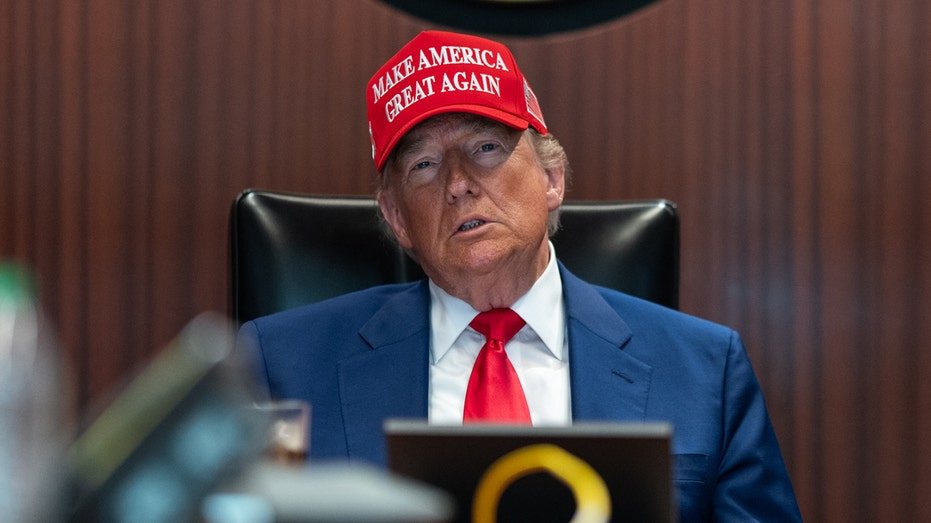
The White House says the United States holds the decisive advantage in its confrontation with Iran's government, pointing to American control of the Strait of Hormuz and what it describes as a collapsing Iranian economy. The administration's message is that President Donald Trump holds all the cards, and that Tehran's leadership is running out of options as the pressure builds.
According to the White House, Iran's economy is in severe distress and its military and economic capacity has been badly weakened. Officials have also said that Trump is expected to act in one of two ways, described as the easy way or the hard way, leaving Tehran to decide which path it prefers. The administration has not detailed the specific next steps behind that warning.
The campaign against Iran is being carried out under the name Operation Epic Fury, the label used for Trump's anti-Iran effort. The conflict has already reached the highest levels of Iran's leadership. Ali Khamenei and members of his family were killed in a US-Israeli strike, and his successor, Supreme Leader Mojtaba Khamenei, has not been seen publicly since that airstrike. In a statement, Mojtaba Khamenei claimed that the United States was on the verge of collapse, arguing that the country's position would weaken further after the midterm elections.
Iranian state media has also pushed its own messaging. Tehran staged a mock execution of Trump around the anniversary of the 1979 seizure of the US embassy, and state-linked outlets released an AI-generated video that threatened targets in Western Europe. Iranian state radio, meanwhile, celebrated Democratic gains in the midterm elections, framing them as a setback for Trump's Iran policy.
Analysts quoted in the reporting say Iran's leadership believes it can outlast Trump and wait for political pressure in Washington to force a change in course. That calculation is complicated by several unresolved military questions. The nuclear stockpile of enriched uranium remains unaccounted for, and analysts say Iran retains the ability to rebuild elements of its ballistic missile program.
Opinion among experts is divided on the next phase. Some argue that Washington should keep up a naval blockade while avoiding broad new strikes, warning that wider escalation carries risks. Others have debated the role Israel has taken on, with some experts questioning whether Israel is effectively subcontracting military action on behalf of the United States. Commentators such as Shapiro have praised Trump's Iran move as bold.
Domestic politics also shape the debate. Exit polling showed that only 4 percent of voters named foreign policy as their top issue, a figure that suggests the war has not been the central concern for most of the electorate. Congress, meanwhile, has limited power to block war policy, since any veto-proof majority against the president would be difficult to assemble. Analysts have pointed to the 2006 precedent, when President George W. Bush pushed ahead with a troop surge in Iraq despite a strongly anti-war public mood.
Source: foxnews.com
3