Serbia’s €2 million Ukraine energy aid targets high-voltage transformers
A Serbia-UNDP agreement signed April 3 will finance high-voltage transformers for Ukraine’s battered power grid. The package is modest in scale but unusually specific in what it is meant to buy.

Serbia’s €2 million contribution to Ukraine’s energy recovery is more specific — and older — than some recent summaries suggest. The Serbian government and the United Nations Development Programme signed the financing agreement on April 3, 2026, with the money earmarked for the procurement and delivery of high-voltage transformers.
That distinction matters. This is not a newly announced August package and it is not a general-purpose reconstruction grant. UNDP says the equipment is intended to restore electricity transmission capacity and help stabilize power supplies for millions of Ukrainians under its Green Energy Recovery Programme.
High-voltage transformers are among the most consequential components in a large power grid. They allow electricity to move efficiently across transmission networks by changing voltage levels at substations. When a major transformer is destroyed, repairing a line or restoring generation alone may not be enough to return a section of the grid to normal operation.
They are also unusually difficult to replace on short notice. The U.S. Department of Energy describes large power transformers as expensive, difficult to transport and typically custom-made, with procurement lead times of a year or longer. That means the timing of a funding decision matters: equipment needed for a winter resilience plan may have to be ordered many months before peak demand arrives.
UNDP linked the Serbian contribution to the continuity of essential services. Reliable electricity is necessary not only for households but for hospitals, schools, water systems and heating. The April announcement also framed the work as part of preparation for the next heating season.
The broader need is far larger. Citing the Fifth Rapid Damage and Needs Assessment, UNDP said in April that losses across Ukraine’s energy sector were estimated at $88.2 billion, with roughly $17.1 billion attributed to the power subsector, including generation and transmission assets.
European institutions continue to scale up assistance. The European Commission says Russia has systematically targeted Ukraine’s civilian energy infrastructure. It announced a support package of roughly €922 million for the 2026-27 winter period. In June, the Commission, Ukraine’s Energy Ministry and the Energy Community Secretariat also called on donors to mobilize another €650 million for the Ukraine Energy Support Fund.
Against that backdrop, Serbia’s €2 million will not alter the overall financing picture. Its significance is that it is tied to a concrete class of scarce equipment. In infrastructure recovery, that can matter more than headline size: a transformer that arrives in time for installation can determine whether a damaged transmission node returns to service before peak winter demand.
The package also illustrates how reconstruction finance works in practice. Large European commitments establish broad pools of support, while smaller national contributions can be assigned to discrete needs. A specific procurement target makes the outcome easier to evaluate: funding should eventually become equipment, and equipment should become restored grid capacity.
That chain is not automatic. Large transformers must be matched to technical requirements, transported to the site, installed and tested. An agreement is therefore only the first stage. The operational value appears when the equipment is actually integrated into the network.
The contribution carries political weight because of Serbia’s unusual position. Belgrade is seeking European Union membership and has expanded cooperation with Kyiv, but it has not aligned with the EU’s sanctions policy toward Russia. Serbia also maintains deep energy ties with Moscow. In June, its energy ministry again described Russia as a longstanding gas-sector partner after talks involving Gazprom.
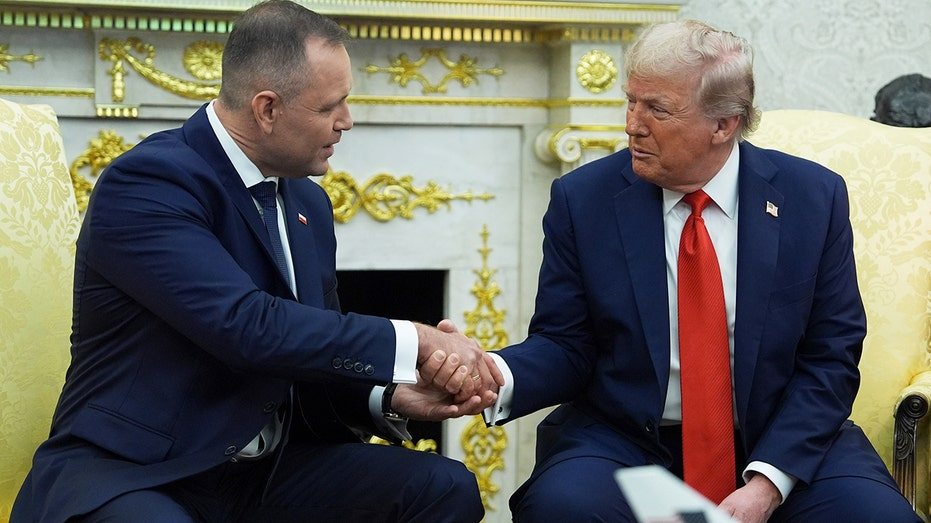
That balancing act was on display again in August, when Ukrainian President Volodymyr Zelenskyy made his first official visit to Serbia. Talks with Serbian leaders covered EU integration, economic cooperation, security and bilateral relations. The April transformer agreement was not a new result of the visit, but it provides a concrete example of cooperation that was already moving forward.
For Belgrade, a UNDP-managed civilian energy project offers a relatively narrow form of support. Serbia can help repair essential Ukrainian infrastructure without presenting the decision as a wholesale change in its policy toward Moscow. For Kyiv, the calculation is simpler: widening the group of countries financing reconstruction reduces dependence on a small set of major donors.
For Ukraine, however, the most important test remains technical rather than diplomatic. The value of the Serbian contribution will be measured by whether transformers are procured, delivered and integrated into the grid quickly enough to help restore damaged transmission capacity.
It is also important not to overstate what the primary source says. UNDP confirms funding for high-voltage transformers and support for targeted areas affected by infrastructure damage. It does not describe the €2 million as a broad program for creating unspecified backup generation across the worst-hit regions.
The verified story is therefore narrower but more tangible: Serbia has financed a specific piece of Ukraine’s power-grid recovery, and the timing of the aid places it inside a much larger European effort to keep electricity, water and heat running through another winter of war. The amount is modest; the infrastructure problem it addresses is not.
79