
Russia Expands Long-Range Drone Launch Network Near NATO’s Eastern Flank
Satellite-image analysis points to at least 10 expanded Russian launch sites. The network is already used against Ukraine and also widens the potential threat to NATO territory.
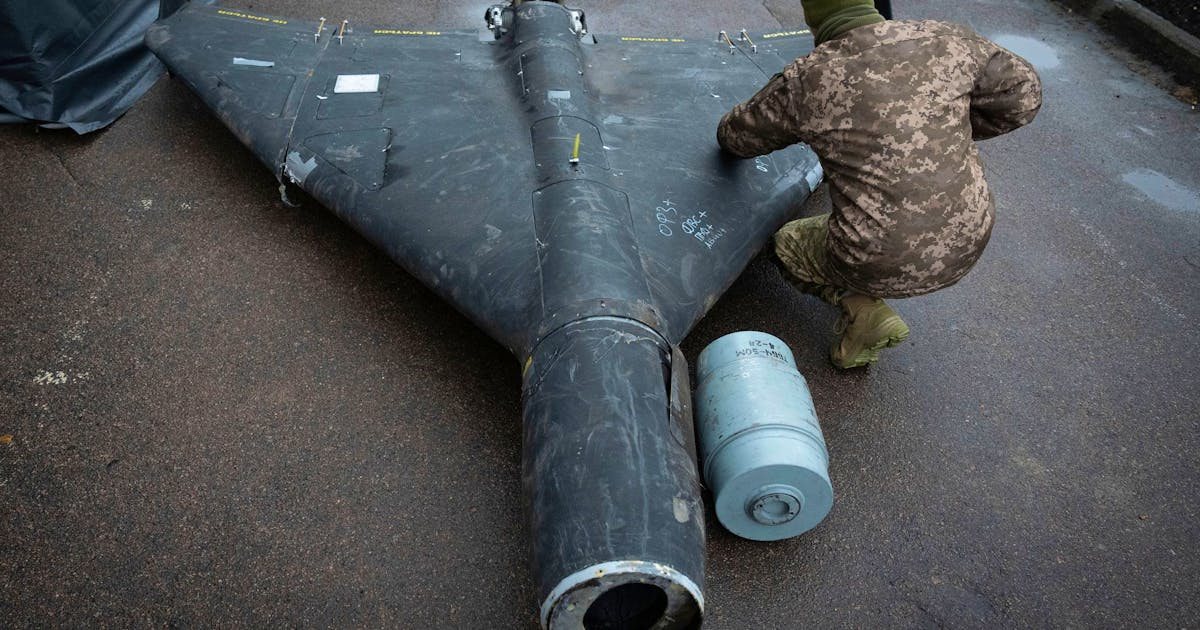
Russia has expanded a network of launch sites for long-range attack drones near its western borders, adding infrastructure that is already being used against Ukraine while also giving Moscow more options if a confrontation with NATO were ever to escalate.
Open-source reporting based on commercial satellite imagery and analysis by the drone-intelligence firm DroneSec identified at least 10 sites with newly built or expanded launch infrastructure near the borders with Ukraine and Belarus. The investigation counted dozens of launch rails. Tracking reviewed by The War Zone indicated that seven of the 10 sites had already been associated with attacks on Ukraine.
That matters because the strongest evidence points first to a practical wartime objective: increasing the number of drones Russia can stage, disperse and launch in large strike packages against Ukrainian cities and infrastructure. The Institute for the Study of War assessed the expansion as likely intended to increase Russia’s capacity for regular long-range strike packages across Ukraine. That makes the claim that the bases have only one purpose — attacking NATO countries — too strong. The facilities are already serving the war against Ukraine.
The NATO dimension is nevertheless real. Dispersed infrastructure closer to the Alliance’s eastern flank gives Russia a broader set of potential launch options, and newer long-range drones could reach additional territory inside NATO if Moscow chose to use them that way. A NATO official said the Alliance was closely monitoring Russia’s long-range strike capabilities and drone activity and had the plans, authorities and forces needed to deter aggression and defend Allied territory.
The concern is sharpened by a separate intelligence picture. Reuters reported this month that Poland and the Baltic states had tightened protection around critical infrastructure after allied warnings about possible Russian provocations. Officials described scenarios that could include a staged or false-flag drone incident involving Ukrainian-made or captured systems. Those warnings are assessments of risk, not evidence that an operation has been approved or that an attack is imminent. The Kremlin dismissed the warnings as scare stories.
Recent U.S. intelligence assessments reported by CNN also describe the possibility that Vladimir Putin could try to test NATO unity with a limited attack in the coming years, ranging from cyber operations to a small military incursion. They do not identify an imminent strike on Poland.
NATO’s own public posture reflects that distinction between capability and intent. On Aug. 12, the Alliance condemned recent Russian airspace violations affecting Poland and Romania and said members were strengthening integrated air and missile defense from the Baltic to the Black Sea. For NATO governments, the new Russian drone infrastructure is therefore less a prediction of a specific attack than another reason to reduce warning time, protect critical systems and make the eastern flank harder to probe.
74