Former Trump Arms Official Warns Russian Researcher's Death May Signal Weaponized Plague
Marshall Billingslea, a former senior Trump arms control official, warned that the unexplained death of a researcher at a Russian anti-plague institute could involve an antibiotic-resistant plague strain developed under the Soviet biological weapons program. The 28-year-old employee died of pneumonia of undetermined origin, and Russian authorities say no plague pathogen was found in her contacts.
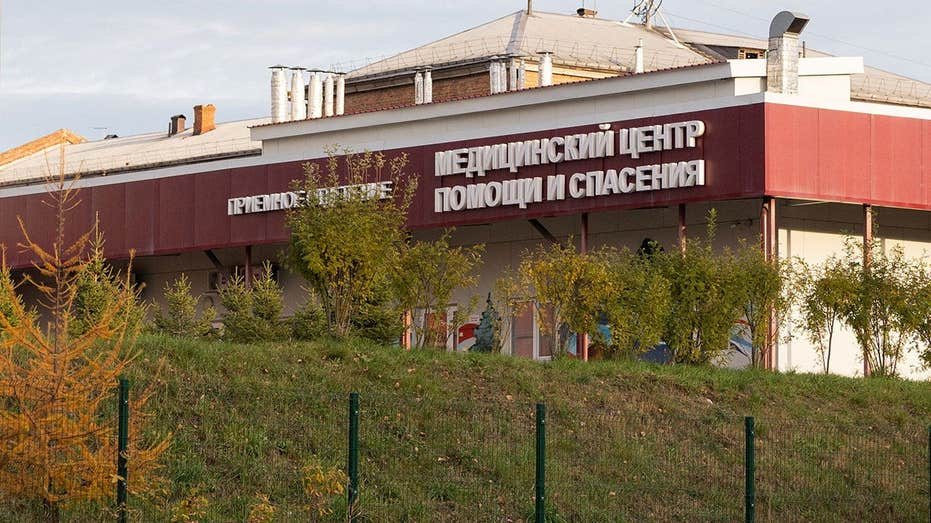
The unexplained death of a 28-year-old researcher at a Russian anti-plague institute has prompted a former senior U.S. arms control official to warn that the case could involve something far more dangerous than the disease historically known as the Black Death. Marshall Billingslea, who served as President Donald Trump's special presidential envoy for arms control, said a top Soviet bioweapons defector told him decades ago about secret work on antibiotic-resistant plague at the same facility in Irkutsk where the recent death occurred.
«This may not be just 'the plague.' It may be far worse,» Billingslea wrote on X, referring to the bacteria that caused the Black Death. He said Ken Alibek, the former No. 2 official in the Soviet biological weapons program who defected to the United States in 1992, had described efforts to engineer a plague strain resistant to antibiotics and to create plague chimeras by fusing two or more pathogens. «He specifically called out Irkutsk for being involved in the BW program,» Billingslea added.
The warning followed the death last week of an employee at the Irkutsk Anti-Plague Institute of Siberia and the Far East. Russian authorities have described the cause as pneumonia of undetermined origin and said testing found no microorganisms in her body linked to her work. Russia has not said the woman died of plague. The World Health Organization said Tuesday that Russian officials told the agency no plague or other high-threat pathogen had been detected among her close contacts, though confirmation of what caused the fatal pneumonia is still pending.
About 60% of the woman's identified contacts have been tested so far, according to Russian authorities. Two cases of COVID-19 and two rhinovirus infections were detected, but no other infectious disease pathogens were found. The unexplained death at a facility that works with dangerous pathogens has nonetheless drawn scrutiny from biosecurity experts, including questions about why the cause remains unknown.
Kevin Esvelt, an MIT professor who studies biological security and catastrophic pandemic risks, said Russia's explanation suggests the researcher did not die from plague while leaving unanswered what killed her. «If we take the Russian authorities at their word, it is not plague,» Esvelt wrote Tuesday. «But untargeted research-grade sequencing reliably identifies pathogens, and people seldom die of pneumonia without pathogens, let alone 28-year-olds.» He added that it would be surprising if authorities did not know the cause, while cautioning that more alarming explanations remain hypothetical. «The concerning possibility is still only a possibility,» he wrote.
The questions come against the backdrop of the Soviet Union's documented history of secretly developing biological weapons, including weaponized plague, and U.S. assessments that elements of that program continued after the Soviet collapse. In its 2025 arms control compliance report, the State Department assessed that Russia maintains an offensive biological warfare program in violation of the Biological Weapons Convention and that the Soviet program was «absorbed, not dismantled» after the Soviet collapse. The department said the program «has continued and evolved» under the Russian Federation and that Moscow continues activities prohibited under the convention. Russia has repeatedly denied maintaining an offensive biological weapons program.
The U.S. assessment does not establish any connection between Russia's biological weapons program and the researcher's death in Irkutsk, and no such connection has been confirmed. The Soviet program Billingslea referenced was one of the world's largest clandestine biological weapons efforts. Alibek, born Kanatjan Alibekov, rose to become first deputy chief of Biopreparat, the ostensibly civilian network that formed a major part of the Soviet biological weapons apparatus, before defecting. After his defection, he provided U.S. officials with extensive information about the scale and capabilities of the Soviet program, describing scientists working to weaponize pathogens including plague and developing strains designed to withstand antibiotics. His claims about some aspects of the Soviet program have faced scrutiny over the years, making independent documentation particularly important. But the existence and enormous scale of the Soviet biological weapons effort, conducted despite Moscow's 1975 ratification of the Biological Weapons Convention, is well established.
The Irkutsk institute says it was founded in 1934 as a scientific and operational center for combating plague. Its mission later expanded to other highly dangerous diseases, including cholera and anthrax, and it describes itself today as a research and anti-epidemic facility responsible for helping protect the region from infectious disease. The Trump administration has said it is closely monitoring the situation and pressed Moscow for greater transparency about what happened. Secretary of State Marco Rubio said Monday that while travel between the U.S. and Russia remains limited, an infectious disease could quickly spread beyond Russia's borders. «If something like that gets out, it could quickly spread,» Rubio said. President Donald Trump said the U.S. would offer assistance to Russia if needed.
8