DHS Watchdog Finds Migrants Held in Phone-Booth-Sized Cages at 'Alligator Alcatraz'
A Department of Homeland Security inspector general report says detainees at the Florida facility known as 'Alligator Alcatraz' were confined in small outdoor metal cages labeled 'calming areas,' prompting new scrutiny of the Trump administration's immigration detention practices.
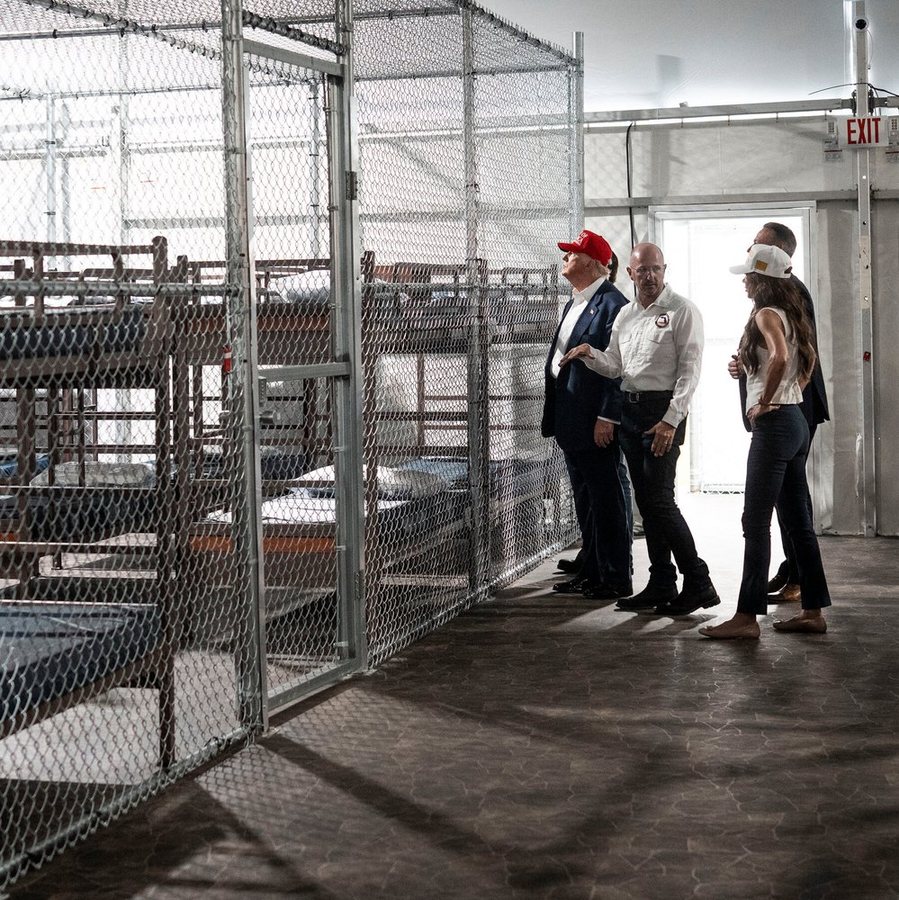
Detainees at the Florida immigration facility widely known as «Alligator Alcatraz» were held in small outdoor metal cages roughly the size of phone booths, according to a report from the Department of Homeland Security's inspector general. The watchdog found that some migrants were confined in the structures, which were labeled «calming areas,» raising fresh questions about conditions at the facility.
The report, released Monday, examined operations at the detention center in Ochopee, Florida, a remote site in the Everglades that the Trump administration has promoted as a model for its immigration enforcement agenda. Investigators described cages that offered little protection from the elements and provided minimal space for those held inside. The findings mark the first formal government review of conditions at the facility since it opened.
President Trump visited the detention center last year, drawing national attention to the site and its nickname. The facility was presented by administration officials as a tough but necessary tool for detaining migrants awaiting deportation proceedings. The inspector general's findings now provide an official account of what conditions inside the facility actually looked like, based on government inspections rather than outside accounts.
The report's description of «calming areas» — metal cages placed outdoors — has become a focal point of criticism. The label suggests a therapeutic purpose, but the physical reality described by investigators was far more restrictive. Detainees were reportedly kept in enclosures that limited movement and exposed them to Florida's heat and humidity, conditions that advocates have long warned pose health risks.
The inspector general's office did not immediately indicate whether it recommended specific changes to the facility's operations. The report adds to a growing body of oversight material on the administration's expanded detention network, which has faced lawsuits and congressional inquiries over conditions, access to legal counsel, and medical care.
Immigration advocates and civil rights groups have pointed to the findings as evidence that the facility's conditions fall short of basic standards. Supporters of the administration's policies argue that detention capacity is necessary to enforce immigration law and that the facility was designed to hold people temporarily before removal.
The Ochopee site sits on state land in a remote part of South Florida, a location chosen in part for its isolation. That remoteness has complicated oversight, making inspections by independent monitors and journalists more difficult. The inspector general's report is one of the few detailed government accounts of daily conditions there.
The findings arrive as the administration continues to expand immigration detention capacity nationwide. Congressional Democrats have called for hearings on the facility, while some Republicans have defended it as a deterrent to illegal crossings. The report is likely to intensify that debate in Washington.
It remains unclear what immediate consequences the report will have for operations at the facility or for the contractors running it. The inspector general's findings will be reviewed by DHS leadership, and lawmakers are expected to request additional documentation in the coming weeks.
For now, the report provides the most detailed official picture to date of a facility that has become a symbol of the administration's hardline immigration approach — and of the conditions that critics say define it.