Dustin Hoffman calls filming The Graduate a terrible experience
Dustin Hoffman says shooting Mike Nichols’ 1967 classic was a painful ordeal, including a scene in which co-star Katharine Ross slapped him 27 times for footage that was never used.
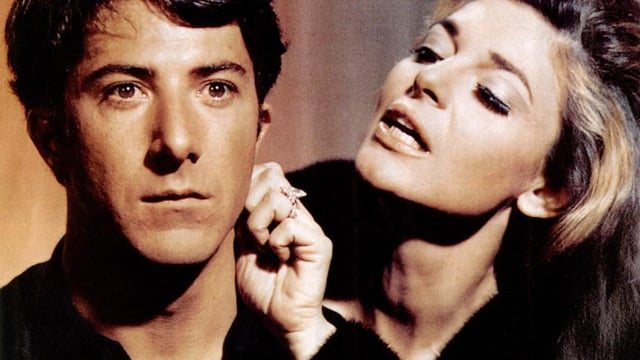
Dustin Hoffman has described the making of “The Graduate” as a «terrible experience,» recalling that director Mike Nichols had co-star Katharine Ross slap him 27 times for a scene that never made it into the finished film. The account appears in a recent essay Hoffman wrote for The New Yorker, in which he looks back on the 1967 comedy-drama that launched his career.
Hoffman played Ben Braddock, the restless recent college graduate whose affair with an older woman, Mrs. Robinson, sets the story in motion. Ross played Elaine Robinson, the young woman Ben pursues later in the film. Hoffman has said the shoot was hard on him even though the movie transformed his life, and he has described the experience as far from pleasant despite its eventual success. The essay returns to the production not as a nostalgic recollection but as a reckoning with the pressures he felt while working under Nichols.
According to Hoffman, the repeated slaps were part of a scene Nichols was trying to capture, and he was struck again and again over the course of the shoot. The number, 27, is the detail that has drawn the most attention, because the footage was ultimately not used. Hoffman frames that outcome as especially frustrating in hindsight, since the physical toll and the repeated takes produced nothing that reached audiences. His description presents the episode as one example of the demanding conditions he endured on set rather than a single isolated moment.
The Graduate, adapted from Charles Webb’s 1963 novel, went on to become one of the defining films of its era. Nichols received the Academy Award for Best Director for the film, and it earned a Best Picture nomination. Its soundtrack by Simon & Garfunkel, which includes “Mrs. Robinson” and “The Sound of Silence,” became as iconic as the movie itself. The film’s success made Hoffman a major star, a fact he acknowledges even as he describes the production as an unhappy one.
Hoffman’s comments add a more critical perspective to a film widely remembered as a cultural landmark. His reflections offer a rare look at the tensions that can accompany a celebrated production, and at how an actor can regard a career-defining project with mixed feelings decades later. The essay, which the New Yorker published as a personal account, has prompted renewed discussion of the film’s legacy and of the price the cast and crew paid to make it.
8