U.S. Companies Win Billions in African Data Center Deals in Competition With China
American companies have closed billions of dollars in deals to build data centers and power infrastructure in Africa, including a $6.2 billion project in Lesotho, as U.S. officials step up competition with China.
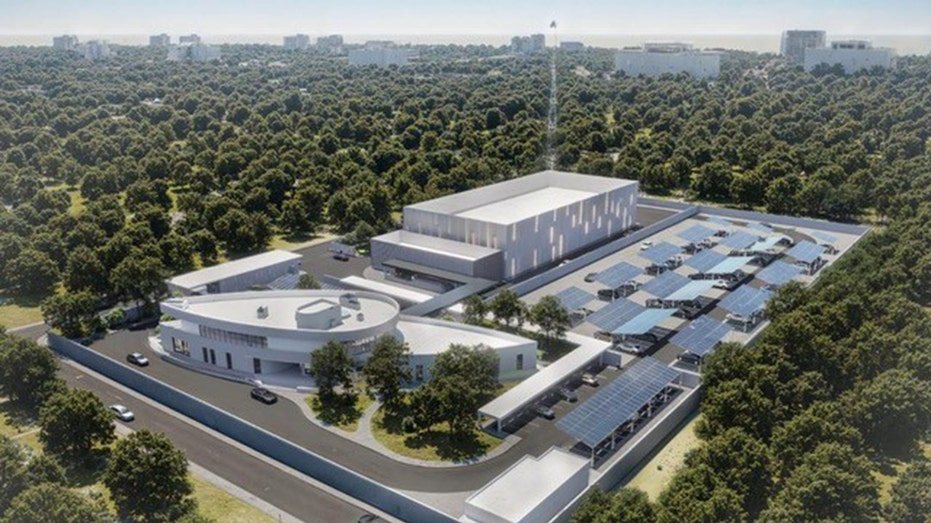
American companies have won billions of dollars in contracts to build data centers and power infrastructure across Africa, a push that U.S. officials say is giving Washington an edge over China in the race to shape the digital economy of the continent.
The State Department Bureau of African Affairs said 37 commercial transactions have closed since the start of the second term of President Donald Trump, with a combined value of $25.67 billion. More deals are still being reported, according to the bureau, which launched a Commercial Diplomacy Strategy in early 2025 to help U.S. firms break into African markets and respond to what officials describe as unfair trade practices by rivals.
Data centers have become central to the global economy because they underpin artificial intelligence, cloud services, video streaming and digital government platforms. Assistant Secretary of State for African Affairs Frank Garcia said the administration is « working worldwide to advance a level playing field for U.S. companies and address disparities in trade practices ». He also contrasted Washington with Beijing, saying « there are others (notably China) that trap, coerce and undermine. The choice to me is clear — partner with the United States for prosperity ».
The most striking result so far is in Lesotho, where the U.S. energy company Convalt Energy, with help from the U.S. embassy, secured a $6.2 billion agreement with the government of Lesotho to develop a 1,200-megawatt pumped-storage hydropower facility and a 900-megawatt artificial intelligence data center. Officials described the project as the largest transaction in the history of the mountainous kingdom, which has long been a focus of Chinese investment. The facility would increase electricity generation capacity in Lesotho by roughly 1,600% and convert the country into a net exporter of electricity while generating about $2 billion in U.S. energy equipment exports.
Hari Achuthan, president and chief executive of Convalt Energy, said the deal shows how American companies can beat China on its traditional turf. « American companies can compete successfully by innovating faster, integrating hardware and software, and remaining intensely focused on the needs of the end customer », he said. He added that artificial intelligence cannot expand without physical infrastructure, noting that every data center requires reliable power, water, fiber connectivity, land, cooling systems and resilient transmission networks.
Achuthan also said the emphasis by the administration on trade and private-sector investment rather than grant funding matches the Convalt approach of building a commercially sustainable infrastructure platform in Lesotho. He said the project is expected to create meaningful economic benefits in the United States, and the company is developing U.S. manufacturing facilities to serve domestic customers and fast-growing African markets.
Elsewhere on the continent, the U.S. embassy in Gabon helped American companies win $600 million in business in 2025 and, this year, a $100 million contract to supply two data centers and a gas-to-power plant. Assistant Secretary Garcia said the American company behind that deal, Cybastion, prevailed over Chinese tech company Huawei in a direct competition. Cybastion has also secured a $170 million contract in the Ivory Coast for a data center and government digitalization platform, a deal confirmed earlier this month by the U.S. embassy.
The new U.S. wins come amid a large gap in overall trade. American goods traded with Africa were valued at $83.4 billion in the most recent full-year data, while Chinese customs data put China-Africa bilateral trade at $348 billion over the same period. In Lesotho, Beijing has removed tariffs, simplified banking with Chinese state lenders, canceled debt and built projects ranging from a fire station to a police fingerprint laboratory. U.S. officials said the recent American deals show that commercial diplomacy can counter that entrenched presence.
With contracts in Lesotho, Gabon and the Ivory Coast, the projects are part of a broader U.S. strategy of using commercial diplomacy to deepen economic ties with African governments while opening export markets for American manufacturers. Officials said the American deals show that the United States can compete successfully in a market where Chinese trade and lending have long been prominent.