Cutwater Approaches $1 Billion in Annual Sales as AB InBev's Spirits Growth Engine
Cutwater, the ready-to-drink canned cocktail brand owned by Anheuser-Busch InBev, is nearing $1 billion in annual sales, driven by high-alcohol products that defy a broader decline in U.S. alcohol consumption. The brand has become the second-largest contributor to AB InBev's overall revenue growth.
Cutwater, the ready-to-drink canned cocktail brand owned by Anheuser-Busch InBev, is closing in on $1 billion in annual sales, a milestone that would cap a rapid ascent from a San Diego brewing side project to one of the spirits industry's fastest-growing labels. The brand's revenue has expanded at triple-digit rates, making it a standout performer even as overall alcohol consumption and sales in the United States hover near record lows.
On AB InBev's second-quarter earnings call, CEO Michel Doukeris told investors and analysts that Cutwater had become the «number one share gaining brand» in the entire spirits industry. He noted that the brand was «inexistent six, seven years ago» and is now «moving towards becoming a $1 billion brand.» During the quarter, Cutwater ranked as the second-largest contributor to AB InBev's overall revenue growth, a significant achievement for a company whose primary business remains beer.
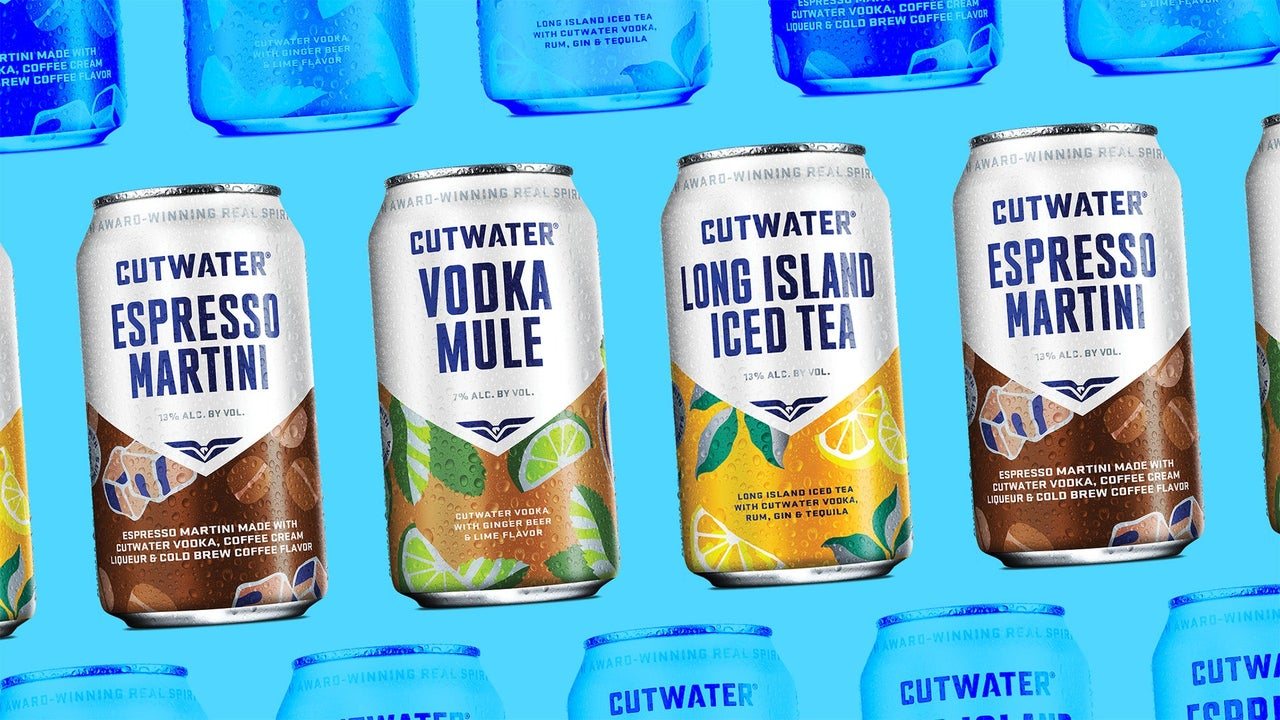
The brand's success stems from a strategy that runs counter to prevailing trends. While a growing number of non-alcoholic beers and mocktail options have gained popularity, Cutwater has leaned into high-alcohol, full-flavor canned cocktails. Each 12-ounce can carries between 7 and 13 percent alcohol by volume, with most flavors exceeding 10 percent. The popular Long Island Ice Tea flavor contains more than three times the alcohol of a Bud Light or a Surfside. Every can is stamped with a guarantee made with two or more shots of real spirits.
That potent formula has turned Cutwater into something of a cultural phenomenon. Last October, GQ dubbed it «the chaotic king of canned cocktails,» while earlier this summer The Atlantic warned that the cans «will smash you to the ground.» On TikTok, creators have documented their experiences with the brand, including comedian Loryn Powell, whose breathalyzer test after two cans in an hour went viral with more than 8 million views. One lime margarita registered a blood alcohol concentration of 0.066, just below the legal driving limit of 0.08, while a second pushed her above 0.09. Other videos with tens of thousands of likes have jokingly warned consumers to leave Cutwater on the shelf.
Cutwater's origins trace back to 2007, when Yuseff Cherney, co-founder and head brewer at Ballast Point Brewing in San Diego, began using an old beer fermenter to distill vodka, gin, rum, and whiskey. That project became Ballast Point Spirits, which spun off when the beer brand was sold to Constellation for $1 billion in 2015. The following year, the canned cocktails were rebranded as Cutwater Spirits. In 2019, AB InBev acquired the ready-to-drink brand for an undisclosed sum.
Since then, the $150 billion beverage giant has continued to roll out new flavors across two dozen vodka, tequila, whiskey, gin, and rum concoctions, and consumers have responded despite the broader slump in alcohol sales. For AB InBev, Cutwater represents a rare growth engine in a challenging market, and its trajectory suggests the brand could soon cross the billion-dollar threshold that few spirits labels ever reach.