
Trump signs order to block defense contractors from buying Chinese critical minerals
President Donald Trump signed an executive order barring defense contractors from purchasing critical minerals from China, part of a broader push to secure military supply chains and boost domestic manufacturing.
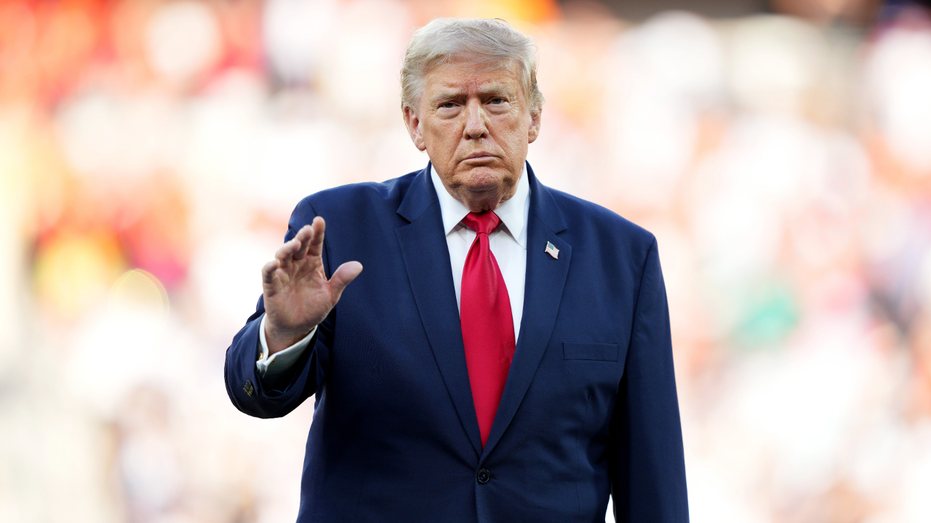
President Donald Trump has signed an executive order requiring U.S. defense contractors to stop buying critical minerals from China, expanding a broader administration push to protect the supply chains behind the country's military capabilities. The order, signed July 20, is the latest in a series of moves focused on the defense industrial base and the administration's goal of bringing more manufacturing back to American soil.
The stated goal is to ensure no material vital to U.S. war-fighting ability is controlled by China. Supply chain vetting is being treated as part of the administration's economic growth strategy, which prioritizes domestic manufacturing over imports from what it describes as unregulated and unreliable suppliers. Backers say the policy benefits both American workers and national security.
The Pentagon has been leading the push to increase production across the defense-related industrial base, including by working with friendly countries. The approach allows partnerships with G7 allies and other close partners, provided production takes place in the United States.
One example is a recent agreement between U.S. company ReconCraft and Ukrainian company Uforce to produce drone boats in Portland, Oregon. The deal marks the first time a U.S. manufacturer will produce drone boats as part of the Pentagon's effort to expand its autonomous weapons capacity. In early July, U.S. drone boats conducted a proof-of-concept kinetic strike that targeted an Iranian submarine facility at a naval base in the Strait of Hormuz.
The U.S. and Ukraine will share not only equipment and workforces but also warfighting doctrine developed by Ukrainian drone operators during years of combat against Russia's invasion. Relevant applications for the U.S. military include the Middle East, where the conflict with Iran has increased demand for advanced drone and counter-drone technology. The broader effort treats such systems as force multipliers that can help reinvigorate the defense industrial base.
Similar concerns are shaping policy on semiconductors, which are essential for drone production. In December, Tennessee Republican Sen. Marsha Blackburn introduced the Chip EQUIP Act, a bill designed to eliminate a significant semiconductor supply chain vulnerability. The legislation would prevent companies receiving CHIPS Act funding from buying specialized technology, including semiconductors, from businesses owned or controlled by China.
Blackburn has warned that the United States must secure its semiconductor supply chains by ensuring American companies do not buy manufacturing tools from China, Russia, North Korea, or Iran. The Chip EQUIP Act would block U.S. labs that receive CHIPS funding from using manufacturing tools made in adversarial nations, she said. The senator has direct knowledge of the issue: the Wacker Polysilicon Plant, a German subsidiary that produces polysilicon, a critical semiconductor precursor, is located in her home state of Tennessee.
Tensions around the Strait of Hormuz have underscored the strategic importance of these efforts. The waterway is a crucial transit route for global oil shipments, and the U.S. military's use of drones in the region illustrates why supply chain security has become a core part of defense planning.
Supporters of the approach say Congress should continue to push for bipartisan legislative support for the procurement strategy and related trade actions. The administration has described the push as part of a broader strategy to rebuild domestic industrial capacity while keeping key allies involved. The broader goal, as they frame it, is clear: the military and national security should not depend on materials or technology controlled by strategic rivals. That principle is now being applied from critical minerals to drone manufacturing to semiconductor production, tying economic policy directly to battlefield readiness.
The executive order targets critical minerals used by defense contractors and signals that supply chain security will remain central to the administration's approach to rebuilding the U.S. defense industrial base.