Accell’s collapse puts Raleigh, Lapierre, Winora and Ghost on separate rescue tracks
The Dutch bicycle group has entered court-supervised payment protection after a sale process failed. German subsidiaries are seeking an investor, Lapierre is pursuing restructuring in France, and Raleigh’s future is now part of a wider breakup of a once-expansive European bike portfolio.
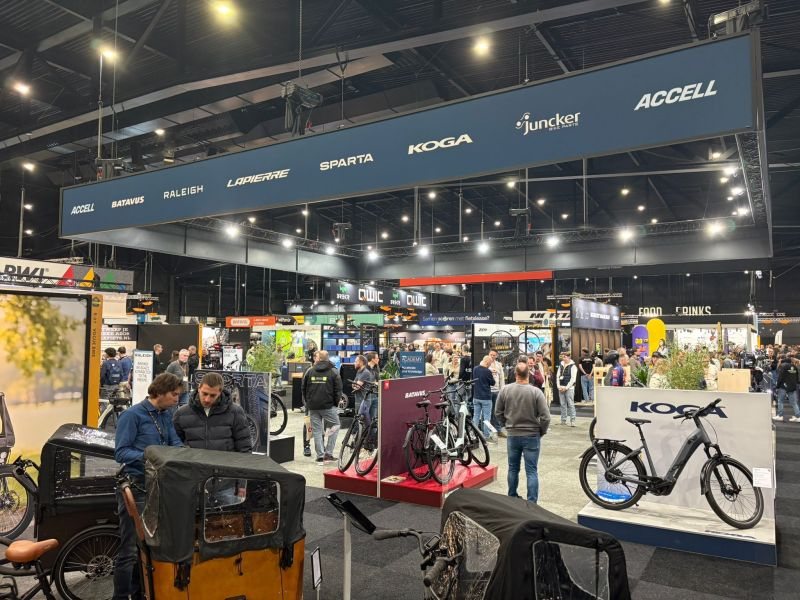
Accell Group’s financial crisis has become a multinational breakup story rather than a single Dutch insolvency. The bicycle company behind Raleigh, Lapierre, Winora, Haibike, Ghost, Batavus and other brands received a court-granted suspension of payments for its Dutch entities on August 5. In Germany, major subsidiaries have moved into self-administered insolvency proceedings. In France, Cycles Lapierre has asked a Dijon court for restructuring protection.
The distinction matters because insolvency at the parent level does not mean every brand closes at once. Accell’s immediate challenge is to preserve viable businesses long enough for administrators, creditors and potential buyers to decide what can survive independently. That process is already taking different forms in each country.
Germany offers the clearest example. A Schweinfurt court ordered self-administration proceedings for Accell Germany, Winora Staiger GmbH, Ghost Bikes GmbH and Engelbert Wiener Bike-Parts GmbH. The businesses employ about 370 people in Sennfeld and Waldsassen and generated roughly €340 million in revenue in 2025. Operations are continuing, with wages initially protected through Germany’s insolvency-pay system.
The German management’s stated objective is to find an investor and separate the local companies from the Dutch group. That gives brands such as Winora, Haibike and Ghost a potential path forward even if the old Accell holding structure disappears. Winora alone traces its roots to 1914 in Schweinfurt, while Ghost is closely associated with Waldsassen in Bavaria.
France is following a different legal route. Cycles Lapierre filed for court-supervised restructuring on August 5, saying the instability of its parent had made ordinary short-term financing impossible. Lapierre generated €99.1 million in revenue in 2025. Its operating loss narrowed to €27.2 million from €46.3 million a year earlier, and headcount fell from 130 to 106 by mid-2026 as the company cut costs and inventory.
Lapierre chief William Perrier has framed the process as an attempt to regain independence and autonomy, not simply wind down the company. The Dijon commercial court is scheduled to consider the request on August 25. That creates a window in which the historic French brand, founded in 1946, could seek a new investor while continuing operations.
The backdrop is a difficult post-pandemic bicycle market. In France, 1.836 million bicycles were sold in 2025, down 6% from the prior year, according to Union Sport & Cycle. The market’s value fell 4.8% to €3.11 billion, while repair activity rose 10.5%. That pattern captures a broader industry problem: consumers are keeping existing bikes longer while manufacturers and dealers have been working through inventories built during the boom.
Accell’s balance sheet magnified that industry correction. A KKR-led consortium took the company private in 2022 in a deal the Financial Times values at €1.8 billion. The transaction was struck when cycling demand and e-bike expectations were unusually strong. When growth failed to match those assumptions, inventory pressure, supply-chain disruptions and debt became a damaging combination.
Accell restructured more than once. In 2025 it described a recapitalization that left roughly €800 million of debt in the operating group. In February 2026 it announced additional funding and another substantial debt reduction. Control then shifted to lenders, meaning KKR was no longer the current controlling owner by the time the August insolvency process began.
Those lenders tried to exit through a strategic sale. Singapore-based Dutech Group, through Tri Star E-Moving, pursued a potential acquisition that reached merger-control reviews in Germany and Poland. German competition authorities cleared the combination, but regulatory approval was only a prerequisite. The parties never completed the transaction, and negotiations collapsed in early August.
Britain’s angle is Raleigh, one of the oldest and best-known names in cycling. Founded in Nottingham in 1887, Raleigh is still based in its home city even though British bicycle production ended in 2002. Accell bought the company in 2012. Its heritage and brand recognition make it a plausible standalone asset if creditors choose to sell the business separately.
What makes Accell especially instructive is the speed of the reversal. As recently as April, the group said it had completed a transformation and was preparing 2027 models from Raleigh, Lapierre, Haibike, Batavus and Winora for dealers. Four months later, it was acknowledging that no realistic path existed to preserve the group in its current form.
For the broader business community, Accell is a reminder that strong consumer brands cannot fully insulate a company from a leveraged capital structure and a severe inventory cycle. The next chapter will be an exercise in value preservation: keeping factories, distribution networks and dealer relationships intact while buyers are found. The holding company may not survive as it was, but several of the names it assembled could emerge under new ownership.
105