
Ukraine’s Independence Day Robot Column Shows Ground Drones Going Mainstream (video)
Dozens of unmanned ground vehicles rolled through central Kyiv as Ukraine highlighted a technology already used for more than 100,000 logistics and evacuation missions this year.
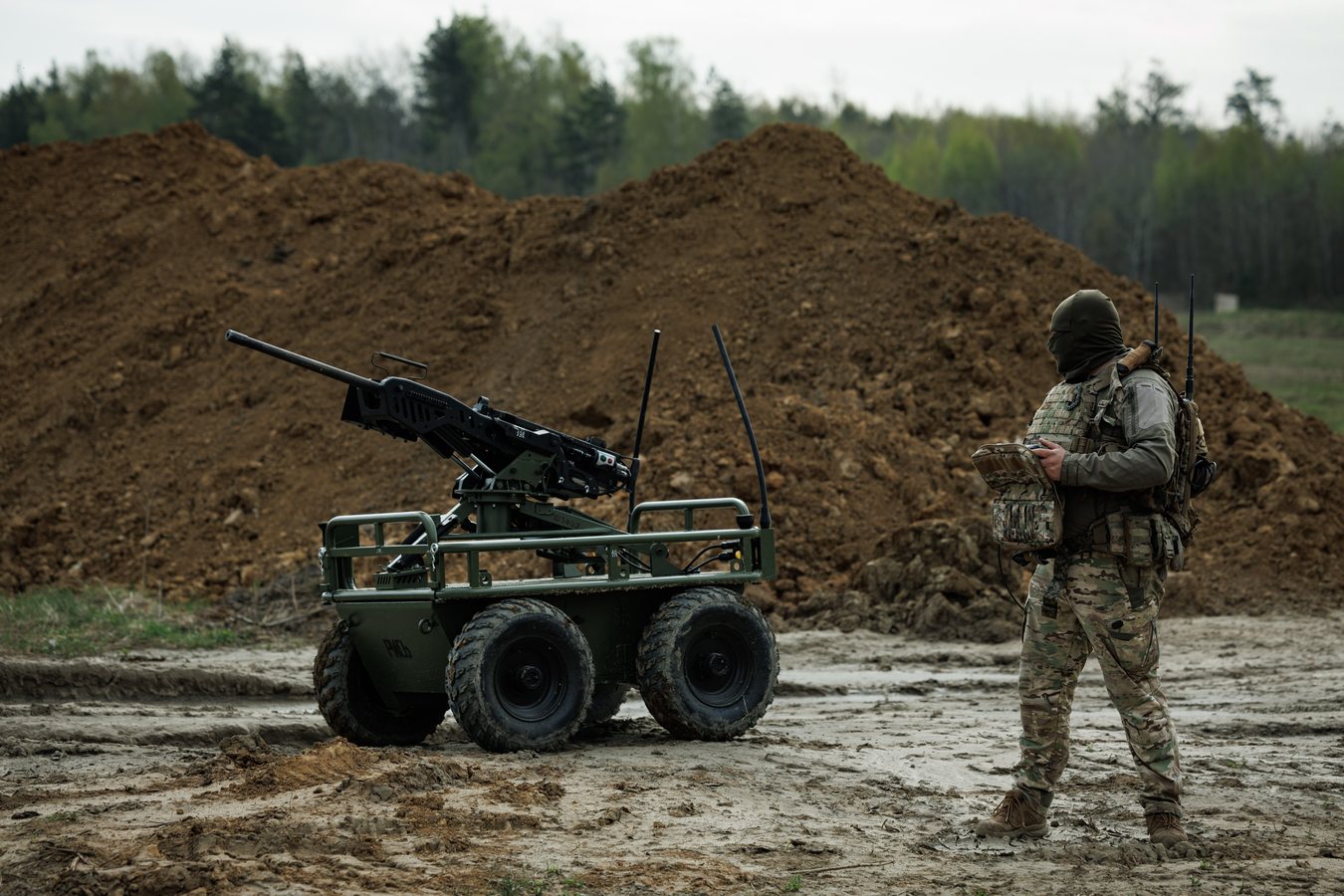
Ukraine used its Independence Day ceremonies to put an increasingly important battlefield technology in public view. As Arhiv reported, several dozen wheeled and tracked unmanned ground vehicles moved down Kyiv’s Khreshchatyk at dawn on Aug. 24, without spectators lining the avenue.
The machines included the Rys PRO and TerMIT. They belong to a broad category of ground robots that can carry ammunition and supplies, evacuate wounded troops, conduct engineering or reconnaissance work, and in some configurations operate remotely controlled weapons.
The striking part is not that the vehicles exist, but how routinely they are now being used. Since the beginning of 2026, Ukrainian defense units have completed more than 100,000 logistics and evacuation missions with unmanned ground systems. More than 22,000 units have been contracted this year.
That scale reflects one of the central pressures of the drone-heavy battlefield. The last miles to a position can be watched by hostile FPV drones and artillery. A small unmanned carrier can still be destroyed, but losing the machine does not automatically mean losing a driver or evacuation team.
Ukraine is also creating a procurement market around the technology. Service members have ordered nearly 1.9 billion hryvnias worth of ground robotic systems through the Brave1 Market program, giving frontline units a direct role in demand.
The industrial story is becoming international. Ukrainian developer Roboneers and Germany’s ARX Robotics formed ARX Industries in June to manufacture the Rys Pro in Ukraine and Germany. The partnership points toward a model in which Ukrainian battlefield feedback is paired with European production capacity.
The Kyiv display was broader than the ground column. Maritime drones including Magura, Sargan and SeaBaby were shown on the Dnipro, while drones and piloted Mirage 2000 and F-16 aircraft appeared in the air. That is why describing the event as a parade made exclusively of combat robots would overstate what happened.
Still, the ground column captured a real shift. Military robotics is moving from demonstration projects to repeat missions, larger procurement volumes and multinational production. The next test is whether manufacturers can keep scaling while improving communications, navigation and survivability in environments saturated with electronic warfare.
83