Scriben AI pen records conversations offline and avoids a screen
Sleepmind's Scriben is a ballpoint pen that records audio locally with a single button, builds memory across recordings, and requires human approval before any action is taken.
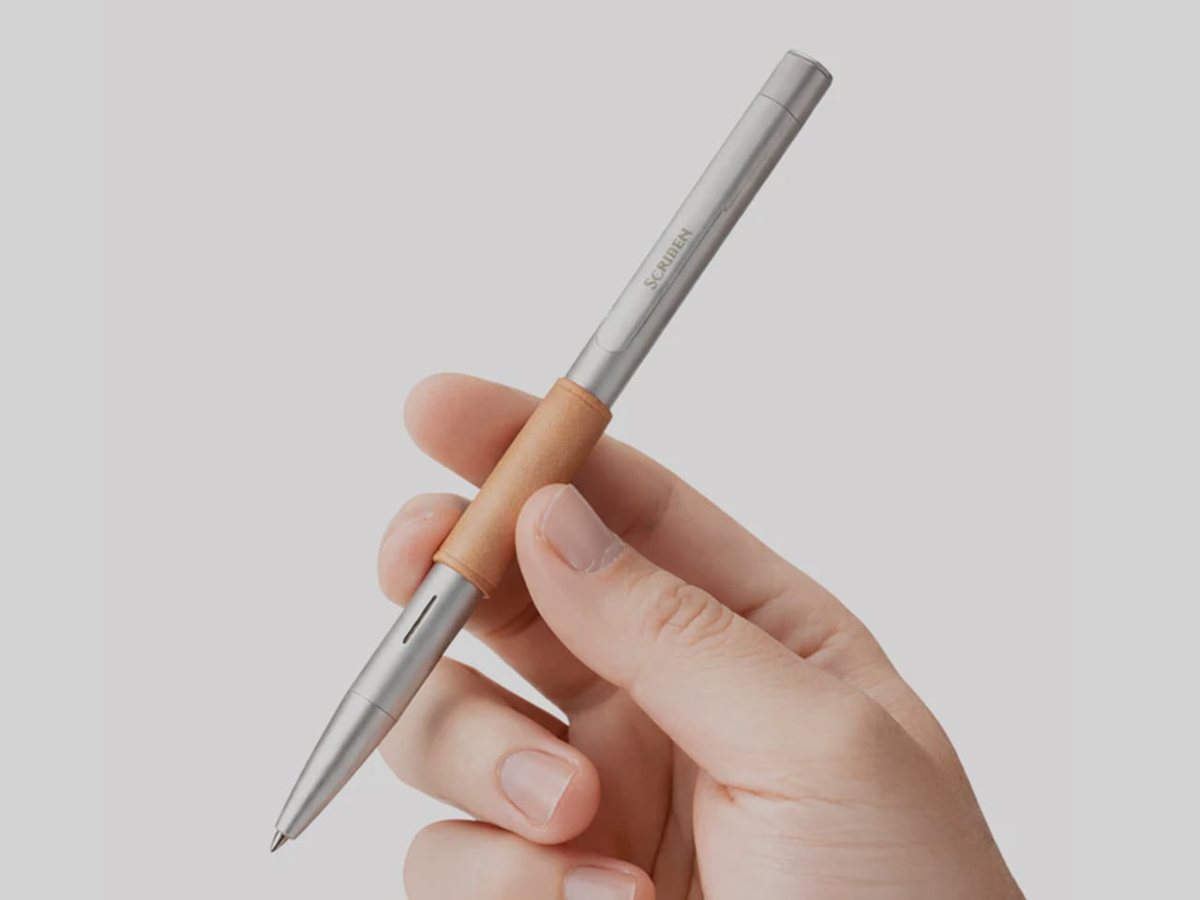
A new AI device is taking a different route than most of its competitors. Scriben, a ballpoint pen built by Sleepmind, Inc., records conversations and turns them into follow-up work without asking users to carry a new gadget or stare at a screen. The company is led by Yidi Xu, who previously worked at Microsoft on Copilot, and the product is designed around the idea that the most useful AI should adapt to how people already work.
The pen is built to look and feel like an ordinary writing instrument. It comes in silver or matte black, uses a 0.6mm ballpoint refill, and includes a leather sleeve. It writes on any paper with a standard ballpoint refill, and its only control is a single button. Pressing the button starts local recording. Audio is stored on 64GB of onboard storage, which the company says holds up to 18 hours per recording and roughly 400 hours in total. The device works offline and does not need a phone. A USB-C port sits under the top cap. Unlike some competing products, the pen does not try to digitize handwriting, and it has no display, indicator light or haptic patterns to learn.
Xu has said her time at Microsoft showed her how capable AI tools often pulled people back toward screens. Her design approach, shaped by training at Tsinghua and an MBA at Wharton, starts from the root of a problem rather than its surface. In her words, « AI should learn how you work, not the other way around. » The team said it chose to leave out features that would make the device more impressive but more demanding to use, a philosophy often described as calm technology, in which tools sit in the background of a user's attention.
Beyond recording, Scriben is meant to handle what happens after a meeting. The system builds persistent memory across recordings, creating an evolving record of a user's work, contacts and open commitments rather than a simple archive of audio files. Transcription covers 85 languages, and speaker identification works when the system has enough context to match voices to names. Xu has argued that this memory should be tailored to each profession, since what matters to a lawyer differs from what matters to a sales executive.
The system can draft a follow-up message, prepare a document or queue a task, but nothing is sent or completed until a person approves it. The company describes this as a prepare, review and approve model. The pen connects to Gmail, Outlook and more than 9,000 tools through Zapier, produces a Morning Brief built from accumulated context, and supports the Model Context Protocol so it can share verified context with Claude, ChatGPT and Zoom AI Companion.
Recording conversations raises consent questions, and the company says users are responsible for following the consent laws that apply to them. On data, Scriben stores audio locally and syncs only when the user chooses, so recordings are not streamed to a server as soon as the button is pressed. The company says that approach matters for people in regulated fields. The design has received recognition, including a Red Dot Design Concept award, which assesses design intent before production, and a 2026 MUSE Design Awards Silver in Product Design. Scriben is available now at scriben.ai in silver and matte black, with a leather sleeve and quick-start guide included.
6