Renault 4 E-Tech Revives a 1961 Icon as an Electric Crossover
Renault has brought back the Renault 4 as an electric-only crossover, the Renault 4 E-Tech, blending retro styling with modern EV technology and a practical interior that sets it apart from the smaller Renault 5 E-Tech.
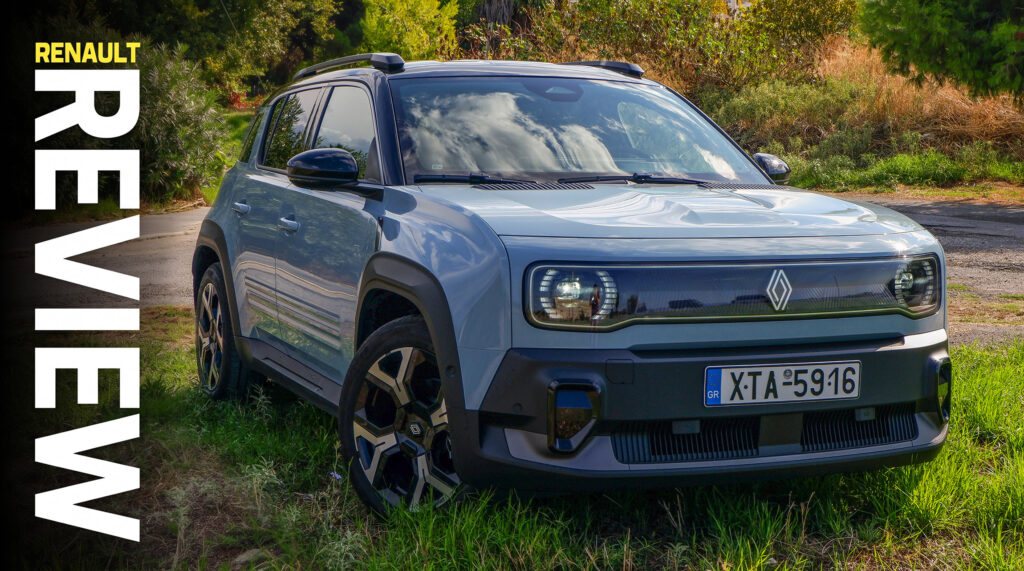
Renault has revived one of its most storied nameplates as an electric-only crossover. The Renault 4 E-Tech, a retro-modern EV built on the same underpinnings as the Renault 5 E-Tech, is now on sale in Europe as a larger and more practical alternative to its hatchback sibling. The production version debuted in 2025, following the rugged Renault 4ever Trophy concept shown in 2022.
The original Renault 4 arrived in 1961 as the French automaker's first front-wheel-drive passenger car. Designed for families and workers, it sold 8.13 million units over a 33-year production run, making it one of the most successful French vehicles ever built. The new model carries that heritage into the electric era with a footprint that has grown considerably. At 4,144 mm long, the R4 E-Tech is nearly half a meter longer than its ancestor and 222 mm longer than the Renault 5, with 84 mm of that extra length between the axles.
Under the skin, the R4 E-Tech uses a single front-mounted electric motor producing 148 horsepower and 245 Nm of torque. Renault quotes a 0-100 km/h time of 8.2 seconds and a top speed of 150 km/h. A 52 kWh lithium-ion battery delivers a WLTP-rated range of 415 km, or about 258 miles. The crossover rides on the EV-dedicated AmpR Small architecture, which includes a standard multi-link rear axle.
Styling is where the revival makes its strongest case. The illuminated grille integrates semi-circular LED headlights, while protective cladding on the bumpers, squared-off wheel arches, sculpted body lines, and the signature greenhouse echo the original 4L. Pill-shaped LED taillights and a black roof complete the look. The result is a design that turns heads without being as overtly charming as the smaller R5.
Inside, the dashboard and digital cockpit are carried over from the Renault 5 E-Tech. A 10.1-inch infotainment display runs Google-powered OpenR software, which is responsive and easy to use, though the review noted occasional Android Auto bugs and an AI assistant that pops up at random times. Hard plastics dominate the upper and lower sections, but fabric inserts on the dashboard and door cards lift perceived quality. Physical climate controls on the center console are a welcome touch.
The R4's real advantage over the R5 is space. The longer wheelbase and taller roofline translate into generous rear headroom and adequate knee room, with the rear bench able to seat three adults on short trips. Boot capacity stands at 420 liters, enough for a vehicle of this size, though there is no dedicated compartment for charging cables because the electric motor occupies the space under the hood.
Equipment levels are strong even in the mid-spec Techno trim tested. Standard features include 18-inch alloy wheels, roof rails, a digital cockpit, a six-speaker audio system, a wireless charging pad, four USB-C outlets, automatic climate control, a hands-free tailgate, auto-folding mirrors, Multi-Sense drive modes, and a comprehensive driver-assistance suite with auto parking. Upgrading to the flagship Iconic trim mainly adds a heated steering wheel, heated and massaging front seats, and synthetic leather upholstery. Rear climate vents are absent across the lineup, a common omission in the B-SUV segment.
Pricing starts from €33,500 in Greece, roughly $37,500, for the mid-spec Techno model. The lineup also includes an entry-level Evolution trim and a Plein Sud variant with a retractable fabric top for an open-air feel. The R4 E-Tech competes in Europe's crowded small SUV segment, where Renault already fields the Clio-based Captur. The company is betting that a distinct retro character and a more spacious interior will carve out room for one more entry.
The original 4L's long production run and massive sales total gave Renault a rare piece of automotive history to draw on. By translating that heritage into an electric crossover rather than a direct retro remake, the automaker is positioning the R4 E-Tech as a practical family vehicle first and a nostalgia exercise second. For American buyers, the model remains out of reach, as Renault does not sell passenger cars in the United States.
6