Human designer reworks AI-generated posters to show value of professional touch
A British designer is publicly redesigning AI-generated posters to demonstrate the difference between automated and human design work.
Badly designed AI posters have become so common that human graphic designers are now reworking them on their own time to demonstrate what a professional touch can add. The results highlight a growing gap between automated design tools and the work of trained creatives, especially in industries like food service where AI-generated imagery often produces unappetizing results.
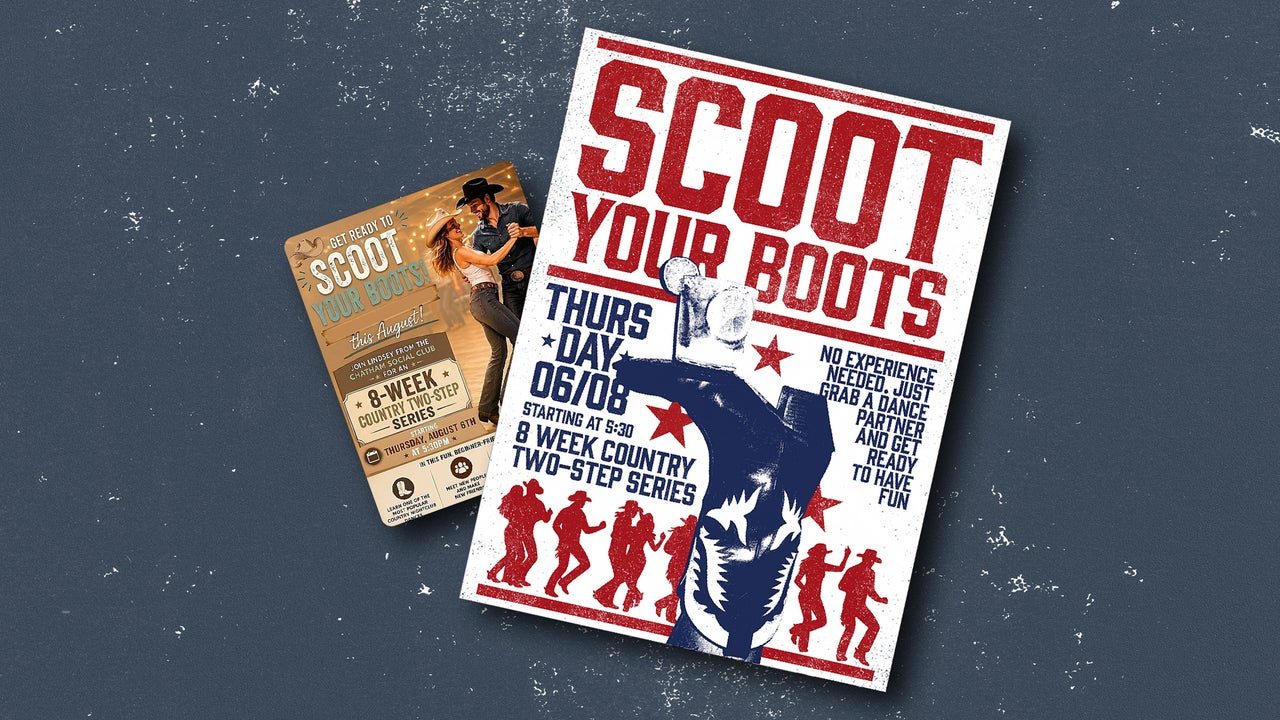
Elizabeth Martin, founder of the U.K.-based Ello Design Studio, started a series called «AI vs. Designer» on her Instagram account to draw attention to the issue. In the series, her studio takes the same creative brief and produces both an AI-generated visual identity and a human-made one, then compares the two. She has also redesigned real AI posters spotted in the wild, including one from a British eyewear brand and another for an eight-week beginner country dance course.
The visual differences are striking. AI-generated posters tend to be information-dense, packed with copy and icons in layouts that look more like infographics than creative work. They often carry an unnatural sheen, yellowish tones, and inconsistent details. For restaurants, the problem is especially visible: AI-generated food imagery frequently produces bizarre repeating patterns that look fake and unappetizing. Martin notes that a poorly lit photo from an old iPad camera would look better than some AI-generated menu advertisements currently used by actual delis.
«I redesigned these posters to prove that when it comes to creativity, there’s still something pretty special about using a human designer over a robot,» Martin said. «In a world where businesses big and small are increasingly turning to AI to save time and money, I think it’s more important than ever to champion the people behind the work, especially when their jobs are being replaced by the very software they’re being asked to compete with.»
Martin says she has noticed fewer junior designer roles available, shorter contracts, smaller projects, and in some cases the creative part of the job itself being reduced. She also reports that multiple clients have sent her AI renders or images of what they want instead of a written brief, a shift that changes how design work is scoped and evaluated.
Other designers have joined the conversation on social media, comparing their own work to AI output and pointing out the advantages of working with a person. Beyond the aesthetic argument, there is also a marketing case for hiring humans. A Bentley University-Gallup Business in Society survey released in August found that nearly half of Americans interviewed feel negatively about businesses using AI to create advertisements, while only 19 percent feel positively about it.
The trend comes as AI tools become faster, cheaper, and more widely available. But the style of AI output, often referred to as «slop,» appears to turn off a significant segment of potential customers. For businesses weighing cost against customer perception, human-made design may carry more value than the price difference suggests.
94