Google and Meta Pledge Transparency as Data Center Opposition Grows
Facing mounting community resistance and rising political pressure ahead of the midterms, major tech companies are promising more transparency, fewer tax breaks, and greater financial incentives for host communities.
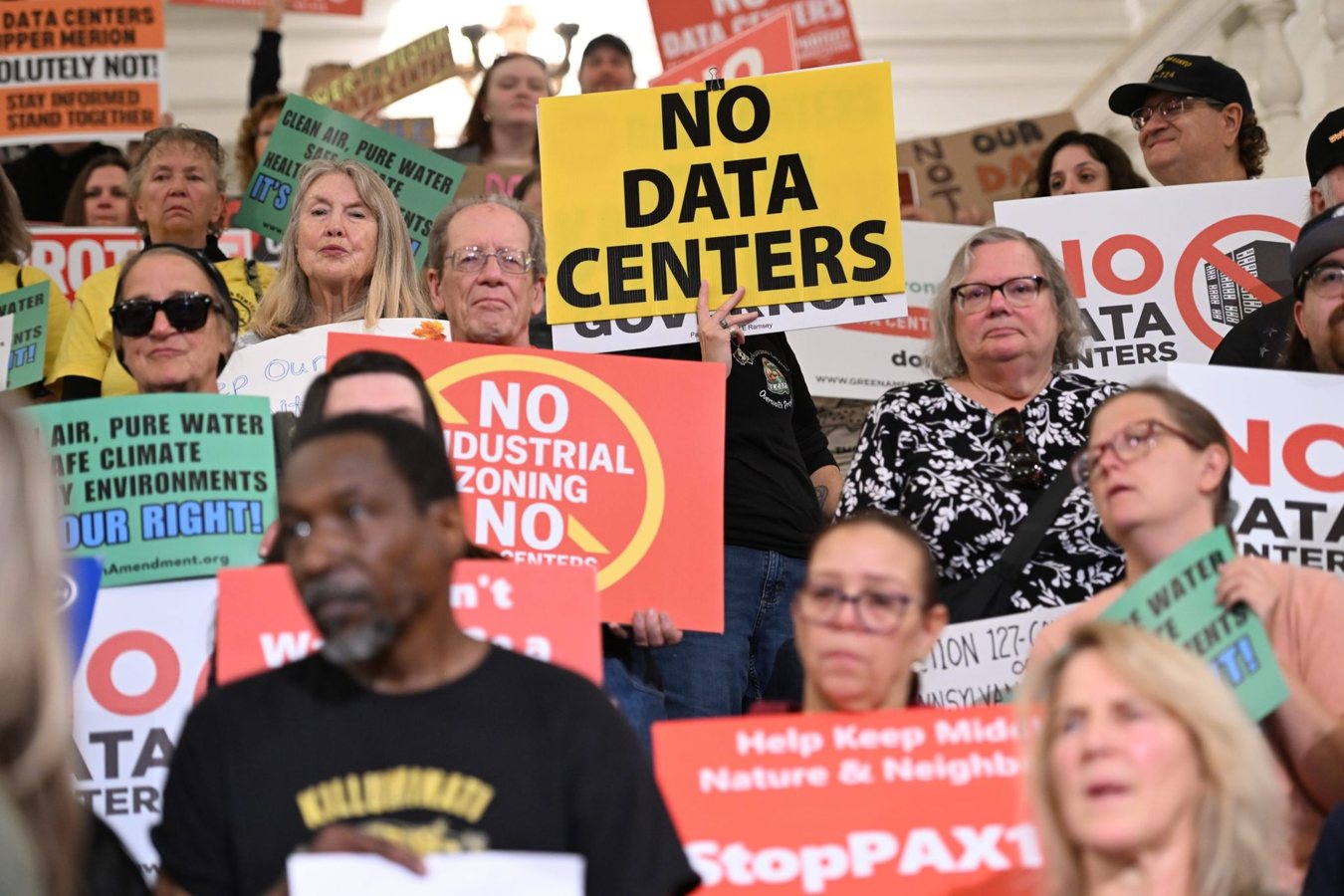
America's largest technology companies are moving to address growing community opposition to their massive data centers, offering pledges of greater transparency, reduced reliance on taxpayer subsidies, and increased financial support for host communities. The shift comes as anti-data center sentiment has become a potent political issue ahead of next month's midterm elections, with control of Congress and 36 governors' offices at stake.
Despite backing from President Donald Trump, the data centers powering the artificial intelligence boom have become politically toxic. Community opposition that blocks municipal permits has emerged as a bottleneck for the industry, and tech giants could face even greater challenges if voters elect more officials skeptical of data centers.
Google and Meta officials said in interviews that they are trying to address mistrust by being more transparent with communities where they hope to build. Devi Thomas, Google's global head of community development and engagement, declined to characterize the resistance as a «backlash» but acknowledged that «there are often community questions to be addressed.» She added that «early public consultation is increasingly a very important part of the process.»
Earlier this month, Amazon introduced its «Amazon Data Center Commitment,» which includes pledges to improve the environmental rating of its backup diesel generators and to disclose more about its data centers' energy and water use. The company also said, as have Microsoft and Google, that it had stopped requiring government officials to sign non-disclosure agreements. The use of such agreements has meant that residents in host communities may know little or nothing about a project until it appears on a municipal board's voting agenda.
Critics and other developers say tech companies have often hidden their involvement behind code names and developers who handle negotiations with local governments. That practice «raises people's suspicion as to what's truly happening,» said Anita Verma-Lallian, a developer with data center projects in Arizona.
Meta is always evaluating how well it shares information with communities, said Lindsay Elin, the company's vice president of public policy and external affairs. «As part of that work, we are reviewing our use of non-disclosure agreements,» she said in a statement.
A report this month from several Senate Democrats sharply criticized Amazon, Google, Meta, and Microsoft, saying the companies have used non-disclosure agreements to freeze out the public. The report also said the firms aggressively seek state and local tax breaks and do not cover the full cost of the electric-grid buildout needed for energy-hungry data centers.
The dominant industry players project they will spend more than $600 billion combined this year on capital projects, primarily data center construction in the United States. Even as the companies prepare to spend more to entice communities — payments that some critics call «bribes» — Trump urged them in a social media post Wednesday to pay people and communities a «dividend» if they «want to make their Data Centers popular.»
Meta and Amazon said recently they will each spend $1 billion on financial incentives for host communities in the coming years, on top of millions they already spend to support schools, charities, and job training. Google says its investments in local programs in data center communities will reach $1 billion by the end of 2027. Microsoft has pointed to a couple of local tax breaks it will forego. Google recently said that for all of its new data center campuses, it will pay full real property taxes on the buildings and land.
The companies have known since last fall that community opposition was becoming a serious problem. Data center demand began driving up electric bills last year across a 13-state electricity grid stretching from Illinois to New Jersey and Maryland, angering ratepayers. The outcry led to promises from the tech giants to pay the cost of the power infrastructure to feed their data centers, while Microsoft rolled out its five-point «Community-First AI Infrastructure» plan.
Data centers' critics remain unconvinced. Sam Burleigh, who helped start Concerned Citizens of Montour County in rural northern Pennsylvania to fight a potential Amazon-backed data center project, called the company's commitments «propaganda.» «What I see is them realizing they have more resistance than they ever dreamt of,» Burleigh said. «And so now they have to find some way, some method to break through that resistance.»
Kathryn Hoffman, executive director of the Minnesota Center for Environmental Advocacy, which has sued over two prospective Google data centers, said she sees Google doing more public relations outreach but not more to disclose critical details about its plans.
6