China's Renewable Energy Surplus Spurs AI-Driven Grid Solutions
China's rapid expansion of renewable energy has created an overcapacity challenge, prompting experts to propose AI-powered management systems to balance the grid and reduce reliance on manual labor.
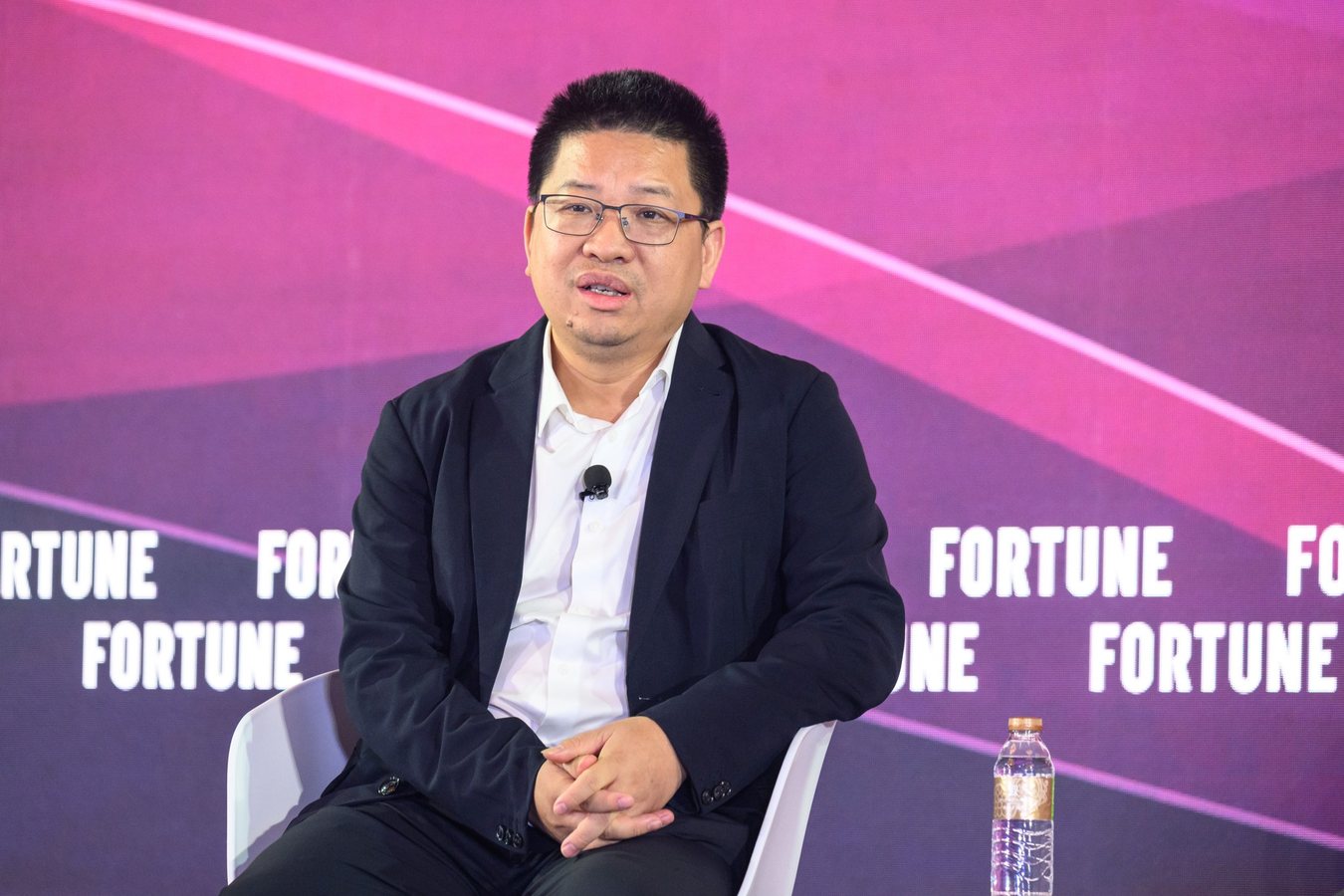
China's aggressive buildout of renewable energy has produced an unexpected problem: the country now has more clean power capacity than its grid can efficiently absorb. Industry leaders speaking at the Fortune Leaders Forum in Macau on September 8 said artificial intelligence could be the key to managing this surplus and ensuring stable electricity supply.
China will account for 60% of all installed renewable capacity through 2030, according to the International Energy Agency. In July, solar overtook coal as the nation's largest source of installed power capacity. Daniel Liu, vice president of solar module giant Jinko Solar, noted that renewables effectively covered all of China's electricity demand growth last year. Yet the sheer scale of production has outpaced market needs, creating what panelists described as an energy overcapacity dilemma.
«China's grid is a very strong and stable one,» said Youyuan Huang, executive vice chairman of BTR New Material Group, the world's top maker of battery anode materials. «But we've installed too much green energy.»
The proposed solution—AI—may seem counterintuitive, but panelists argued that artificial intelligence requires a large and steady supply of energy, making it a natural partner for the renewable sector. «[Energy] guarantees the safety and stability of computing power,» Huang explained. «With the development of GPUs, the power of a single chip has risen dramatically…This means that if the power drops, [large amounts of] data that's being computed could be lost.»
Jiangxing Intelligence, a physical AI firm, has developed an AI «brain» that monitors environmental conditions around renewable energy infrastructure to ensure electricity is collected and stored prudently. The system also controls a suite of autonomous robots that inspect and maintain solar panels and wind turbines.
«The supply of wind and solar energy is highly uncontrollable…at night there's no sunlight, but during the day sunlight floods in,» said Haitian Pang, founder and CEO of Jiangxing Intelligence. «With an intelligent brain that deeply understands the region's physical and meteorological conditions, you can forecast wind and solar conditions, and then know what options you need for energy storage.»
Pang added that such infrastructure will help reduce reliance on manual labor, especially in remote areas. «When wind and sand bury the solar panels, for example, we can dispatch drones that automatically clean them with water,» he said. «This way, the entire energy system can run more stably and efficiently.»
While China leads in renewable adoption, other parts of Asia face distinct challenges. The archipelagic geography of Southeast Asia makes building and maintaining a contiguous electricity grid difficult. «The Philippines has more than 7,000 islands, while Indonesia has more than 10,000, so it remains to be seen how renewable energy can come into play alongside fossil fuels there,» Liu noted.
Huang pointed out that even as Chinese factories relocate to Southeast Asia, the region lacks clean and stable power. «We have many investments in Indonesia, where many large-scale data centers are being built,» he said. «Yet most of them are powered by traditional energy sources like coal.»
Liu added that India has made substantial progress toward adopting renewable energy, though its demand for coal remains high. Despite these hurdles, panelists expressed optimism about Asia's energy transition. «I think a clean energy transition—including a lower-cost energy transition—will certainly remain a continuous pursuit for everyone,» Pang said.
«The narrative of energy transition differs across countries: for some it's security, and for others it's the future,» Liu concluded. «But they're all actively embracing renewables.»