Apple's new iPad mini gets OLED screen but skips 120 Hz ProMotion
The new iPad mini gets an OLED display, a thinner design and the A20 Pro chip, but its refresh rate stays at 60 Hz with no ProMotion support.
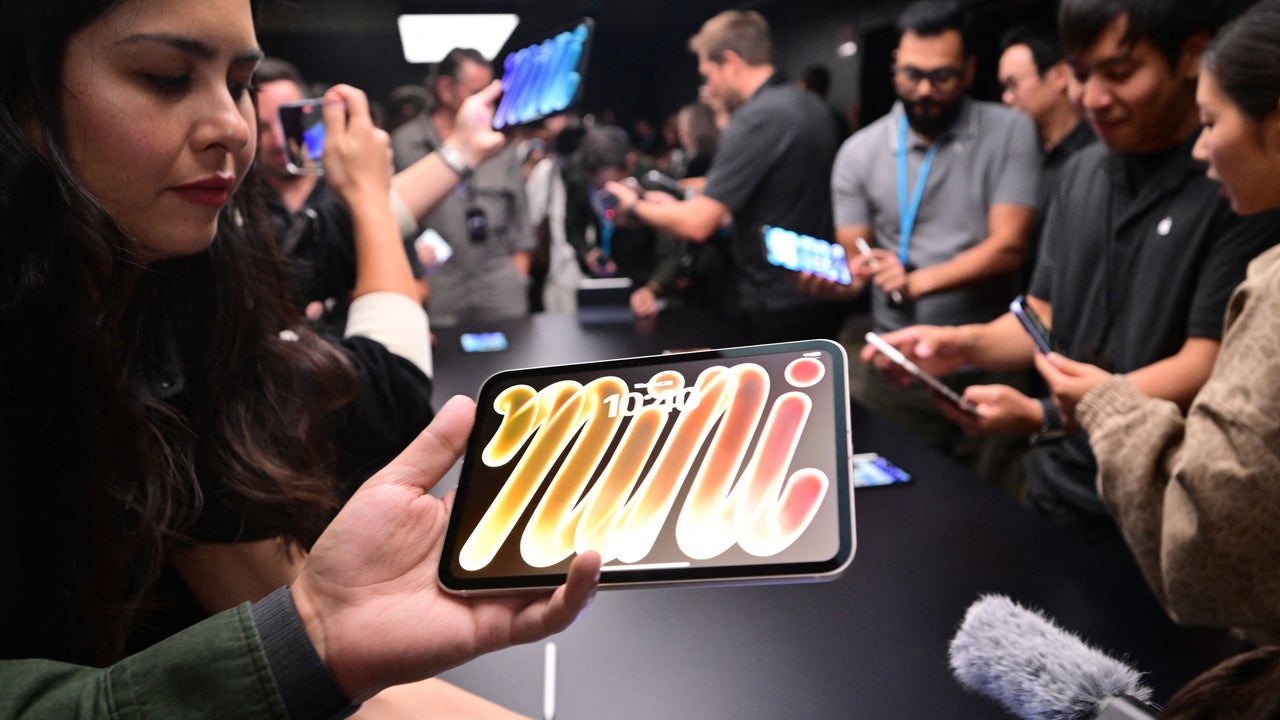
Apple has unveiled the eighth-generation iPad mini with an 8.5-inch OLED display, but it has kept a fixed 60 Hz refresh rate and no support for ProMotion 120 Hz technology, which is already found in the iPhone and iPad Pro. According to Fast Company reviewer, this is the main drawback of the device despite its many improvements.
The company calls the new model the biggest update to this product in its history, and, according to the review's author, this conclusion looks justified. The 8.5-inch display takes up roughly the same area as the previous 8.3-inch LCD model, thanks to bezels that are 24% thinner. The device itself has become thinner: its thickness has decreased from 6.3 to 5.4 millimeters, and its weight has dropped by 14% to 255 grams. In the author's assessment, this significantly makes one-handed reading easier.
The internal components have also been upgraded. The device has moved from the A17 Pro chip to the 2-nanometer A20 Pro, which is also used in the iPhone 18 Pro. For wireless connectivity, Apple has used its own N1 chip, which provides Wi-Fi 7 and Bluetooth 6, as well as its own C2 modem for 5G. The "Acoustic Display" sound system transmits speaker vibrations through the panel and helped earn an IP67 rating for water and dust resistance, which is a first for iPad.
The author's main objection concerned the screen's refresh rate. The previous model had 60 Hz, and this figure, according to the author, was the main reason he sold his iPad mini. He notes that on laptops and desktop computers 60 Hz is less noticeable, but on a small screen, where the user usually looks at one app and expects an instant response to touch, it feels like a choice in favor of smartphone technology. The author said he would have been willing to buy an OLED iPad mini with ProMotion, but Apple's decision made him give up on the purchase.
The technical reason for this decision is tied to the type of panel. Apple first introduced ProMotion on the 2017 iPad Pro with LCD panels based on IGZO transistors, which dynamically changed the frequency from 24 to 120 Hz. In 2021, the company first used an OLED screen with an LTPO backplane in the iPhone 13 Pro, which enabled a variable refresh rate on smartphones as well. The first OLED iPhone X, released four years earlier, used an LTPS backplane, which requires constant refreshing at a fixed rate of 60 or 120 Hz, otherwise pixel charge leaks and image quality deteriorates. According to supply chain data, the new iPad mini uses a Samsung Display panel based on LTPS technology.
The author believes Apple likely did not want to sacrifice the energy efficiency of a thin body with a slightly smaller battery. At the same time, rising memory prices affected the cost: the base 128 GB model costs $699. The author stresses that LTPO panels are no longer expensive exotics, since Apple offers ProMotion in regular iPhone 17 and 18 models, and the price difference from this upgrade would hardly be significant against the backdrop of the previous model's base price increase to $599 in June.
According to the author, the iPad mini was already a niche product, and the new version is aimed even more at enthusiasts. With more storage and a matte nano-texture coating, its price can reach $1,249. The author doubts that an extra $50 would significantly affect sales. He also believes the iPad mini and the 11-inch iPad Pro, which now starts at $1,199, are fundamentally different devices, since the mini is touch-oriented and has little in common with keyboard-based work. The closest analogue, in the author's view, is the foldable iPhone Duo, which also has ProMotion on both screens, although it costs $1,999. In the author's opinion, Apple correctly positions ProMotion as a feature that adds value to the regular iPhone, and this feature should also be in the iPad mini.
8