Amazon expands Prime Air drone delivery to nearly 500 US cities
Amazon plans to expand its Prime Air drone delivery service to nearly 500 U.S. cities and towns by the end of 2026, offering eligible orders in as fast as 30 minutes.
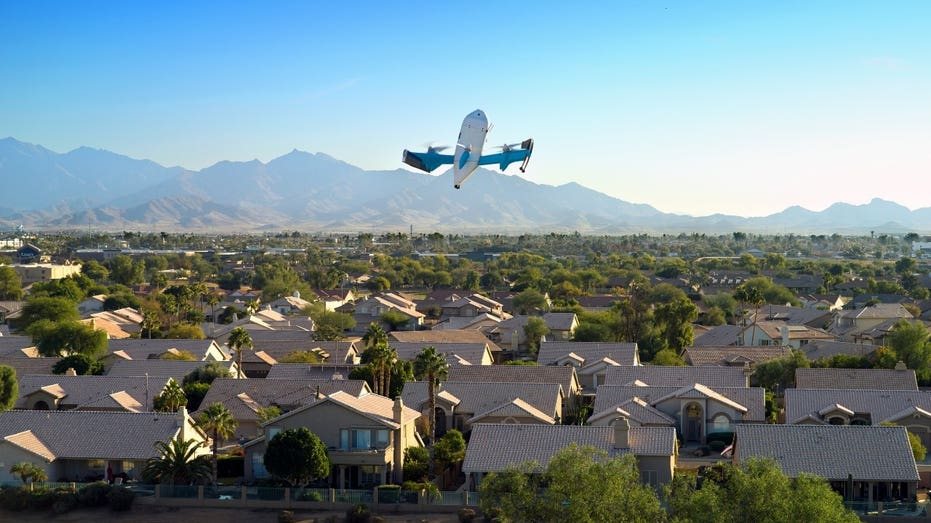
Amazon is preparing a major expansion of its Prime Air drone delivery service, with plans to reach nearly 500 U.S. cities and towns by the end of 2026. The company says eligible orders could arrive at customers' homes in as little as 30 minutes, a significant step up from its current footprint of 11 launch locations across 10 metro areas.
Amazon reports its drones have already delivered hundreds of thousands of packages this year. The 500-city figure refers to communities served rather than individual drone hubs, as each Prime Air site can cover roughly 175 square miles and reach multiple nearby towns from a single launch location.
Prime Air currently operates in the Phoenix, Tampa, Kansas City, Baton Rouge, Detroit, Omaha, Houston, Dallas, San Antonio, and Waco metro areas, spanning seven states. Amazon lists Chicago, Syracuse, Cleveland, Atlanta, and Boise as the next markets on its launch schedule, with additional communities expected later this year.
Coverage is not guaranteed for every address within those metro areas. Amazon says availability varies by ZIP code and address, and the drone option appears during shopping or at checkout only when a customer's home qualifies. No separate app or special account is required beyond a standard Amazon account.
While Amazon advertises delivery in as fast as 30 minutes, the company says most drone orders currently arrive about 60 minutes after checkout. Prime Air can carry packages up to 5 pounds that fit roughly inside a large shoebox, which Amazon says covers more than 60% of the items customers buy most often. Eligible products include iPhones, Galaxy phones, AirPods, AirTags, Ring doorbells, groceries, and household goods, depending on location and what can be safely loaded onto the drone.
Pricing depends on Prime membership and order size. Prime members pay no drone delivery fee on eligible orders of $50 or more, while smaller orders carry a $2.99 fee. Customers without Prime pay $4.99 per drone delivery.
For first-time users, customers select a delivery spot on their property, which can be reused or changed later. The drone checks the area before releasing the package, scanning for people, pets, vehicles, and other obstacles. Trees, landscaping, or a pool may make a property unsuitable for drone delivery if they prevent the drone from finding a safe drop zone.
Amazon holds FAA Part 135 certification, the federal framework for commercial drone package delivery, which allows operations carrying property for compensation beyond visual line of sight. The Prime Air system uses a Detect-and-Avoid mechanism that continuously scans the airspace and makes real-time decisions to avoid obstacles during flight.
Privacy considerations accompany the technology. Prime Air drones use onboard cameras and sensors for navigation, but Amazon says the drones do not track individuals or record their movements, and no person watches a live camera feed because the drone processes camera data onboard.
Noise could become a point of contention in some neighborhoods. Amazon says the drone produces less sound during drop-off than an idling delivery truck and compares the sound at cruising altitude to a window fan on low. Community complaints about drone noise have followed delivery programs elsewhere, and local reaction may influence how smoothly Prime Air enters new areas as the service expands.
86