
USMNT Advances but Controversial Red Card Threatens World Cup Run
The United States Men's National Team reached the round of 16 for the first time since 2002, but Folarin Balogun's red card, deemed unfair by experts, could derail their progress against Belgium.
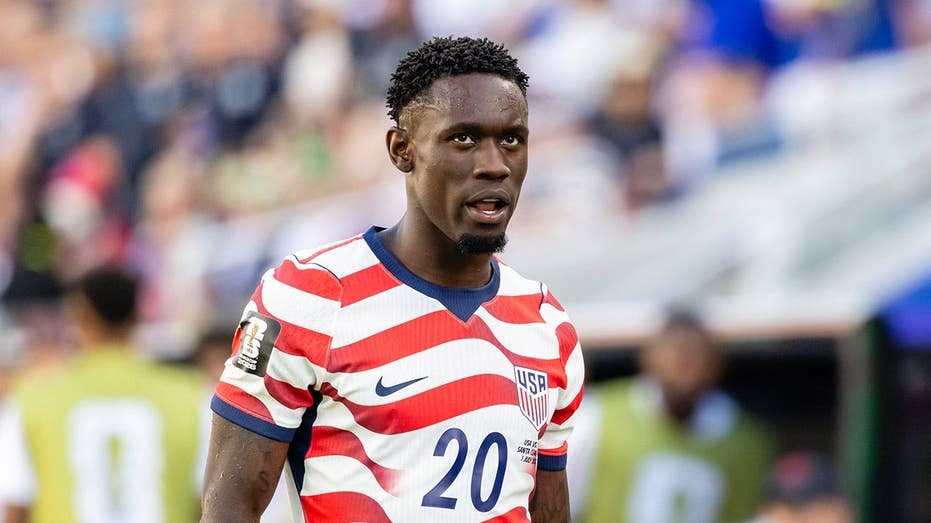
The United States Men's National Team (USMNT) has advanced to the round of 16 at the 2026 World Cup, marking their first knockout stage victory since 2002. By many accounts, the tournament has been a resounding success for the host nation, with the team displaying dominant performances, controlling possession, and outscoring opponents 8-1 with their starting lineup on the field. However, this achievement is now overshadowed by a controversial red card issued to star striker Folarin Balogun, a decision that has sparked widespread criticism from players, coaches, and refereeing experts.
The red card was awarded during the USMNT's 2-0 win over Bosnia and Herzegovina, a match that saw Malik Tillman score a world-class free kick to seal the victory. The incident occurred when Balogun made a tackle that, upon review by the Video Assistant Referee (VAR), was deemed worthy of a red card. Yet, according to Andy Davies, a former Premier League and Championship referee with over 12 seasons of experience, the VAR review should never have taken place. Davies explained that the recommendation to review the play was based on slow-motion and still replays, which violates VAR protocols that allow such footage only for determining the point of contact in red card tackle situations. While Davies acknowledged that the tackle itself might warrant a red card under the letter of the law, the process used to reach that decision was fundamentally flawed.
The controversy is compounded by the fact that similar plays throughout the tournament have gone unpunished. USMNT midfielder Weston McKennie voiced his frustration after the match, noting that many other players have made comparable tackles without receiving any card or VAR review. One prominent example involves Argentine star Lionel Messi, who caught Algeria's Aissa Mandi with his studs up during a challenge. Algeria was awarded only a free kick, with no card issued and no VAR intervention, prompting Algeria to file a formal complaint with FIFA over the officiating. This double standard has not gone unnoticed by USMNT fans and players, who argue that the tournament's most famous players are treated differently.
The referee on the field, Raphael Claus, did not initially see anything worthy of a card during live play, only issuing the red after the VAR official recommended a review based on slow-motion footage. Claus has a controversial history, having been investigated for match-fixing in Brazil, though there is no evidence that this influenced his decision in this case. Nevertheless, the lack of an appeal process for Balogun's suspension has added to the frustration. The USMNT will now face Belgium in the round of 16 without their star striker, a significant blow to their chances of advancing further. The team's performance has been impressive, but the red card could derail their momentum and potentially damage the future of soccer in the United States if they are eliminated.
The implications of this decision extend beyond the current match. A loss to Belgium, especially one influenced by what many see as unfair officiating, could leave a permanent stain on the 2026 World Cup and undermine the growth of the sport in the U.S. The USMNT had been building toward a potential quarterfinal matchup against Spain or Portugal in Los Angeles, a dream scenario for American soccer fans. Now, that possibility hangs in the balance. While the team may still overcome Belgium without Balogun, the controversy has cast a shadow over their achievements. As McKennie put it, the decision is «questionable,» and the lack of consistency in officiating has left the USMNT and its supporters feeling unfairly treated.