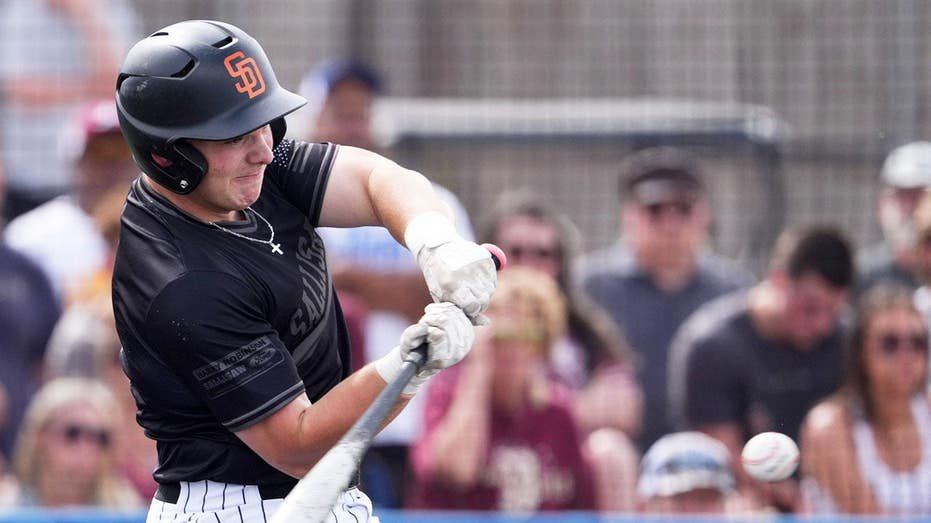
A rule change approved by USA Baseball and the National Federation of High School State Associations (NFHS) will permit high school baseball players to use lighter bats starting in 2028, a decision that has drawn sharp criticism from parents, coaches, and fans who warn it could increase the risk of injury on the field.
The NFHS Rules Committee voted to expand permitted bat drop weights to include -4, -5, and -6, moving away from the current standard of -3. Bat drop weight is the difference between a bat's length in inches and its weight in ounces. Under the current rule, a 31-inch bat must weigh 28 ounces, a 32-inch bat 29 ounces, and so on. The change will allow players to swing lighter bats, which can generate higher swing speeds and potentially send the ball harder and faster off the barrel.
USA Baseball President John Gall framed the decision as a measure to keep young athletes in the sport. «We have seen too many athletes entering high school baseball struggle with the immediate jump to the -3-drop weight and then walk away from the game,» Gall said in a statement. «This rule change creates flexibility for players to continue building strength, refining mechanics, and developing bat speed over time before making the jump to USA BBCOR.»
BBCOR, which stands for Batted Ball Coefficient of Restitution, is a standard introduced in 2012 that limits the energy transferred from the bat to the ball, effectively toning down the performance of aluminum bats and making them closer to wood bats used in professional baseball. The current -3 drop weight has been the norm for high school and college play since the BBCOR mandate took effect after the 2011 season.
Critics argue that the new rule undermines player safety and development. Erik Schoenrock, a former University of Memphis pitcher drafted by the San Diego Padres in 2013 and now head coach at Southwest Tennessee Community College, called the decision «ridiculous.» In a social media post, Schoenrock wrote: «If you’re not using a -3 bat by the time you’re 14 or 15 years old… don’t worry about college baseball recruiting. You’re not getting prepared. And personally, I think this is ridiculous… just asking for someone to get hurt. 0 player safety thoughts with this new rule.»
Many parents and fans echoed similar concerns online, pointing out that a lighter bat in the hands of a strong, skilled player could produce dangerously high exit velocities, increasing the risk of line drives striking pitchers, infielders, or batters. The move comes despite the fact that the original shift to BBCOR bats was driven partly by safety concerns after years of increasingly powerful aluminum bats led to serious injuries.
NFHS Director of Sports, Sanctioning, and Student Services Elliot Hopkins defended the change, saying it balances development and safety. «The adoption of the USA Baseball BBCOR standard and expanding the available drop-weight options provides younger and developing players with additional opportunities to build proper mechanics, confidence, and skills while maintaining the risk minimization and performance standards expected in education-based athletics,» Hopkins said.
Observers note that the rule appears to be aimed at easing the transition for younger or less physically developed players who may struggle with the heavier -3 bats. However, critics contend that the solution overlooks the fundamental purpose of high school baseball as a developmental pathway. They argue that players who cannot handle a -3 bat by their mid-teens are unlikely to be competitive at the college level, and that the change could actually delay skill progression.
The decision has also reignited debate about whether high school baseball should move entirely to wood bats, as was common before the 1970s. Proponents of wood bats say they offer a safer and more authentic developmental experience, while opponents point to the higher cost of wood bats and their tendency to break more frequently.
For now, the new bat drop weight options will not take effect until the 2028 season, giving schools, coaches, and players several years to adjust. But the controversy is unlikely to fade quickly. With safety, player retention, and competitive integrity all at stake, the debate over lighter bats in high school baseball is far from over.